Transcription of Material Safety Data Sheet - vercounty.org
1 1. PRODUCT AND COMPANY IDENTIFICATION GREAT VALUE Product NameGV LDU Formula 12092 Recommended UseDetergent. Company Emergency Phone Number 801-975-3194 2. HAZARDS IDENTIFICATION Potential Health Effects Principle Routes of ExposureSkin contact. Eye contact. Acute Toxicity EyesMay cause irritation. SkinRepeated exposure may cause skin dryness or cracking. InhalationNot an expected route of exposure. IngestionNot an expected route of exposure. Ingestion may cause gastrointestinal irritation, nausea, vomiting and diarrhea.
2 Chronic Effects Ethanol has been shown to be a reproductive toxin only when consumed as an alcoholic beverage. Ethanol has been shown to be carcinogenic in long-term studies only when consumed as alcoholic beverage. Aggravated Medical ConditionsNone known. Interactions with Other Chemicals Use of alcoholic beverages may enhance toxic effects. Environmental HazardSee Section 12 for additional Ecological Information. _____ Page 1 / 9 Issuing Date 28-May-2010 Supplier AddressSun Products Corporation3540 W.
3 1987 S., Salt Lake City, Utah, 84104 USPhone:800-776-6702 Contact:Michelle MaakestadContact Phone:800-723-1164 Emergency Phone: 801-975-3194 CAUTION! Emergency Overview May cause skin and eye irritationDistributorWal-Mart Stores Incorporated Bentonville, AR USA 72716 Revision Date 28-May-2010 Material Safety data Sheet Revision Number 1 Appearance No information availablePhysical State Liquid. Odor Pleasant_____ 3. COMPOSITION/INFORMATION ON INGREDIENTS Chemical Name CAS-NoWeight %Water7732-18-530-60 Alcohols, C12-16, ethoxylated68551-12-215-40 Urea57-13-610-30 Sodium dodecylbenzenesulfonate25155-30-010-30 Hexadecanoic acid, 2-sulfo-, 1-methyl ester, sodium salt4016-24-45-10 Lauramine oxide1643-20-53-7SD Alcohol 40 (190 Proof)64-17-53-7 Magnesium chloride7786-30-33-7 Sodium hydroxide1310-73-21 - 5 Sodium - 1 Triethylene glycol, monobutyl ether143-22-6< nitrate10377-60-3< 4.
4 FIRST AID MEASURES Eye ContactRinse thoroughly with plenty of water, also under the eyelids. If symptoms persist, call a physician. Skin ContactWash skin with soap and water. In the case of skin irritation or allergic reactions see a physician. InhalationMove to fresh air in case of accidental inhalation of vapors or decomposition products. If symptoms persist, call a physician. IngestionDo NOT induce vomiting. Drink plenty of water. If symptoms persist, call a physician.
5 Notes to PhysicianTreat symptomatically. 5. FIRE-FIGHTING MEASURES Flammable PropertiesNot flammable. Flash PointNot applicable. Suitable Extinguishing MediaUse extinguishing measures that are appropriate to local circumstances and the surrounding environment. Hazardous Combustion Products Carbon oxides. Explosion data Sensitivity to Mechanical Impact No. Sensitivity to Static Discharge No. Specific Hazards Arising from the ChemicalIn the event of fire and/or explosion do not breathe fumes. Thermal decomposition can lead to release of irritating gases and vapors.
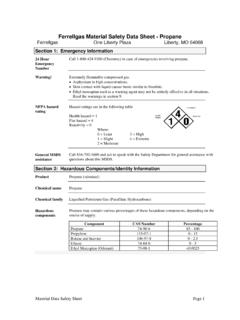
6 Protective Equipment and Precautions for FirefightersAs in any fire, wear self-contained breathing apparatus pressure-demand, MSHA/NIOSH (approved or equivalent) and full protective gear. _____ Page 2 / 9 Stability 0 Revision Date 28-May-2010 Physical and Chemical Hazards N/A NFPA Health Hazard 11027969 - GV LDU Formula 12092 Flammability 0_____ 6. ACCIDENTAL RELEASE MEASURES Personal PrecautionsAvoid contact with skin, eyes and clothing. Environmental PrecautionsRefer to protective measures listed in Sections 7 and 8.
7 Methods for ContainmentPrevent further leakage or spillage if safe to do so. Methods for Cleaning UpUse personal protective equipment. Dam up. Soak up with inert absorbent Material . Pick up and transfer to properly labeled containers. Clean contaminated surface thoroughly. 7. HANDLING AND STORAGE HandlingHandle in accordance with good industrial hygiene and Safety practice. Avoid contact with skin, eyes and clothing. StorageKeep container tightly closed. 8. EXPOSURE CONTROLS / PERSONAL PROTECTION Exposure Guidelines Chemical Name ACGIH TLVOSHA PELNIOSH IDLH SD Alcohol 40 (190 Proof) 64-17-5 STEL: 1000 ppmTWA: 1000 ppm TWA: 1900 mg/m3 (vacated) TWA: 1000 ppm (vacated) 1900 mg/m3 IDLH: 3300 ppm 10% LEL TWA: 1000 ppm TWA: 1900 mg/m3 Sodium hydroxide 1310-73-2 Ceiling: 2 mg/m3 TWA: 2 mg/m3 (vacated) Ceiling: 2 mg/m3 IDLH: 10 mg/m3 Ceiling: 2 mg/m3 Sodium metabisulfite 7681-57-4 TWA: 5 mg/m3(vacated) TWA: 5 mg/m3N/A NIOSH IDLH.
8 Immediately Dangerous to Life or Health Other Exposure Guidelines Vacated limits revoked by the Court of Appeals decision in AFL-CIO v. OSHA, 965 962 (11th Cir., 1992). Engineering MeasuresShowers Eyewash stations Ventilation systems Personal Protective Equipment Eye/Face ProtectionSafety glasses with side-shields. Skin and Body ProtectionProtective gloves. Respiratory ProtectionNo protective equipment is needed under normal use conditions. Hygiene MeasuresHandle in accordance with good industrial hygiene and Safety practice.
9 _____ Page 3 / 9 Revision Date 28-May-20101027969 - GV LDU Formula 12092_____ 9. PHYSICAL AND CHEMICAL PROPERTIES 10. STABILITY AND REACTIVITY StabilityStable under recommended storage conditions. Incompatible ProductsStrong oxidizing agents. Conditions to AvoidNone known. Hazardous Decomposition ProductsCarbon oxides. Hazardous PolymerizationHazardous polymerization does not occur. 11. TOXICOLOGICAL INFORMATION Acute Toxicity Product Information IrritationMay cause skin and eye irritation. Chemical Name LD50 OralLD50 DermalLC50 InhalationSodium dodecylbenzenesulfonate438 mg/kg ( Rat )--SD Alcohol 40 (190 Proof)7060 mg/kg ( Rat )--Magnesium chloride2800 mg/kg ( Rat )--Sodium hydroxide-1350 mg/kg ( Rabbit )-Sodium metabisulfite1131 mg/kg ( Rat )-- Chronic Toxicity Chronic ToxicityEthanol has been shown to be a reproductive toxin only when consumed as an alcoholic beverage.
10 Ethanol has been shown to be carcinogenic in long-term studies only when consumed as alcoholic beverage. Carcinogenicity The table below indicates whether each agency has listed any ingredient as a carcinogen. Chemical Name ACGIHIARC NTP OSHASD Alcohol 40 (190 Proof)A3 Group 1 Sodium metabisulfiteGroup 3 _____ Page 4 / 9 1027969 - GV LDU Formula 12092 VOC Content (%) PointNot Coefficient: n-octanol/waterOdorAutoignition TemperatureNo information availablePleasant. Decomposition TemperatureNo information availableRevision Date 28-May-2010 Boiling Point/RangeNo information availableOdor Threshold Melting Point/RangeNo information availableNo information State LiquidWater SolubilitySoluble in information availablepH 7 Evaporation RateNo information availableNo information available.