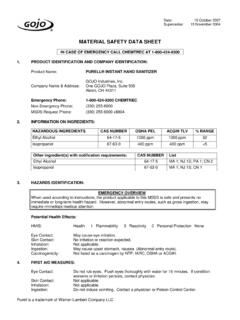
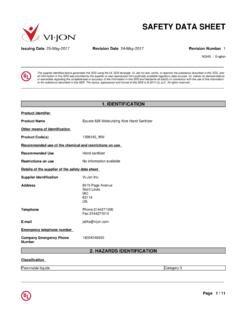
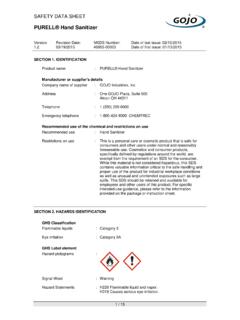
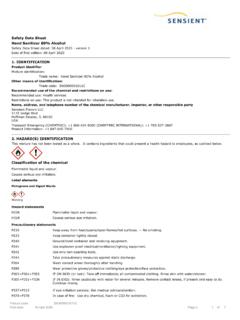
Transcription of Material Safety Data Sheets for Hand Sanitizer
1 Hand Sanitizer Safety data SHEETDate of Preparation: March 17, 2020 Page 1 of 10 Section 1: IDENTIFICATION Product Name: Synonyms: Product Use: Restrictions on Use: Date of Preparation of SDS: Hand Sanitizer Not available. Hand Sanitizer . Not available. March 17, 2020 Section 2: HAZARD(S) IDENTIFICATION GHS INFORMATION Classification: Flammable Liquids, Category 2 Eye Irritation, Category 2A Specific Target Organ Toxicity (Single Exposure), Category 3 - Narcotic Effects LABEL ELEMENTS Hazard Pictogram(s): Signal Word: Danger Hazard Statements: Highly flammable liquid and vapor.
2 Causes serious eye irritation. May cause drowsiness or dizziness. Precautionary Statements Prevention: Keep away from heat, hot surfaces, sparks, open flames and other ignition sources. No smoking. Keep container tightly closed. Ground and bond container and receiving equipment. Use explosion-proof electrical, ventilating, and lighting equipment. Use non-sparking tools. Take action to prevent static discharges. Avoid breathing mist, vapours, or spray. Wash thoroughly after handling. Use only outdoors or in a well-ventilated area.
3 Wear protective gloves, protective clothing and eye protection. Response: IF ON SKIN (or hair): Take off immediately all contaminated clothing. Rinse skin with water or shower. IF INHALED: Remove person to fresh air and keep comfortable for breathing. Hand Sanitizer Safety data SHEETDate of Preparation: March 17, 2020 Page 2 of 10 IF IN EYES: Rinse cautiously with water for several minutes. Remove contact lenses, if present and easy to do. Continue rinsing. Call a POISON CENTER or doctor if you feel unwell. If eye irritation persists: Get medical attention.
4 In case of fire: Use dry chemical, CO2, water spray or alcohol-resistant foam to extinguish. Storage: Store in a well-ventilated place. Keep container tightly closed. Keep cool. Store locked up. Disposal: Dispose of contents/container in accordance with applicable regional, national and local laws and regulations. Hazards Not Otherwise Classified: Not applicable. Ingredients with Unknown Toxicity: None. This Material is considered hazardous by the Hazardous Products Regulations. Section 3: COMPOSITION / INFORMATION ON INGREDIENTS Hazardous Ingredient(s) Common name / Synonyms CAS No.
5 % Ethanol Not available. 64-17-570 - 80 2-PropanolIsopropyl alcohol 67-63-01 - 5 Hydrogen peroxide (H2O2)Hydrogen peroxide - 1 Non-Hazardous Ingredient(s) Common name / Synonyms CAS No. % Water Not available. 7732-18-5 10 - 30 1,2,3-Propanetriol Glycerin 56-81-51 - 5 Actual concentration range(s) withheld as a trade secret. Section 4: FIRST-AID MEASURES Inhalation: If used as recommended, no first-aid measures are necessary. If handling large amounts of vapour is inhaled, remove person to fresh air and keep comfortable for breathing.
6 Call a poison center or doctor if you feel unwell. If breathing or the heart stops, trained personnel should immediately begin artificial respiration (AR) or cardiopulmonary resuscitation (CPR) respectively. Get medical attention immediately. Acute and delayed symptoms and effects: Normal use is not expected to cause any adverse effects. Excessive inhalation may cause headache, dizziness, confusion, loss of appetite and/or loss of consciousness. Eye Contact: If in eyes: Rinse cautiously with water for at least 20 minutes. Remove contact lenses, if present and easy to do.
7 Continue rinsing. If eye irritation persists: Get medical advice/attention. Acute and delayed symptoms and effects: Causes serious eye irritation. Signs/symptoms may include redness, swelling, pain, tearing, and blurred or hazy vision. Ethanol may cause painful sensitization to light, chemical Hand Sanitizer Safety data SHEETDate of Preparation: March 17, 2020 Page 3 of 10 conjunctivitis and corneal damage. Isopropanol may cause transient corneal injury. Skin Contact: If used as recommended, no first-aid measures are necessary.
8 If in contact with large amounts of product: Rinse skin with water or shower. Call a poison center or doctor if you feel unwell. Acute and delayed symptoms and effects: No adverse effects are expected under normal conditions of use. Handling of large amounts may cause skin dryness and/or irritation. Ingestion: If swallowed: Call a poison center or doctor if you feel unwell. If vomiting occurs naturally, have victim lean forward to reduce the risk of aspiration. Do NOT induce vomiting unless directed to do so by medical personnel.
9 Never give anything by mouth to an unconscious person. If breathing or the heart stops, trained personnel should immediately begin artificial respiration (AR) or cardiopulmonary resuscitation (CPR) respectively. Get medical attention immediately. Acute and delayed symptoms and effects: May cause gastrointestinal irritation. Signs/symptoms may include abdominal pain, stomach upset, nausea, vomiting and diarrhea. General Advice: In case of accident or if you feel unwell, seek medical advice immediately (show the label or SDS where possible).
10 Note to Physicians: Symptoms may not appear immediately. Section 5: FIRE-FIGHTING MEASURES FLAMMABILITY AND EXPLOSION INFORMATION Highly flammable liquid and vapor. Will be easily ignited by heat, sparks or flames. Vapors may form explosive mixtures with air. Vapors may travel to source of ignition and flash back. Most vapors are heavier than air. They will spread along ground and collect in low or confined areas (sewers, basements, tanks). Vapor explosion hazard indoors, outdoors or in sewers. Runoff to sewer may create fire or explosion hazard.

![DYWIDAG THREADBARS - TECHNICAL DATA [METRIC UNITS]](/cache/preview/e/b/b/3/7/7/0/a/thumb-ebb3770a3b09e2a2f4d7220642c198a8.jpg)