Transcription of Mental Health continuum model
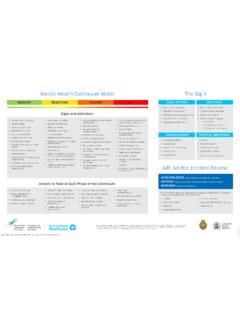
1 Mental Health continuum model Content and illustration adapted with permission from resources created by the Vancouver Police Department, the Department of National Defence, and the Canadian Armed Forces. 2 Mental Health continuum model | Mental Health continuum model People from all walks of life experience stress in their personal and work lives. As a first responder, you encounter stressful events at work that can have an impact on your physical and Mental Health . But the struggles of everyday life divorce, illness, death of a loved one, addiction can be just as serious. It s natural to go through ups and downs in life.
2 Sometimes you bounce right back when you re feeling down. Other times, you may need help to recover and return to feeling like your usual self. So how can you tell when you need help? The Mental Health continuum model illustrates the different Mental Health phases you may experience throughout your life and career. It also describes the physical and Mental effects associated with each phase and suggests actions that may help. The model includes the following phases: Healthy and adaptive coping (green) Mild and reversible distress (yellow) More severe and persistent functioning impairment (orange) Clinical illnesses and disorders requiring concentrated medical care (red) It s important to remember that you can move in either direction along the spectrum, which means there is always the possibility to return to full Health and functioning.
3 Healthy Reacting Injured Ill Normal fluctuations in mood, calm, takes things in stride Normal sleep patterns, few sleep difficulties Physically well, good energy level Consistent performance Sense of humour, in control mentally Physically active and socially active Limited or no gambling/alcohol use Nervousness, irritability, impatience, sadness, feeling overwhelmed Trouble sleeping, intrusive thoughts, nightmares Tired/low energy, muscle tension, headaches Procrastination Displaced sarcasm, forgetfulness Decreased physical and social activity Regular but controlled gambling/alcohol use Anxiety, anger, pervasive sadness, hopelessness Restless or disturbed sleep, recurring images or nightmares Increased fatigue, aches and pains Poor performance and concentration or workaholic, presenteeism Negative attitude Social avoidance or withdrawal Increased gambling/alcohol use Excessive anxiety, easily angered, depressed mood, suicidal thoughts Unable to fall or stay asleep, sleeping too much or too little Exhaustion.
4 Physical illness Unable to perform duties/control behavior/concentrate, overt subordination, absenteeism Isolation, avoiding social events, not going out or answering the phone Alcohol/gambling addition, other addictions Actions to take at each phase of the continuum Focus on task at hand Break problems into manageable chunks Identify and nurture support systems Maintain healthy lifestyle Recognize limits Identify and minimize stressors Engage in healthy coping strategies Get adequate food, rest, and exercise Identify and understand own signs of distress Seek social support and talk with someone instead of withdrawing Seek help Seek consultation as needed Follow Health care provider recommendations Regain physical and Mental Health