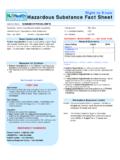
Transcription of METHYL METHACRYLATE HAZARD SUMMARY Methyl …
1 Common Name: METHYL METHACRYLATE CAS Number: 80-62-6 DOT Number: UN 1247 ---------------------------------------- --------------------------------- HAZARD SUMMARY * METHYL METHACRYLATE can affect you when breathed in. * METHYL METHACRYLATE may damage the developing fetus. * Contact can irritate the eyes, skin, nose and throat. * Breathing METHYL METHACRYLATE can irritate the lungs causing coughing and/or shortness of breath . Higher exposures can cause a build-up of fluid in the lungs (pulmonary edema), a medical emergency, with severe shortness of breath . * High exposure can cause dizziness, irritability, difficulty with concentration and reduced memory. * METHYL METHACRYLATE may cause a skin allergy.
2 If allergy develops, very low future exposure can cause itching and a skin rash. * METHYL METHACRYLATE may damage the nervous system causing numbness, "pins and needles," and/or weakness in the hands and feet. * METHYL METHACRYLATE may affect the liver and kidneys. * METHYL METHACRYLATE is a FLAMMABLE and REACTIVE chemical and a FIRE and EXPLOSION HAZARD . IDENTIFICATION METHYL METHACRYLATE is a colorless liquid with a sharp, fruity odor. It is used to make resins, plastics, and plastic dentures. REASON FOR CITATION * METHYL METHACRYLATE is on the Hazardous Substance List because it is regulated by OSHA and cited by ACGIH, DOT, NIOSH, NFPA, DEP and EPA. * This chemical is on the Special Health HAZARD Substance List because it is FLAMMABLE and REACTIVE.
3 * Definitions are provided on page 5. HOW TO DETERMINE IF YOU ARE BEING EXPOSED The New Jersey Right to Know Act requires most employers to label chemicals in the workplace and requires public employers to provide their employees with information and training concerning chemical hazards and controls. The federal OSHA HAZARD Communication Standard, , requires private employers to provide similar training and information to their employees. RTK Substance number: 1277 Date: September 1996 Revision: July 2002 ---------------------------------------- --------------------------------- * Exposure to hazardous substances should be routinely evaluated. This may include collecting personal and area air samples.
4 You can obtain copies of sampling results from your employer. You have a legal right to this information under OSHA * If you think you are experiencing any work-related health problems, see a doctor trained to recognize occupational diseases. Take this Fact Sheet with you. * ODOR THRESHOLD = ppm. * The range of accepted odor threshold values is quite broad. Caution should be used in relying on odor alone as a warning of potentially hazardous exposures. WORKPLACE EXPOSURE LIMITS OSHA: The legal airborne permissible exposure limit (PEL) is 100 ppm averaged over an 8-hour workshift. NIOSH: The recommended airborne exposure limit is 100 ppm averaged over a 10-hour workshift.
5 ACGIH: The recommended airborne exposure limit is 50 ppm averaged over an 8-hour workshift and 100 ppm as a STEL (short term exposure limit). WAYS OF REDUCING EXPOSURE * Where possible, enclose operations and use local exhaust ventilation at the site of chemical release. If local exhaust ventilation or enclosure is not used, respirators should be worn. * Wear protective work clothing. * Wash thoroughly immediately after exposure to METHYL METHACRYLATE . * Post HAZARD and warning information in the work area. In addition, as part of an ongoing education and training effort, communicate all information on the health and safety hazards of METHYL METHACRYLATE to potentially exposed workers.
6 METHYL METHACRYLATE page 2 of 6 This Fact Sheet is a SUMMARY source of information of all potential and most severe health hazards that may result from exposure. Duration of exposure, concentration of the substance and other factors will affect your susceptibility to any of the potential effects described below. ---------------------------------------- ----------------------------------- HEALTH HAZARD INFORMATION Acute Health Effects The following acute (short-term) health effects may occur immediately or shortly after exposure to METHYL METHACRYLATE : * Contact can irritate the eyes, skin, nose and throat. * Breathing METHYL METHACRYLATE can irritate the lungs causing coughing and/or shortness of breath .
7 Higher exposures can cause a build-up of fluid in the lungs (pulmonary edema), a medical emergency, with severe shortness of breath . * High exposure can cause dizziness, irritability, difficulty with concentration and reduced memory. Chronic Health Effects The following chronic (long-term) health effects can occur at some time after exposure to METHYL METHACRYLATE and can last for months or years: Cancer HAZARD * There is limited evidence that METHYL METHACRYLATE causes mutations (genetic changes). Reproductive HAZARD * METHYL METHACRYLATE may damage the developing fetus. Other Long-Term Effects * METHYL METHACRYLATE may cause a skin allergy. If allergy develops, very low future exposure can cause itching and a skin rash.
8 * METHYL METHACRYLATE may damage the nervous system causing numbness, "pins and needles," and/or weakness in the hands and feet. * METHYL METHACRYLATE may affect the liver and kidneys. MEDICAL Medical Testing If symptoms develop or overexposure is suspected, the following are recommended: * Consider chest x-ray after acute overexposure. * Exam of the nervous system. * Evaluation by a qualified allergist, including careful exposure history and special testing, may help diagnose skin allergy. * Liver and kidney function tests. Any evaluation should include a careful history of past and present symptoms with an exam. Medical tests that look for damage already done are not a substitute for controlling exposure.
9 Request copies of your medical testing. You have a legal right to this information under OSHA Mixed Exposures * Because smoking can cause heart disease, as well as lung cancer, emphysema, and other respiratory problems, it may worsen respiratory conditions caused by chemical exposure. Even if you have smoked for a long time, stopping now will reduce your risk of developing health problems. * Because more than light alcohol consumption can cause liver damage, drinking alcohol may increase the liver damage caused by METHYL METHACRYLATE . WORKPLACE CONTROLS AND PRACTICES Unless a less toxic chemical can be substituted for a hazardous substance, ENGINEERING CONTROLS are the most effective way of reducing exposure.
10 The best protection is to enclose operations and/or provide local exhaust ventilation at the site of chemical release. Isolating operations can also reduce exposure. Using respirators or protective equipment is less effective than the controls mentioned above, but is sometimes necessary. In evaluating the controls present in your workplace, consider: (1) how hazardous the substance is, (2) how much of the substance is released into the workplace and (3) whether harmful skin or eye contact could occur. Special controls should be in place for highly toxic chemicals or when significant skin, eye, or breathing exposures are possible. In addition, the following controls are recommended: * Where possible, automatically pump liquid METHYL METHACRYLATE from drums or other storage containers to process containers.