Transcription of MLA Research Paper (Harba) - Macmillan Learning
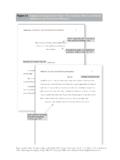
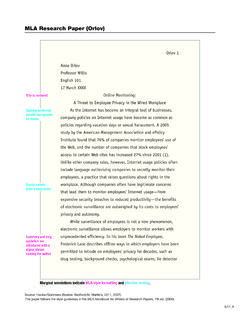
1 Source: Hacker/Sommers (Bedford/St. Martin s, 2016, 2014).This Paper follows the style guidelines in the MLA Handbook, 8th ed. (2016).MLA Research Paper (Harba)Marginal annotations indicate MLA-style formatting and effective 1 Sophie HarbaProfessor Baros-MoonEngl 110130 April XXXXWhat s for Dinner? Personal Choices vs. Public HealthShould the government enact laws to regulate healthy eating choices? Many Americans would answer an emphatic No, arguing that what and how much we eat should be left to individual choice rather than unreasonable laws. Others might argue that it would be unreasonable for the government not to enact legislation, given the rise of chronic diseases that result from harmful diets. In this debate, both the definition of reasonable regulations and the role of government to legislate food choices are at stake.
2 In the name of public health and safety, state governments have the responsibility to shape health policies and to regulate healthy eating choices, especially since doing so offers a potentially large social benefit for a relatively small surrounding the government s role in regulating food have a long history in the United States. According to Lorine Goodwin, a food historian, nineteenth-century reformers who sought to purify the food supply were called fanatics and radicals by critics who argued that consumers should be free to buy and eat what they want (77). Thanks to regulations, though, such as the 1906 federal Pure Food and Drug Act, food, beverages, and medicine are largely free from toxins. In addition, to prevent contamination and the spread of disease, meat and 4/16 Opening Research question engages highlights the Research answers the Research question and presents Harba s main is background provides context for phrase names the author.
3 The parenthetical citation includes a page 110/05/16 2:21 PMSource: Hacker/Sommers (Bedford/St. Martin s, 2016, 2014).Harba 2dairy products are now inspected by government agents to ensure that they meet health requirements. Such regulations can be considered reasonable because they protect us from harm with little, if any, noticeable consumer cost. It is not considered an unreasonable infringement on personal choice that contaminated meat or arsenic-laced cough drops are unavailable at our local supermarket. Rather, it is an important government function to stop such harmful items from entering the though our food meets current safety standards, there is a need for further regulation. Not all food dangers, for example, arise from obvious toxins like arsenic and E. coli. A diet that is low in nutritional value and high in sugars, fats, and refined grains grains that have been processed to increase shelf life but that contain little fiber, iron, and B vitamins can be damaging over time (United States, Dept.)
4 Of Agriculture and Dept. of Health and Human Services 36). A graph from the government s Dietary Guidelines for Americans, 2010 provides a visual representation of the American diet and how far off it is from the recommended nutritional standards (see fig. 1).Michael Pollan, who has written extensively about Americans unhealthy eating habits, notes that [t]he Centers for Disease Control estimates that fully three quarters of US health care spending goes to treat chronic diseases, most of which are preventable and linked to diet: heart disease, stroke, type 2 diabetes, and at least a third of all cancers. In fact, the amount of money the United States spends to treat chronic illnesses is increasing so rapidly that the Centers for Disease Control has labeled chronic disease the public health challenge of the No page number is available for this Web explains her use of a key term, establishes common ground with the helps readers move from one paragraph to the 210/05/16 2:21 PMSource: Hacker/Sommers (Bedford/St.
5 Martin s, 2016, 2014).Harba 321st century (United States, Dept. of Health and Human Services 1). In fighting this epidemic, the primary challenge is not the need to find a cure; the challenge is to prevent chronic diseases from striking in the first , however, is not a popular solution when it comes to most Americans and the food they eat. According to a nationwide poll, 75% of Americans are opposed to laws that restrict or put limitations on access to unhealthy foods (Neergaard and Agiesta). When New York mayor Michael Bloomberg proposed a regulation in 2012 banning the sale of soft drinks in servings How Do Typical American Diets Compare to Recommended Intake Levels or Limits? Sou rce: USDA & HHS: Dietary Gui de lines for Americans. 20 10 * Sol id Fats an d Add ed Sugars Fig. 1. This graph shows that Americans consume about three times more fats and sugars and twice as many refined grains as is recommended but only half of the recommended foods (United States, Dept.
6 Of Agriculture and Dept. of Health and Human Services, fig. 5-1).Harba treats both sides sets forth the urgency of her uses a graph to illustrate Americans poor nutritional visual includes a figure number, descriptive caption, and source 310/05/16 2:21 PMSource: Hacker/Sommers (Bedford/St. Martin s, 2016, 2014).Harba 4greater than twelve ounces in restaurants and movie theaters, he was ridiculed as Nanny Bloomberg. In California in 2011, legislators failed to pass a law that would impose a penny-per-ounce tax on soda, which would have funded obesity prevention programs. And in Mississippi, legislators passed a ban on bans a law that forbids .. local restrictions on food or drink (Conly A23).Why is the public largely resistant to laws that would limit unhealthy choices or penalize those choices with so-called fat taxes?
7 Many consumers and civil rights advocates find such laws to be an unreasonable restriction on individual freedom of choice. As health policy experts Mello et al. point out, opposition to food and beverage regulation is similar to the opposition to early tobacco legislation: the public views the issue as one of personal responsibility rather than one requiring government intervention (2602). In other words, if a person eats unhealthy food and becomes ill as a result, that is his or her choice. But those who favor legislation claim that freedom of choice is a myth because of the strong influence of food and beverage industry marketing on consumers dietary habits. According to one nonprofit health advocacy group, food and beverage companies spend roughly two billion dollars per year marketing directly to children. As a result, kids see nearly four thousand ads per year encouraging them to eat unhealthy food and drinks ( Facts ).
8 As was the case with antismoking laws passed in recent decades, taxes and legal restrictions on junk food sales could help to counter the strong marketing messages that promote unhealthy anticipates objections to her idea. She counters opposing views and provides support for her 410/05/16 2:21 PMSource: Hacker/Sommers (Bedford/St. Martin s, 2016, 2014).Harba 5 The United States has a history of state and local public health laws that have successfully promoted a particular behavior by punishing an undesirable behavior. The decline in tobacco use as a result of antismoking taxes and laws is perhaps the most obvious example. Another example is legislation requiring the use of seat belts, which have significantly reduced fatalities in car crashes. One government agency reports that seat belt use saved an average of more than fourteen thousand lives per year in the United States between 2000 and 2010 (United States, Dept.)
9 Of Transportation, Natl. Highway Traffic Safety Administration 231). Perhaps seat belt laws have public support because the cost of wearing a seat belt is small, especially when compared with the benefit of saving fourteen thousand lives per designed to prevent chronic disease by promoting healthier food and beverage consumption also have potentially enormous benefits. To give just one example, Marion Nestle, New York University professor of nutrition and public health, notes that a 1% reduction in intake of saturated fat across the population would prevent more than 30,000 cases of coronary heart disease annually and save more than a billion dollars in health care costs (7). Few would argue that saving lives and dollars is not an enormous benefit. But three-quarters of Americans say they would object to the costs needed to achieve this benefit the regulations needed to reduce saturated fat intake.
10 Why do so many Americans believe there is a degree of personal choice lost when regulations such as taxes, bans, or portion limits on unhealthy foods are proposed? Some critics of anti-junk-food laws believe that even if state and local laws Harba introduces a direct quotation with a signal phrase and follows with a comment that shows readers why she chose to use the acknowledges critics and analogy extends Harba s 510/05/16 2:21 PMSource: Hacker/Sommers (Bedford/St. Martin s, 2016, 2014).Harba 6were successful in curbing chronic diseases, they would still be unacceptable. Bioethicist David Resnik emphasizes that such policies, despite their potential to make our society healthier, open the door to excessive government control over food, which could restrict dietary choices, interfere with cultural, ethnic, and religious traditions, and exacerbate socioeconomic inequalities (31).