Transcription of Module 10: Hazardous Materials Topic 1: Introduction - NWCG
1 Module 10: Hazardous Materials Topic 1: Introduction Module Introduction Fighting wildland fires is a tough and dangerous job. You know you will face smoke and heat, and these alone are enough to brave. Unfortunately, when Hazardous Materials are present, your job gets tougher. You will need to use your head and your training to detect, identify and react properly to Hazardous Materials in the field. In this Module , we ll discuss: Identification of Hazardous Materials Guidelines for reacting to incidents involving Hazardous Materials Steps wildland firefighters can take to respond to Hazardous Materials incidents Narration script: You enter wildland fire situations well prepared, geared up and ready for action. Your actions are intended to save lives, structures and the environment. However, in the wildland you may encounter a Hazardous material incident one that you know little about.
2 In such situations, you will need to rely on experts and proven processes to do your job right. Hazardous Materials are all around you, and you rely on them in your daily life, but when mixed with fire, they can easily ruin your life. As a rule, it is best to treat every fire as a potential Hazardous Materials situation. Page 1 Topic 2: Hazardous Materials Introduction The dangers wildland firefighters face include not only heat and smoke, but less-obvious Hazardous Materials (HazMats) as well. A routine containment could easily turn in to a disaster without a good understanding of how to identify and respond to Hazardous Materials .
3 To prepare yourself, investigate the following safety topics: Recognize the presence of HazMats Isolate the HazMat scene You will investigate each of these issues in turn. Narration script: Safety on the fireline also involves thinking about Hazardous Materials . If you ever go through extensive HazMat training, you will learn that one foundational principle is to: Treat every incident as a HazMat incident until proven otherwise. Wildland incidents AND urban/interface situations fit into this category. The secret is all about being prepared. So, investigate the items on this screen as we focus on HazMat safety. Commonly found HazMats You may encounter HazMats during a wildland fire, especially in the wildland/urban interface. In fact, HazMats may even have started the fire. When in doubt, try to check with knowledgeable people on the scene.
4 Be sure to check out any placards, container labels, and shipping papers from trucks and rail cars you encounter. HazMats to watch for in the wildland include: Barrels of agricultural pesticides in farm structures Propane in large tanks at fuel distribution points Illegal Hazardous waste dumps (which we ll talk about in a little bit) In the wildland/urban interface, always suspect the presence of HazMats in: Residences Look for these types of HazMats in residences: Propane tanks Chemicals, such as garden fertilizers and pesticides Paints Cleaning agents Fuel cans and the fuel tanks on lawn mowers and equipment Synthetics, such as plastics, man-made fabrics, and building Materials Ammunition and reloading supplies Vehicles may contain as much as 300 pounds (135 kg) of plastic Page 2 Farms and Ranches In addition to all the HazMats you will find in residences, look for these additional HazMats on farms and ranches.
5 Propane tanks Fuel storage tanks, such as aboveground gasoline and diesel tanks, safety cans, and fuel tanks on farm machinery Bulk chemicals, such as fertilizers and pesticides Explosives, such as dynamite and blasting caps Narration script: Hazardous Materials can take on all forms, shapes, and sizes. The Hazardous stuff you ll often find out in the wildland are industrial-sized chemicals and fuel. In the wildland/urban interface, it s usually the same stuff, only in smaller quantities. Just be aware that Hazardous Materials are out there, in the country and in the interface. Illegal HazMat scenes Now you know that you may find HazMats when fighting wildland fires. But you also may come across a more insidious kind of HazMats the illegal kind. Be on the lookout for: Illegal dumps often contain Hazardous chemicals or substances Clandestine drug labs may contain several different toxic and explosive chemicals which also can start or contribute to the growth of wildland fires Illegal marijuana farms may also put you at risk, though not necessarily from Hazardous chemicals Clandestine operations such as drug labs and marijuana farms are often located in rural areas to reduce the chances of detection.
6 Other hazards to beware of include armed guards, attack dogs, and potentially lethal booby traps that are often used to protect these operations. Narration script: The sad truth is that you could encounter illegal drug labs, marijuana farms or other illicit drug-related industries when fighting wildland fires. Stumbling into a methamphetamine lab or simply opening one of the death bags containing waste from such a lab can ruin your life. In these situations, leave EVERYTHING alone and call law enforcement. And stay out of the area because you never know when there might be booby traps. Isolating HazMat incidents Regardless of what the HazMat is or how it came to be, you must be able to recognize and isolate it. When you discover such Materials , report it through the chain of command and request the appropriate resources.
7 Take these steps when you encounter any unidentified or uncontained HazMat: 1 Attempt to identify the material by reading any placards or labels through binoculars from a safe distance uphill and upwind of the material Page 3 2 Isolate the scene and deny entry to everyone until you are relieved by those trained and equipped to handle these situations move and keep people from the scene but allow enough room to maneuver your equipment 3 Warn others in the immediate vicinity 4 Notify the incident Commander (IC) of the potential problem so that trained specialists can be brought in Remember and follow this rule.
8 If you don t know, don t go, it may blow. Narration script: The public s curiosity about a fire scene can quickly turn in to a health and safety issue when Hazardous Materials are present. You may need to establish an extended perimeter on the scene and also make sure you and your team stay out of the increased danger zone. Page 4 Knowledge Check 1 Multiple choice check the box of the answer(s) you choose. You spot this potential HazMat scene and try to identify the Materials present. Caption: still of a house clearly in the urban/wildland boundary with fire impinging on a big propane tank.
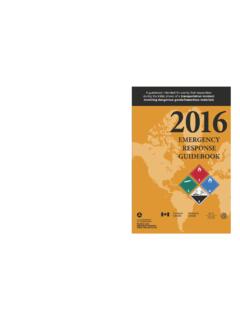
9 Identify THREE additional steps you need to take. Attack the fire Control the scene and keep everyone out Call animal control Approach the scene to identify other possible HazMats Warn others in the immediate vicinity Notify the IC The correct answers are control the scene and keep everyone out, warn others in the immediate vicinity, and notify the IC. Page 5 Using the Emergency Response Guidebook You ve learned just a bit about identifying HazMats, isolation, and notification. Now let s get into more detail by getting familiar with the Emergency Response Guidebook (ERG).
10 The ERG is one of your best resources for HazMat information. The guide is divided in to colored sections telling you what you are dealing with, and how to deal with it: White Pages The white pages in the ERG (table of placards) show basic placards and their colors. Match the placard on the scene exactly with the placard in the ERG, then use the three-digit guide number next to the sample placard to go to the proper place in the numbered guide of the ERG s orange section. Make sure to follow the procedure in the orange section. Yellow Pages The yellow section of the ERG lists Hazardous material identification numbers, also know as UN/NAs, in ascending order. After you locate the number you know, you will also find the corresponding material name and ERG guide number. Follow the guide number to the proper place in the orange section, and then follow the listed procedure.