Transcription of MULTNOMAH COMMUNITY ABILITY SCALE (MCAS)
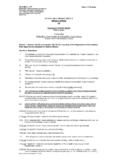
1 MULTNOMAH COMMUNITY ABILITY SCALE (MCAS). Staff Name: Staff ID#: Member Name: Assessment Date: ____/____/____. Assessment Type: Initial Assessment Six Months Closing Other Department #: Section One - Interference with Functioning: This section pertains to those physical and psychiatric symptoms that make life more difficult for the client. Rate the client as he/she functions with current medications and services. 1- Physical Health: How impaired is the client by his/her physical health status? NOTE: Impairment may be from chronic health problems and/or frequency and severity of acute illnesses. 1. Extreme health impairment 2. Marked health impairment 3. Moderate health impairment 4. Slight health impairment 5.
2 No health impairment 6. Don't' know 2 - Intellectual Functioning: What is the client's level of general intellectual functioning? NOTE: Low intellectual functioning may be due to a variety of reasons. It should be distinguished from impaired cognitive processes due to psychotic symptoms, which are covered in later questions. Rate estimated IQ independent of psychotic symptoms. 1. Extremely low intellectual functioning 2. Moderately low intellectual functioning 3. Low intellectual functioning 4. Slightly low intellectual functioning 5. Normal or above level of intellectual functioning 6. Don't know 3 - Thought Process: How impaired is the client's thought processes as evidence by such symptoms as hallucinations, delusions, tangentiality, loose associations, response latencies, ambivalence, incoherence, etc?
3 1. Extremely impaired thought processes 2. Markedly impaired thought processes 3. Moderately impaired thought processes 4. Slightly impaired though processes 5. No impairment, normal thought processes 6. Don't know 4 Mood Abnormality: How abnormal is the client's mood as evidenced by such symptoms as constricted mood, extreme mood swings, depression, rage, mania, etc. NOTE: Abnormality in this area may include any of the following: rage of moods, level of mood, and/or appropriateness of mood. 1. Extremely abnormal mood 2. Markedly abnormal mood 3. Moderately abnormal mood 4. Slightly abnormal mood 5. No impairment, normal mood 6. Don't know 5 Response to Stress and Anxiety: How impaired is the client by inappropriate and/or dysfunctional responses to stress and anxiety?
4 NOTE: Impairment could be due to inappropriate responses to stressful events ( extreme responses or not response to events that should be of concern) and /or difficulty in handling anxiety as evidence by agitation, perseveration, inability to problem-solve etc.). 1. Extremely impaired response 2. Markedly impaired response 3. Moderately impaired response 4. Slightly impaired response 5. Normal response 6. Don't know 1. Section Two - Adjustment to Living: This section pertains to how the client functions in his/her daily life and how he/she has adapted to the disability of mental illness. Rate behavior, not potential behavior. 6- ABILITY to Manage Money: How successfully does the client manage his/her own money and control expenditures?
5 1. Almost never manages money successfully 2. Seldom manages money successfully 3. Sometimes manages money successfully 4. Manages money successfully a fair amount of the time 5. Almost always manages money successfully 6. Don't know 7 Independence in Daily Life: How well does the client perform independently in day-to-day living? NOTE: Performance includes personal hygiene, dressing appropriately, obtaining regular nutrition and housekeeping. 1. Almost never performs independently 2. Often does not perform independently 3. Often performs independently 4. Sometimes performs independently 5. Almost always performs independently 6. Don't know 8 Acceptance of Illness: How well does the client accepts (as opposed to deny) his/her psychiatric disability?
6 1. Almost never accepts disability 2. Infrequently accepts disability 3. Sometimes accepts disability 4. Accepts disability a fair amount of the time 5. Almost always accepts disability 6. Don't know Section Three Social Competence: This section pertains to the capacity of the client to engage in appropriate interpersonal relations and culturally meaningful activity. 9 Social Acceptability: In general, what are other people's reactions to the client: 1. Very negative 2. Fairly negative 3. Mixed, mildly negative to mildly positive 4. Fairly positive 5. Very Positive 6. Don't know 10 Social Interest: How frequently does the client initiate social contact or respond to other's initiation of social contact: 1.
7 Very infrequently 2. Fairly infrequently 3. Occasionally 4. Fairly frequently 5. Very frequently 6. Don't know 11 Social Effectiveness: How effectively does the client interact with others NOTE: Effectively refers to how successfully and appropriately the client behaves in social settings, , how well he/she minimizes interpersonal friction, meets personal needs, achieves personal goals in a socially appropriate manner, etc. 1. Very ineffectively 2. Ineffectively 3. Mixed or dubious effectiveness 4. Effectively 5. Very effectively 6. Don't know 12 Social Network: How extensive is the client's social support network? NOTE: A support network may consist of interested family, friends, acquaintances, professionals, coworkers, socialization programs, etc.
8 Note: Rate the size of the network, not the social acceptability. 1. Very limited network 2. Limited network 3. Moderately extensive network 4. Extensive network 5. Very extensive network 6. Don't know 2. 13 Meaningful Activity: How frequently is the client involved in meaningful activities that are satisfying to him or her? NOTE: Meaningful activities might include arts and crafts, reading, going to a movie, etc. 1. Almost never involved 2. Seldom involved 3. Sometimes involved 4. Often involved 5. Almost always involved 6. Don't know Section Four Behavioral Problems: This section pertains to those behaviors that make it more difficult for the client to integrate successfully in the COMMUNITY or comply with his/her prescribed treatment.
9 NOTE: Rate client's current behavior, considering as appropriate events during the past year. 14 Medication Compliance: How frequently does the client comply with his/her prescribed medication regimen? NOTE: This question does not relate to how much those medications help the client. 1. Almost never complies 2. Infrequently complies 3. Sometimes complies 4. Usually complies 5. Almost always complies 6. Don't' know 15 Cooperation with Treatment Providers: How frequently does the client cooperate as demonstrated by, for example, keeping appointments, complying with treatment plans and following through on reasonable requests? 1. Almost never cooperates 2. Infrequently cooperates 3. Sometimes cooperates 4.
10 Usually cooperates 5. Almost always cooperates 6. Don't' know 16 - Alcohol/Drug Abuse: How frequently does the client abuse drugs and/or alcohol? NOTE: abuse means use to the extent that it interferes with functioning. 1. Frequently abuses 2. Often abuses 3. Sometimes abuses 4. Infrequently abuses 5. Almost never abuses 6. Don't know 17 Impulse Control: How frequently does the client exhibit episodes of extreme acting out? NOTE: Acting out refers to such behavior as temper outbursts, spending sprees, aggressive actions, suicidal gestures, inappropriate sexual acts, etc. 1. Frequently acts out 2. Acts out fairly often 3. Sometimes acts out 4. Infrequently acts out 5. Almost never acts out 6. Don't know 3.