Transcription of Notes and Answers - AzarGrammar.com
1 Chapter 1: PRESENT TIME1 Notes and AnswersORDER OF CHAPTERCHARTSEXERCISESWORKBOOKF irst day of class: talking/writingEx. 1 present and present progressive1-1 1-2Ex. 4 10 Frequency adverbs1-3Ex. 9 13Pr. 11 15 Final -s1-4Ex. 14 18Pr. 16 20 Non-action verbs1-6Ex. 19Pr. 21 Present verbs: short Answers to yes/no questions1-7Ex. 20 21Pr. 25 Cumulative reviewEx. 22 23Pr. 22 24, 26 General Notes on Chapter 1 This chapter includes some of the most fundamental and useful structures in everydayEnglish. Students learn to ask and answer questions that are useful in getting and givinginformation, describing, and keeping a conversation moving book emphasizes everyday English, a style and register acceptable in mostsituations. The first exercise models a simple dialogue for an interview to help classmatesget acquainted.
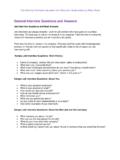
2 Then the charts and exercises focus on important details of a fewfundamental verb structures. TERMINOLOGY: The text does not differentiate between verb tenses and aspects. The usual student understanding of the term tense is a verb form that expresses timerelationships; most students are comfortable with the term. The goal is always to presentand explain structures with a minimum of technical terminology. The hope is that thestudents will leave their formal study of English one day with good control of its structures;terminology can and probably will be soon present progressive is also called the present continuous in some 11/6/02 8:55 AM Page 1 EXERCISE 1, p 1. explain the purpose of the task: pairs of students are going to interview each other andthen introduce their partners to the rest of the class.
3 (If your students already know eachother, you might ask them to pretend to be other people famous film stars, historicalfigures, etc.)PA RT example of the conversation between Kunio and Maria is intended to show thelearners what they are supposed to do during their own : Have two students read the dialogue aloud. Model some parts of the dialogue yourself. For example, you could model various ways anative speaker might say Hi. My name s ( ..) and have the students try to imitate yourintonation. You could model any of the sentences and have the whole class repeat. Model everyday contracted speech. For example:Where arebecomes Where re. Point out phrases that keep a conversation moving along. Discuss their meanings andfunctions:And you?(meaning And where are you living now? which refers to theimmediately preceding question) and How about you?
4 (meaning the speaker is asking theother person the same question that immediately preceded).PA RT I students can complete the paragraph as seatwork prior to class COMPLETIONS:..Maria is from now, she s living on FifthAvenue in an apartment (OR: in an apartment on Fifth Avenue).She has been here forthree came here to study English at this schoolbefore she goes to another schoolto study computer her free time, she likes to get on the students are to use information from the dialogue to create an introduction,as practice for creating their own introductions later. Have the students, workingindividually or in small groups, write Maria s introduction of Kunio. Then, the students canread their introductions aloud as you write their words on the board as a basis INTRODUCTION:I would like to introduce Kunio to you.
5 He s from Japan. Right now, he s living in adorm. He has been here for two months. Right now he s studying English. Later, he sgoing to study engineering at this school. In his free time, he reads a lot. He also likesto get on the RT I questions from the class on the given topics. Write the questions on thechalkboard, then call attention to the same or similar questions in the dialogue betweenKunio and QUESTIONS:What is your name? Where are you from? / What country are you from? / What s your hometown?Where are you living now? / Where do you live?*How long have you been in (this city)?Why did you come here?What do you like to do in your free time? / Do you have any hobbies? / What do youenjoy doing in your spare time?2 CHAPTER 1, Present Time*Where are you living now?(present progressive) is usually the form of a question about a current but probablytemporary residence: a dormitory, an apartment, do you live?
6 (simple present) is more often the questionabout the resident s permanent home. In addition to a street address, the question Where do you live?can elicit aresponse of a city or state/province ( ,I live in Kansas City, Kansas.).The distinction between these forms is this interview, either question is appropriate and will elicit the desired 11/6/02 8:55 AM Page 2 The next step is to divide the students into pairs, mixing language groups in a multilingualclass or mixing proficiency levels in a monolingual class. Give the pairs ten minutes or so todo the interviews and prepare their introductions. Allow the students to read from theirnotes during the RT the class to write down the names of their classmates as a way of gettingto know each a follow-up to the in-class activity, you could ask the students to write theinformation from their interviews in a short composition (in class or out of class) and handit in.
7 EXERCISE 2, p. 2. Introducing yourself in practice is intended to reinforce the first exercise. It allows you to get to know yourstudents and evaluate their suggestions in the text for ways in which to handle the compositions resulting fromthis assignment can be used for any writing assignments throughout the term. You maywish to keep this first writing sample for now and return it to the students after severalmonths so that they can see how much their English has improved since the first day ofclass. EXERCISE 3, p. 3. Pretest (error analysis): present verbs. (Charts 1-1 1- 6)This exercise previews some common problems in using present verb should be given time in class to solve the exercise prior to class might want to ask the students to write out and hand in the corrected sentences inorder to evaluate their level of understanding and usage ability.
8 Group or pair work wouldbe another possibility. For example, a pair or group could write out all the correctedsentences and then give that paper to another pair or group to read and correct again ifnecessary. As another possibility, students could be asked to write the corrected sentenceson the board for class discussion. (It s probably wise to ask for volunteers rather thanassigning students to boardwork, especially the first day of class.) Answers :1. I am astudent at this school. (OR:We arestudentsat this school.) am notliving at home right amliving in this m don t knowmy teacher s (Teacher s name)teachesourEnglish expectsus to be in class on always cometoclass on Does Omar goto school? / Is Omargoing to school? mdoesn tgo to sister doesn thave a DoesAnna haveajob?
9 Notes and Answers301_ph/prs_AZAR_39601 11/6/02 8:55 AM Page 34 CHAPTER 1, Present TimeCHARTS 1-1 AND 1-2: SIMPLE PRESENT vs. PRESENT PROGRESSIVE It is assumed that the students are already acquainted with these two present tenses, theirnegative and question forms, and contractions with am, are, is,and is not assumed that thestudents have full control of these forms and their uses, however. The time-line diagram below is used to demonstrate tenses throughout the text, with thevertical crossbar representing now or the moment of speaking. nowpastfuture The other tenses in the text are presented with the same time-line diagram. For example, seeChart 2-8 for the diagrams for the simple past and past presenting the grammar in Charts 1-1 and 1-2.* One option for presenting Chart 1-1 is to draw the diagrams on the board, discuss theexamples briefly, then proceed immediately to the exercises.
10 As another option, you could review all the grammar points in Charts 1-1 and 1-2 beforeturning to the exercises. Elicit examples from the class, write them on the board, discussdifferences in meaning, manipulate forms, and orally model the contractions. You might, forexample, use the verb sitand have the students make sentences about themselves and theirclassmates in statements, negatives, and questions such as these:(Pedro) sits in class every day. (Pedro) is sitting (in that seat) right now. He doesn t sit in the backrow every day. He isn t sitting in the back row right now. Does he usually sit in the center row? Ishe sitting in the center row?Ask leading questions so that the students will answer variously with I, s/he,and theyas thesubjects. Ask other questions so that students give short Answers .