Transcription of Obsessive Compulsive Disorder (OCD) - TalkPlus
1 INFORMATION AND ADVICE Obsessive Compulsive Disorder (OCD) Many of us have traits of OCD, for example a need for things to be clean or not liking pictures on the wall to hang bent! However, for some people their symptoms go beyond traits and can become very distressing and have a big impact upon their lives. Each person with OCD will have a unique set of symptoms and difficulties, these symptoms can become all-encompassing and overwhelming. In general however people with OCD suffer with obsessions. These may be thoughts, pictures or impulses that are usually highly unpleasant and come to mind in an unwanted fashion, they often leave the person feeling anxious, upset or frightened.
2 Anxiety is the brains warning system that something is wrong - for example if we narrowly avoid a car crash we would feel a similar way. Anxiety is a way to tell our brains to react do something, protect yourself. You may recognise that the fear is unreasonable or does not make sense, but it is still very real. To try and manage or combat the obsessions and the anxiety they produce, people with OCD, engage in Compulsive behavior. Compulsions are behaviours that are often repetitive and at times seem irrational. For example someone may wash their hands over and over again, tap certain parts of their body or environment a specific amount of times, or check windows and doors obsessively.
3 Compulsions may also be things we do in our minds, for example counting to ten ten times, or repeating certain words or phrases in a specific pattern. What is OCD? How common is OCD? OCD is an anxiety Disorder that effects around 1-2% of the population, that is more than 1 in 50 people. More people suffer from OCD than from bipolar or panic Disorder . OCD symptoms often appear early in life: in childhood, the teen years, or early adulthood. Males and females of all races are equally affected. OCD is generally present throughout the persons life, but can get better or worse over time, or symptoms can flare up often in response to life stressors.
4 Research shows that OCD does run in families and that genes likely play a role in the development of the Disorder . Key Points: OCD is characterised by distressing, intrusive thoughts. Many of us with OCD manage these thoughts using Compulsive behaviours. Inside this booklet: What is OCD? 1 How common is OCD? 1 What are the symptoms of OCD? 2 What keeps OCD going? 3 What treatments are available? 4 Useful contacts 4 PAGE 2 Obsessive Compulsive Disorder (OCD) OCD is characterised by three things: Obsessions that lead to anxiety that lead to compulsions. We will see how these link together on the next page. Everybody experiences different types of obsessions and compulsions, listed below are some of the most common.
5 What are the symptoms of OCD? Washing hands/clothing/possessions excessively. Checking windows/doors/taps/the oven to make sure they are locked or off. Seeking reassurance from other people that everything is OK you did turn the oven off, you didn t harm them, you don t owe them money, etc. Checking the route you have driven over and over to make sure you have not run anyone over. Putting things straight or symmetrical many times. Praying or seeking forgiveness. Fearful thoughts about being contaminated in some way by dangerous substances Germs, AIDS, dirt. Frightening thoughts or images that a serious and harmful event will occur because of your carelessness.
6 A fire because you have left the cooker on, a burglary because you have not locked the doors. You may think you have knocked someone over with your car. Pictures or thoughts that you may harm other people especially those close to you who you would never want to hurt. That you will cheat on your partner or physically harm your child. Thoughts about things in your life not being in the right place and finding this upsetting Wanting personal possessions to be lined up perfectly straight. Thoughts about your sexual identity and preferences changing. Being concerned that you are a paedophile or thinking you may be straight if you are gay or vice-versa. Blasphemous or unpleasant thoughts around your religious faith Thinking you may have committed a sin or accidently worshipped the devil.
7 Compulsions: Obsessions: Thinking something to yourself to sort out or stop the Obsessive thoughts. These are called neutralising thoughts. Saying out loud (or quietly) specific words or phrases in response to other words (to prevent disaster happening). Hoarding behaviour keeping things with little or no value. Avoidance. People can go to great lengths to avoid situations that trigger their obsessions and anxiety. This also means they do not have to go through the distressing and time consuming process of carrying out the compulsions. PAGE 3 INFORMATION AND ADVICE Occasionally people experience something called Pure O . At first it seems like the person just has the obsessions and no compulsions.
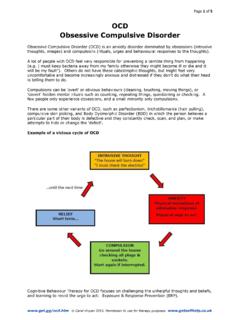
8 This can be easily confused with general anxiety and worry. However, people who experience distressing obsessions will use some kind of compulsion to manage these and they are usually carried out in the persons mind. Examples of these compulsions would be thinking about certain words or numbers in a specific pattern, or rituals involving repeating certain phrases or counting. What keeps OCD going? Obsessions Short term relief Anxiety Compulsions Above is what can be called a maintenance cycle, or vicious cycle of OCD. This vicious cycle is easy to get into we all experience distressing thoughts at one time or another but the person with OCD will experience these often and they will lead to unpleasant and anxious feelings.
9 To reduce the anxiety and unpleasantness the person engages in compulsions, these compulsions provide relief, but unfortunately this is short term and the cycle begins anew The more we engage in the vicious cycle the stronger it becomes and the more difficult it is to break. People often feel guilty or like they are a terrible person for having obsessions and this just increases the likelihood of the thoughts returning because they are given such a negative importance in someones mind. On the next page we will look at treatment and the ways we can break this vicious cycle of OCD. At TalkPlus we offer Cognitive Behavioural Therapy (CBT). This is an evidence-based treatment, which means it has been proven to help people who suffer with OCD.
10 CBT aims to help people better manage or overcome their OCD by learning skills and ways to cope. There are several steps involved in treating OCD. The first one involves under-standing more about it, what OCD is, what symptoms you are experiencing and how these are connected. What keeps it going and what triggers are involved. This understanding is an important step to take to start tackling OCD as it is much easier to change when we know why we are doing it and how the change can help us. Once you have learnt more about your unique experience of OCD you can start to tackle it by learning techniques. This is done using a specific treatment ap-proach called Exposure and Response Prevention (ERP).

![ZÀ]}µ o À }v - TalkPlus](/cache/preview/1/7/c/4/4/b/6/6/thumb-17c44b66edfab6bc2dc10c7f4bbf6249.jpg)