Transcription of Opioid Dose Equivalence - ANZCA
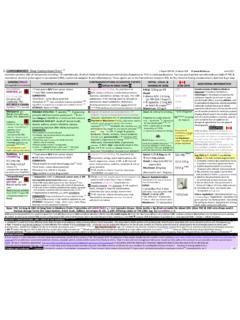
1 Morphinemg/day1 Anamorph, Kapanol (MR), MS Contin (MR), MS Mono (MR), Ordine, , OxyContin (MR), OxyNorm, Targin (MR)Hydromorphonemg/day5 Dilaudid, Jurnista (MR) , Codalgin, Panadeine, Panadeine Forte, Mersyndol, Nurofen Plus, , (MR) , Tramal, Tramadol SR (MR), Zydol, Zydol SR (MR), (MR)SUBLINGUAL PREPARATIONSB uprenorphinemg/day40 Suboxone, Subutex, Temgesic RECTAL PREPARATIONNote: Absorption from rectal administration is highly PREPARATIONSB uprenorphinemcg/hr2 NorspanFentanylmcg/hr3 Denpax, Durogesic, Dutran, Fenpatch, Fentanyl SandozPARENTERAL PREPARATIONSM orphine mg/day3 DBL morphine sulphate injection, DBL morphine tartrate injectionOxycodone mg/day3 OxyNorm FIHydromorphone mg/day15 Dilaudid FI, Dilaudid-HP FICodeine phosphate injection injection BPFentanyl fentanyl injection, SublimazeSufentanil mcg/day2 FACULTY OF PAIN MEDICINE ANZCA , DECEMBER 2014 Opioid dose Equivalence Calculation of oral Morphine Equivalent Daily dose (oMEDD) oMEDD (mg) = Current Opioid dose x Conversion factorCURRENT OPIOIDCONVERSION FACTORPROPRIETARY NAMESORAL (SWALLOWED) PREPARATIONSNote: Modified release formulations are marked MRPRACTICAL CONSIDERATIONS | SELECTED REFERENCESP ractical Considerations1) This Opioid dose Equivalence table is intended for comparison of different Opioid regimens in individual patients or in patient cohorts.
2 2) Caution is required if Opioid dose Equivalence tables are used to guide Opioid switching, as the administration of a calculated equivalent dose of the replacement Opioid may lead to ) It should be noted that there is considerable variability in pharmacokinetics and pharmacodynamics of the different opioids, within and between individual patients. In addition interactions with non- Opioid drugs can strongly influence Opioid ) Modified-release formulations can be sub-classified as delayed- or extended- release. Extended release of a drug can be achieved using sustained- or controlled-release delivery systems. When the Opioid regimen includes modified- and immediate-release preparations, both should be included in calculation of the ) Methadone, fentanyl lozenges and neuraxial opioids are not included in this table due to their complex and variable ) The conversion factors listed are derived from pooled data in the peer-reviewed literature and pharmaceutical company product information.
3 Selected References1) Anderson R et al. Accuracy in equianalgesic dosing: conversion dilemmas. J Pain Sym Manage. 2001; 21:397-4062) Bruera E, Pereira J, Watanabe S et al. Opioid rotation in patients with cancer pain. A retrospective comparison of dose ratios between methadone, hydromorphone, and morphine. Cancer 1996;78(4):852-573) Dale O, Moksnes K, Kaasa S. European Palliative Care Research Collaborative pain guidelines: Opioid switching to improve analgesia or reduce side effects. A systematic review. Palliative Medicine 2011;25:494-5034) Faculty of Pain Medicine. Principles regarding the use of Opioid analgesics in patients with chronic non-cancer pain. 20105) Fine PG, Portenoy RK. Establishing Best Practices for OpioidRotation: Conclusions of an Expert Panel. J Pain Sym Manage 2009;38:418-4256) Glare PA, Walsh TD. dose -ranging study of oxycodone for chronic pain in advanced cancer. J Clin Oncol. 1993;11(5):973-87) Hagen NA, Babul N. Comparative clinical efficacy and safety of a novel controlled-release oxycodone formulation and controlled-release hydromorphone in the treatment of cancer pain.
4 Cancer. 1997;79(7):1428-378) Houde R, Wallenstein S, Beaver W. Evaluation of analgesics in patients with cancer pain. Clin Pharm. 1966;1:59 979) Kalso E, Vainio A. Morphine and oxycodone hydrochloride in the management of cancer pain. ClinPharmacolTher. 1990;47(5):639-4610) Kalso E, VainioA et al. Morphine and oxycodone in the management of cancer pain: plasma levels determined by chemical and radioreceptor assays. PharmacolToxicol. 1990;67(4):322-2811) Knotkova H, Fine PG, Portenoy RK. Opioid Rotation: The science and the limitations of the equianalgesic dose table. J Pain Sym Manage 2009;38:426-43912) Mahler DL, Forrest WH. Relative analgesic potencies of morphine and hydromorphone in postoperative pain. Anesthesiology 1975;42(5):602 60713) Mercadante S, Caraceni A. Conversion ratios for Opioid switching in the treatment of cancer pain: a systematic review. Palliative Medicine 2011;25(5):504-51514) Pereira J, Lawlor P, Vigano A et al. Equianalgesic dose ratios of opioids: a critical review and proposals for long-term dosing.
5 J Pain Sym Manage 2001;22:672-68715) Sittl R, Likar R, Nautrup BP. Equipotent doses of transdermal fentanyl and transdermal buprenorphine in patients with cancer and noncancer pain: results of a retrospective cohort study. ClinTher. 2005;27(2):225-3716) Skaer TL. Dosing considerations with transdermal formulations of fentanyl and buprenorphine for the treatment of cancer pain. J Pain Research 2014;7:495-50317) The Royal Australasian College of Opioid Policy: Improving management of chronic non-malignant pain and prevention of problems associated with prescription Opioid 2008