Transcription of Organizational Alignment - ichangeworld
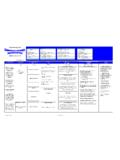
1 ichangeworld Consulting, LLC 795 Clausing Avenue Novato, CA 94945 United States Phone: (415) 878-2031 Copyright 2001-2003 licensed for distribution by ichangeworld Consulting LLC. All rights reserved. Organizational Alignment by Donald T. Tosti and Stephanie F. Jackson ORGANIZATIONS AS SYSTEMS Organizations are dynamic systems and, like all other systems, they function best when their components are designed to work together smoothly and efficiently. Any change we introduce to an organization, then, must be aligned to fit the existing system or must modify the system to accept the change. The model below is a simplified systems framework for understanding the relationship between Organizational components. The model describes two interdependent paths for moving from a broad statement of Organizational mission and vision to specific Organizational results: Strategic: The left-hand path emphasizes what needs to be done: the strategic goals the organization will work toward; the objectives that groups and individuals must accomplish to carry out those strategies; the activities that must be performed to meet goals and objectives.
2 Cultural: The right-hand path emphasizes how things should be done: the values that will guide people in carrying out the mission and vision; the practices which reflect those values; the specific, day-to-day behaviors which will represent the values and practices to others as people go about their work. Note that these values reflect how an organization intends to conducts it business not people's personal values about home, family, religion, or personal relationships. ichangeworld Consulting, LLC 795 Clausing Avenue Novato, CA 94945 United States Phone: (415) 878-2031 Copyright 2001-2003 licensed for distribution by ichangeworld Consulting LLC. All rights reserved. Organizational Alignment Organizational Alignment requires compatibility between the strategic and cultural "paths," and consistency within them. Values should be compatible with goals: a group that values flexibility should think twice about goals focused on developing very tight control systems.
3 Day-to-day behavior should be consistent with stated values: a group that values responsiveness should not answer customer requests with sorry, that's not my job. Organizations have traditionally emphasized the strategic path. Most invest considerable effort in defining strategic goals and objectives. Fewer address the cultural path with clearly defined statements of values, and fewer still make a consistent effort to ensure that values and strategy are compatible and that work behavior represents their values. Yet the way we do things influences results fully as much as what we do. Organizational values, like Organizational goals, are business necessities. Maintaining an aligned organization requires clarity about values as well as strategies and goals. For example, achieving and maintaining market share requires setting relevant goals and testing actions and decisions against those goals.
4 It also requires communicating relevant Organizational values and ensuring that typical behavior in the organization reflects those values. In recent years, increasing competition and rapid change have generated more interest in the "values side" of the organization the side most strongly associated with culture. When customers perceive less and less difference among companies in products and services, they begin to place more and more importance on how those companies work with them. Organizational SYSTEMS: KEY COMPONENTS Mission and Vision represent long-term Organizational intent. They provide guidance about Organizational purposes, expressed in terms of what the organization is in business to do (mission), with a picture of the expected impact of the organization's performance (vision). For example, here is a mission statement for a hypothetical financial services organization: "We provide products and services to business customers that help them make well-informed, timely financial decisions.
5 " Accompanying that mission statement, or as part of it, might be a vision of its impact: "We see our customers developing a well- ichangeworld Consulting, LLC 795 Clausing Avenue Novato, CA 94945 United States Phone: (415) 878-2031 Copyright 2001-2003 licensed for distribution by ichangeworld Consulting LLC. All rights reserved. founded confidence in their financial decisions, and increasing security about their financial futures." Such statements provide general guidance to everyone in the organization in making choices about strategies, customers and markets, products, and services. Goals and Values provide greater direction about where the organization is going, and by what means. They establish how the organization intends to allocate resources to accomplish the mission/vision over time (goals), and how it intends to behave as it does so (values). For example, supporting the mission and vision above might be strategic decisions or goals like these: "To provide a full line of financial services to small and mid-size organizations.
6 " "To gain a competitive advantage through top-quality customer service." Statements like this give people guidance about how to allocate resources, and where to invest their time and effort." In addition, the organization can make statements about the kinds of values it considers important, such as: Partnering: "We work in partnership with our customers, freely sharing information, ideas, and plans." Initiative: "We encourage people at all levels to take initiative to meet customer needs, and support them in doing so." Statements like this provide guidelines for how people are expected to behave in working with customers, and how managers are expected to behave toward customer support personnel. Mission/vision, value and strategy statements tell people "what we are about," and guide members of the organization in setting priorities and choosing how to behave. Objectives and Practices are the institutionalization of strategies and values.
7 They represent decisions about how to implement those strategies and values: the objectives people set for themselves and the results they expect of their work units; the typical ways they interact with customers and others both within and outside the organization. ichangeworld Consulting, LLC 795 Clausing Avenue Novato, CA 94945 United States Phone: (415) 878-2031 Copyright 2001-2003 licensed for distribution by ichangeworld Consulting LLC. All rights reserved. For example, managers might support a goal to increase market share among small and mid-size organizations by setting specific sales objectives for those markets, or by setting product development objectives around the needs of small and mid-size customers. Managers might support a value of partnership by practices like holding regular meetings with clients. They might support a value of initiative by practices like giving front-line customer service personnel resources and authority to take independent action in meeting customer needs.
8 Activities and Behaviors are the execution of intent the ultimate determinants of Organizational performance. These represent what really happens in an organization on a day-to-day basis: the activities people choose to invest their time in, and the way they behave as they perform those activities. Statements of mission and vision, values and strategies are meaningful only insofar as they are translated into action. For example, a strategic decision to build a competitive edge through customer service becomes reality when people throughout the organization engage in activities like acting on customer feedback and testing decisions made anywhere in the organization for their potential impact on customers. Values of partnership and initiative become reality when people engage in behaviors like inviting personnel from other groups to planning meetings and taking action to meet needs as they arise, rather than waiting for approval.
9 Results are the outcomes an organization produces, as a function of the activities and behaviors performed. They can be measured in a variety of ways: financial indicators, product/service measures, customer retention rates, sales measures, employee and customer attitude surveys, measures of market share, etc. The way an organization chooses to measure its performance determines its ability to stay on track to evaluate its progress against values and strategic goals. For example, an organization that measures results exclusively in terms of outcomes like sales volume and profit will have a pretty good picture of short-term success, but will be missing information that may be critical to long-term health, such as customer retention measures. ichangeworld Consulting, LLC 795 Clausing Avenue Novato, CA 94945 United States Phone: (415) 878-2031 Copyright 2001-2003 licensed for distribution by ichangeworld Consulting LLC.
10 All rights reserved. Organizational INFLUENCES The strategic and cultural "paths" do not operate in isolation. They interact with the organization s external environment, with its internal support systems, and with its stakeholders. The expansion of the model below offers a fuller picture of the Organizational system; a complete picture would also include feedback. External Environment: This includes a host of factors, such as the economy, sociopolitical environment, competition, governmental policies and regulations, the state of the technology. Any or all may influence an organization's strategy or values. For example, heavy competition in the large corporate market, and the costs required to penetrate it, may influence an organization's decision to concentrate on the small and mid-size business market. Increasing evidence of an organization's impact on the physical environment may result in placing greater importance on social responsibility as a value.