Transcription of P3550-EDU Literacy cover - eWorkshop
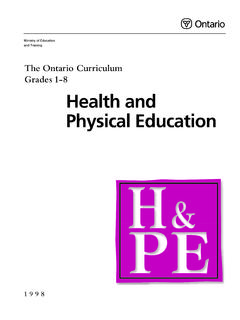
1 Printed on recycled paper05-021 ISBN 1-4249-0244-4 (vol. 1)ISBN 0-7794-9031-2 (set) Queen s Printer for Ontario, 2006P3550-EDU_Literacy_cover 3/24/06 1:06 PM Page 1A Guide to effective Literacy Instruction,Grades 4 to 6 Volume One: Foundations of Literacy Instruction for the Junior Learner1. The Junior Learner2. Knowledge and Skills Required for Literacy3. Principles of effective Literacy InstructionSubsequent volumes in the series will cover a range of topics, including assessment; planning instruction;the classroom environment and resources; instructional approaches in oral communication, reading,writing, and media Literacy .
2 And technology as it supports Literacy instruction and 3/24/06 1:06 PM Page 2A Guide to EffectiveLiteracy Instruction,Grades 4 to 6A Guide to EffectiveLiteracy Instruction,Grades 4 to 6A Multivolume Resource from the Ministry of EducationVOLUMEONEF oundations of Literacy Instruction for the Junior Learner2006 Literacy Eng V1 part 1 3/24/06 12:18 PM Page iLiteracy Eng V1 part 1 3/24/06 12:18 PM Page 3 CHAPTER1: 11 Introduction .. 12 Physical Development .. 13 Intellectual Development .. 13 Social and Emotional Development .. 16 Language Background .. 19 Family Involvement With the School .. 21 Learning Strengths and Needs.
3 21 Signature Page: Jim 24 CHAPTER2: KNOWLEDGE ANDSKILLSREQUIRED 27 Introduction .. 28 Oral Communication .. 31 Cueing Systems: How Language and Words Work .. 33 Characteristics of Texts .. 36 The Reading Process .. 41 The Writing Process .. 42 Strategies to Make Meaning in Reading and Writing .. 44 Higher-Order Thinking .. 55 Tools and Technologies .. 65 Developmental Stages for Literacy .. 67 CONTENTSUne s rie de publications quivalente est disponible en fran ais sous le titre suivant : Guide d enseignement efficace en mati re de litt ratie de la 4e la 6eann Eng V1 part 1 3/24/06 12:18 PM Page iiiCHAPTER3: PRINCIPLES 75 Introduction.
4 76 effective Literacy Instruction Is Research Based .. 76 effective Literacy Instruction Is Differentiated .. 81 effective Literacy Instruction Is Collaborative .. 92 effective Literacy Instruction Leads to Learning That Is Transferable and Enduring .. 104 Planning Checklist for effective Literacy Instruction .. 107 Sample Lesson Applying Literacy Skills to Content Area Subjects .. 115 Introduction .. 117 Skill-Building Strategies and Tools .. 117 REFERENCES 157A GUIDE TO effective Literacy INSTRUCTION, GRADES 4 TO 6 VOLUME ONEivLiteracy Eng V1 part 1 3/24/06 12:18 PM Page ivIn order to improve the achievement of all students from Junior Kindergarten to Grade 6,the Ontario Ministry of Education requires elementary schools to participate in a regularcycle of assessment, target setting, and improvement planning.
5 These practices, combinedwith effective instruction, have been shown by research to be key factors in improvingthe achievement levels of the spring of 2004, the Ministry of Education convened two bilingual expert panels one for Literacy and one for mathematics to report on effective instructional practices in Literacy and mathematics in the junior Literacy report, Literacy for Learning: The Report of the Expert Panel onLiteracy in Grades 4 to 6 in Ontario, was published in October 2004. A Guide to effective Literacy Instruction, Grades 4 to 6, is based on the research and advice set out in the expert panel report.
6 It provides Ontario teachers with a framework and practical resources for planning a successful Literacy program that equipsall junior students to grow as strategic readers, writers, talkers, listeners, and multivolume guide was written by teachers for teachers. It builds on the strengthsthat exist in Ontario s education system and supports the crucial work that teachers doevery day to equip their students to become confident and successful learners. It isintended for all teachers of Grades 4 to 6 in the English-language school system, includingthose responsible for French immersion, English as a second language, special education,and specific subjects.
7 A similar reference guide, reflecting research and effective practicesin Literacy instruction in the French language, has been developed for educators inOntario s French-language school portions of this guide rely heavily on, or are actually taken from, the expert panelreport. The ministry gratefully acknowledges the panel s permission to use excerptsfrom its report in this guide without attribution. (Citations for direct quotations refersimply to Literacy for Learning.) Although the report and the guide cover similar ground,each has a different focus. The report presents current research and best practices, whilethis guide suggests practical ways in which the research can be applied in the charged with improving the Literacy learning of students in the junior gradesare strongly encouraged to use the guide in conjunction with the expert panel s Eng V1 part 1 3/24/06 12:18 PM Page 1 Literacy Eng V1 part 1 3/24/06 12.
8 18 PM Page 2In this guide, literacyis defined as the ability to use language and images in rich andvaried forms to read, write, listen, speak, view, represent, and think critically about enables us to share information, to interact with others, and to interpret variouskinds of texts. It connects individuals and communities and is an essential tool for personal growth and active participation in a democratic society. The development of Literacy is a complex process that involves building on prior knowledge, culture, and experiences in order to instil new knowledge and deepen understanding. THEIMPORTANCE OFLITERACYINSTRUCTION IN THEJUNIORGRADESTo be successful personally and professionally, today sstudents need to be independent, flexible, creative, critical, and strategic thinkers and need to be proficient in many literacies that is,they must be able to understand and communicate withpeople from diverse backgrounds by means of a wideand constantly expanding range of texts, media, andcommunication methods.
9 They need to be confidentin their learning and motivated to continue to learnthroughout their Literacy instruction is the backbone of teaching and learning in the junior grades. Althoughjunior learners may have a basic understanding of how to read and write, teachers need to teach thesestudents explicitly the specific skills that will help them understand the increasingly complex texts and concepts they will encounter in school. 3 INTRODUCTIONM ultiliteraciesThe term multiliteraciesis used in this guide to describe the increasinglydiverse ways in which ideas and information can be expressed andunderstood using conventional andinnovative text forms, symbols, andmedia.
10 Students need to become proficient at understanding and using a wide range of text forms, media, andsymbol systems in order to maximizetheir learning potential, keep pace withchanging technologies, and actively participate in the global on their first language, studentsdevelop skills in critical Literacy , visualliteracy, media Literacy , technological Literacy , cross-curricular literacies(involving music, mathematics, science,visual arts, and other subjects), and Literacy in other Eng V1 part 1 3/24/06 12:18 PM Page 3A GUIDE TO effective Literacy INSTRUCTION, GRADES 4 TO 6 VOLUME ONE4 Text: A Representation of IdeasThe word textas used in this guide means a representation of ideas that can be sharedover distance and time.