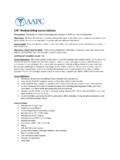
Transcription of Pain Quick Reference for ICD‐10‐CM
1 1 Copyright 2014 AAPC | 2480 South 3850 West Suite B | Salt Lake City, Utah 84120 Pain Quick Reference for ICD 10 CM Coding of acute or chronic pain in ICD 10 CM are located under category G89, Pain, not elsewhere classified. The subcategories are broken down by type, temporal parameter, and causation. Central pain syndrome Acute pain due to trauma Acute post thoracotomy pain Other acute postprocedural pain Chronic pain due to trauma Chronic post thoracotomy pain Other chronic postprocedural pain Other chronic pain Neoplasm related pain (acute) (chronic) Chronic pain syndrome There are many guidelines that relate to this category in ICD 10 CM.
2 general Coding Guidelines Codes in category G89 may be used in conjunction with codes from other categories and chapters to provider more detail about acute or chronic pain and neoplasm related pain, unless otherwise indicated in other guidelines. If the pain is not specified as acute or chronic, post thoracotomy, postprocedural, or neoplasm related, do not assign a code from category G89. 2 Copyright 2014 AAPC | 2480 South 3850 West Suite B | Salt Lake City, Utah 84120 EXAMPLE: John presents with neck pain. He states he has been suffering stiffness for a few days.
3 Cervicalgia A code from category G89 should not be assigned if the underlying diagnosis is known, unless the reason for the encounter is pain control/management and not management of the underlying condition. When an admission or encounter is for a procedure aimed at treating the underlying conditions, a code for the underlying condition should be assigned as the principal diagnosis. No code from category G89 should be assigned. Category G89 Codes as Principal or First listed Diagnosis Category G89 codes are acceptable as principal diagnosis or the first listed code: When pain control or pain management is the reason for the admission/encounter.
4 The underlying cause of the pain should be reported as an additional diagnosis, if known. When a patient is admitted for the insertion of a neurostimulator for pain control, assign the appropriate pain code as the principal or first listed diagnosis. When an admission or encounter is for a procedure aimed at treating the underlying condition and a neurostimulator is inserted for pain control during the same admission/encounter, a code for the underlying condition should be assigned as the principal diagnosis and the appropriate pain code should be assigned as a secondary diagnosis.
5 EXAMPLE: A patient presents with acute low back pain due to trauma for steroid injections. Acute pain due to trauma Low back pain Use of Category G89 Codes in Conjunction with Site Specific Pain Codes Codes from category G89 may be used in conjunction with codes that identify the site of pain if the category G89 code provides additional information. For example, if the code describes the site of the pain, but does not fully describe whether the pain is acute or chronic, then both codes should be assigned. The sequencing of category G89 codes with site specific pain codes is dependent on the circumstances of the encounter/admission as follows: 3 Copyright 2014 AAPC | 2480 South 3850 West Suite B | Salt Lake City, Utah 84120 If the encounter is for pain control or pain management, assign the code from category G89 followed by the code identifying the specific site of pain.
6 If the encounter is for any other reason except pain control or pain management, and a related definitive diagnosis has not been established by the provider, assign the code for the specific site of pain first, followed by the appropriate code from category G89. EXAMPLE: A patient presents for evaluation of his chronic bilateral knee pain. The pain has been becoming more severe lately, prompting the visit. The patient will be sent for further testing. Pain in the right knee Pain in the left knee Other chronic pain Postoperative Pain The provider s documentation should be used to guide the coding of postoperative pain.
7 The default for post thoracotomy and other postoperative pain not specified as acute or chronic is the code for the acute form. Routine or expected postoperative pain immediately after surgery should not be coded. Postoperative pain not associated with a specific postoperative complication is assigned to the appropriate postoperative pain code in category G89. Postoperative pain associated with a specific postoperative complication is assigned to the appropriate code(s) found in Chapter 19, Injury, poisoning, and certain other consequences of external causes.
8 If appropriate, use additional code(s) from category G89 to identify acute or chronic pain. EXAMPLE: After a procedure, a patient complains continuously of severe post thoracotomy pain. The pain does not abate with medication, so the patient is sent for testing. Acute post thoracotomy pain Chronic Pain Chronic pain is classified to subcategory There is no time frame defining when pain becomes chronic pain. The provider s documentation should be used to guide use of these codes. 4 Copyright 2014 AAPC | 2480 South 3850 West Suite B | Salt Lake City, Utah 84120 5 Copyright 2014 AAPC | 2480 South 3850 West Suite B | Salt Lake City, Utah 84120 Neoplasm Related Pain Code is assigned to pain documented as being related, associated or due to cancer, primary or secondary malignancy, or tumor.
9 This code is assigned regardless of whether the pain is acute or chronic. This code may be assigned as the principal or first listed code when the stated reason for the admission/encounter is documented as pain control/pain management. The underlying neoplasm should be reported as an additional diagnosis. When the reason for the admission/encounter is management of the neoplasm and the pain associated with the neoplasm is also documented, code may be assigned as an additional diagnosis. It is not necessary to assign an additional code for the site of the pain.
10 EXAMPLE: A patient presents for bone pain related to bilateral, central breast cancer that has metastasized. She is being treated today for the pain. Neoplasm related pain (acute) (chronic) Malignant neoplasm of central portion of right female breast Malignant neoplasm of central portion of left female breast Secondary malignant neoplasm of unspecified site Chronic Pain Syndrome Central pain syndrome ( ) and chronic pain syndrome ( ) are different than the term chronic pain and therefore codes should only be used when the provider has specifically documented this condition.