Transcription of Parathormone (Parathyroid Hormone) - Quest Diagnostics
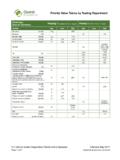
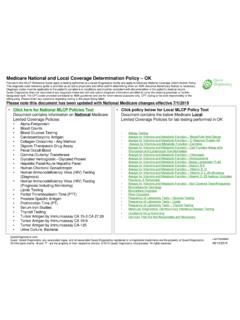
1 Medicare Local Coverage Determination PolicyCPT:CMS Policy for Florida, Puerto Rico, and Virgin IslandsLocal policies are determined by the performing test location. This is determined by the state in which your performing laboratory resides and where your testing is commonly view current limited coverage tests, reference guides, and policy view the complete policy and the full list of medically supportive codes, please refer to the CMS website referenceMedically Supportive ICD Codes are listed on subsequent page(s) of this (Parathyroid Hormone) Coverage Indications, Limitations, and/or Medical NecessityParathyroid hormone (PTH), a polypeptide hormone produced in the parathyroid gland, along with Vitamin D, are the principal regulators of calcium and phosphorus homeostasis. The most important actions of PTH are (1) rapid mobilization of calcium and phosphate from bone and the long-term acceleration of bone resorption, (2) increasing renal tubular reabsorption of calcium, (3) increasing intestinal absorption of calcium (mediated by an action on the metabolism of vitamin D), and (4) decreasing renal tubular reabsorption of phosphate .
2 These actions account for most of the important clinical manifestations of PTH excess or PTH is normally measured concomitantly with serum calcium levels. Abnormally elevated PTH values may indicate primary, secondary, or tertiary hyperparathyroidism. Abnormally low PTH levels may result from hypoparathyroidism and from certain malignant diseases such as squamous cell carcinoma of the lung, renal carcinoma, pancreatic carcinoma, or ovarian Parathormonetest will be considered medically necessary under any of the following circumstances: Evaluation of patients with a combination of clinical signs and symptoms of hyperparathyroidism such as weakness, fatigue, bone pain, confusion, depression, nausea, vomiting, polyuria, etc. in which parathyroid disease is suspected; Evaluation of patients with a combination of clinical signs and symptoms of hypoparathyroidism such as Chvostek ssign, Trousseau s sign, dysphagia, tetany, increased deep tendon reflexes, etc.
3 In which parathyroid disease is suspected; Evaluation of a patient with an abnormal total calcium level; To distinguish nonparathyroidfrom parathyroid causes of hypercalcemia; Evaluation of patients with previously diagnosed hyper or hypoparathyroidism; Evaluation of patients with a magnesium deficiency and/or excessive Vitamin D; Evaluation of patients with ectopic parathyroid hormone producing neoplasms; To evaluate and monitor therapy of secondary hyperparathyroidism in chronic renal disease and/or status post renal transplantation; Immediate follow-up of patients that have undergone thyroidectomy and/or parathyroidectomy; and Evaluation of a patient with osteoporosis to rule out Guidelines CPT 83970 should not be billed with more than one (1) unit of service per day. It is expected that parathormonelevels for patients diagnosed with chronic kidney disease (CKD) will be performed according to Kidney/Dialysis Outcomes Quality Initiative (K/DOQI) clinical practice guidelines for bone metabolism and disease.
4 For stage 3 CKD patients with a glomerular filtration rate (GFR) of 30-59, it is expected that PTH level measurements will be performed every 12 months. For stage 4 CKD patients with a glomerular filtration rate (GFR) of 15-29, it is expected that PTH level measurements will be performed every 3 months. For stage 5 CKD patients with a glomerular filtration rate (GFR) less than 15 or dialysis, it is expected that PTH level measurements will be performed every 3 expected that the frequency of parathormonelevel measurements will be performed according to K/DOQI clinical guidelines. If the measurement of PTH levels exceed recommended frequencies, documentation may be reviewed tosupport the excess measurements. CPT:The ICD10 codes listed below are the top diagnosis codes currently utilized by ordering physicians for the limited coverage testhighlighted above that are also listed as medically supportive under Medicare s limited coverage policy.
5 If you are ordering this test for diagnostic reasons that are not covered under Medicare policy, an Advance Beneficiary Notice form is required. *Note Bolded diagnoses below have the highest utilizationMedicare Local Coverage Determination PolicyCMS Policy for Florida, Puerto Rico, and Virgin IslandsLocal policies are determined by the performing test location. This is determined by the state in which your performing laboratory resides and where your testing is commonly : This diagnosis code reference guide is provided as an aid to physicians and office staff in determining when an ABN (Advance Beneficiary Notice) is necessary. Diagnosis codes must be applicable to the patient s symptoms or conditions and must be consistent with documentation in the patient s medical record. Quest Diagnostics does not recommend any diagnosis codes and will only submit diagnosis informationprovided to us by the ordering physician or his/her designated staff.
6 The CPT codes provided are based on AMA guidelines and are for informational purposes only. CPT coding is the sole responsibility of the billing party. Please direct any questions regarding coding to the payer being updated:Visit view current limited coverage tests, reference guides, and policy view the complete policy and the full list of medically supportive codes, please refer to the CMS website reference , Quest Diagnostics , any associated logos, and all associated Quest Diagnostics registered or unregistered trademarks are the property of Quest Diagnostics . All third-party marks and are the property of their respective owners. 2016 Quest Diagnostics Incorporated. All rights is a frequency associated with this test. Please refer to the Limitations or Utilization Guidelines section on previous page(s). 10 Primary Secondary hyperparathyroidism, not elsewhere Hyperparathyroidism, Disorder of phosphorus metabolism, Disorders of magnesium metabolism, Other disorders of calcium Age-related osteoporosis without current pathological Chronic kidney disease, stage 2 (mild) Chronic kidney disease, stage 4 (severe) Chronic kidney disease, stage End stage renal Chronic kidney disease, Secondary hyperparathyroidism of renal Other Other Kidney transplant statusParathormone (Parathyroid Hormone)