Transcription of Peer Support Services HIPAA Code Detail Code …
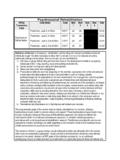
1 peer Support Services HIPAA Transaction Code Code Detail Code Mod1 Mod2 Mod3 Mod4 Rate Practitioner Level 4, In-Clinic H0038 HQ U4 U6 $ Practitioner Level 5, In-Clinic H0038 HQ U5 U6 $ Practitioner Level 4, Out-of-Clinic H0038 HQ U4 U7 $ peer Support Services Practitioner Level 5, Out-of-Clinic H0038 HQ U5 U7 $ Definition of Service: This service provides structured activities within a peer Support center that promote socialization, recovery, wellness, self-advocacy, development of natural supports, and maintenance of community living skills. Activities are provided between and among individuals who have common issues and needs, are consumer motivated, initiated and/or managed, and assist individuals in living as independently as possible. Activities must promote self-directed recovery by exploring consumer purpose beyond the identified mental illness, by exploring possibilities of recovery, by tapping into consumer strengths related to illness self-management (including developing skills and resources and using tools related to communicating recovery strengths, communicating health needs/concerns, self-monitoring progress), by emphasizing hope and wellness, by helping consumers develop and work toward achievement of specific personal recovery goals (which may include attaining meaningful employment if desired by the individual), and by assisting consumers with relapse prevention planning.
2 A Consumer peer Support Center may be a stand-alone center or housed as a program within a larger agency, and must maintain adequate staffing Support to enable a safe, structured recovery environment in which consumers can meet and provide mutual Support . Target Population Adults with serious mental illness or co-occurring mental illness and substance related disorders Adolescents transitioning into adulthood with SED or co-occurring SED and substance related disorders Benefit Information Available to all Ongoing Core Customers. Requires a MICP New Episode Request or Update Request (to add as a single service to an existing authorization). Utilization Criteria Available to those with LOCUS scores: 1: Recovery Maintenance and Health Management 2: Low Intensity Community-Based Services 3: High Intensity Community-Based Services 4: Medically Monitored Non-Residential Ordering Practitioner Physician, Psychologist, Physician s Assistant, Advanced Practice Registered Nurse (Clinical Nurse Specialist or Nurse Practitioner), LPC, LMFT, LCSW Unit Value 15 minutes Initial Authorization 3600 units Re-Authorization 3600 units Maximum Daily Units 96 Authorization Period 180 days UAS: Budget and Expense Categories peer Support Services Provider 138 Adult Mental Health 738 Adult Addictive Diseases Admission Criteria 1.
3 Individual must have a primary mental health issue; and one or more of the following: 2. Individual requires and will benefit from Support of peer professionals for the acquisition of skills needed to manage symptoms and utilize community resources; or 3. Individual may need assistance to develop self-advocacy skills to achieve decreased dependency on the mental health system; or 4. Individual may need assistance and Support to prepare for a successful work experience; or 5. Individual may need peer modeling to take increased responsibilities for his/her own recovery; or 6. Individual may need peer supports to develop or maintain daily living skills. Continuing Stay Criteria 1. Individual continues to meet admission criteria; and 2. Progress notes document progress relative to goals identified in the Individualized Recovery/Resiliency Plan, but treatment/recovery goals have not yet been achieved.
4 Discharge Criteria 1. An adequate continuing care plan has been established; and one or more of the following: 2. Goals of the Individualized Recovery Plan have been substantially met; or 3. Consumer/family requests discharge; or 4. Transfer to another service/level is more clinically appropriate. Service Exclusions Crisis Stabilization Program (however, those utilizing transitional beds within a Crisis Stabilization Program may access this service). Clinical Exclusions 1. Individuals diagnosed with a Substance-Related Disorder and no other concurrent mental illness; or 2. Individuals with the following conditions are excluded from admission unless there is clearly documented evidence of a psychiatric condition overlaying the primary diagnosis: mental retardation, autism, organic mental disorder, or traumatic brain injury Additional Service Criteria: A. Required Components 1.
5 A peer Supports service may operate as a program within: A freestanding peer Support Center A peer Support Center that is within a clinical service provider A larger clinical or community human service provider administratively, but with complete programmatic autonomy. 2. A peer Supports service must be operated for no less than 3 days a week, no less than 12 hours a week, no less than 4 hours per day, typically during day, evening and weekend hours. Any agency may offer additional hours on additional days in addition to these minimum requirements. 3. The governing board of a freestanding peer Center must be composed of 75% consumers and represent the cultural diversity of the population of the community being served. The board is encouraged to have either board members or operating relationships with someone with legal and accounting expertise. For programs that are part of a larger organizational structure that is not consumer led and operated, the peer Supports Program must have an advisory body with the same composition as a freestanding peer Center s board.
6 The board or advisory committee must have the ability to develop programmatic descriptions and guidelines (consistent with state and federal regulations, accreditation requirements, and sponsoring agency operating policies), review and comment on the peer Support Program s budgets, review activity offerings, and participate in dispute resolution activities for the program. 4. Individuals participating in the service at any given time must have the opportunity to participate in and make decisions about the activities that are conducted or Services offered within the peer Supports program, and about the schedule of those activities and Services , as well as other operational issues. 5. Regardless of organizational structure, the service must be directed and led by consumers themselves. 6. peer Supports may include meals or other social activities for purpose of building peer relationships, but meals cannot be the central or core activity offered.
7 The focus of the service must be skill maintenance and enhancement and building individual consumer s capacity to advocate for themselves and other consumers. 7. peer Supports cannot operate in isolation from the rest of the programs within the facility or affiliated organization. The Program Leader must be able to call multidisciplinary team meetings regarding a participating individual s needs and desires, and a Certified peer Specialist providing Services for and with a participating individual must be allowed to participate in multidisciplinary team meetings. 8. Out-of-Clinic may only be billed when: Travel by the practitioner is to a non-contiguous location; and/or Travel by the practitioner is to a facility not owned, leased, controlled or named as a service site by the agency who is billing the service(excepting visits to Shelter Plus sites); and/or Travel is to a facility owned, leased or controlled by the agency billing the service, but no more than 6 individuals are being served in the course of that day by a single practitioner in non-group Services ; and/or Travel is to a facility owned, leased, controlled or named as a service site by the agency, but no more than 24 individuals are being served in groups at that site in the course of a day.
8 If the service does not qualify to be billed as "out of clinic," then the "in-clinic" rate may still be billed. B. Staffing Requirements 1. The following practitioners can provide peer Support Services : Practitioner Level 4: LMSW; LAPC; LAMFT; Psychologist/LCSW/LPC/LMFT s supervisee/trainee with at least a Bachelor s degree in one of the helping professions such as social work, community counseling, counseling, psychology, or criminology, functioning within the scope of the practice acts of the state; and CPSs and PPs with at least a Bachelor s degree in one of the helping professions such as social work, community counseling, counseling, psychology, or criminology. Practitioner Level 5: CPS and PP under supervision of a Physician, Psychologist, LCSW, LPC, LMFT, RN, APRN, PA, LMSW, LAPC, or LAMFT 2. The individual leading and managing the day-to-day operations of the program, the Program Leader, must be a Georgia-certified peer Specialist, who is a CPRP or can demonstrate activity toward attainment of the CPRP credential.
9 3. The Program Leader must be employed by the sponsoring agency at least FTE. 4. The Program Leader and Georgia-certified peer Specialists in the peer Supports program may be shared with other programs as long as the Program Leader is present at least 75% of the hours the peer Supports program is in operation, and as long as the Program Leader and the Georgia- certified peer Specialists are available as required for supervision and clinical operations, and as long as they are not counted in consumer to staff ratios for 2 different programs operating at the same time. 5. Services must be provided and/or activities led by staff who are Georgia-certified peer Specialists or other consumers under the supervision of a Georgia-certified peer Specialist. A specific activity may be led by someone who is not a consumer but is an invited guest. 6. There must be at least 2 Georgia-certified peer Specialists on staff either in the peer Supports Program or in a combination of peer Supports and other programs and Services operating within the agency.
10 7. The maximum face-to-face ratio cannot be more than 30 consumers to 1 Certified peer Specialist based on average daily attendance in the past three (3) months of consumers in the program. 8. The maximum face-to-face ratio cannot be more than 15 consumers to 1 direct service/program staff, based on the average daily attendance in the past three (3) months of consumers in the program. 9. All staff must have an understanding of recovery and psychosocial rehabilitation principles as defined by the Georgia Consumer Council and psychosocial rehabilitation principles published by USPRA and must possess the skills and ability to assist other consumers in their own recovery processes. C. Clinical Operations 1. This service must operate at an established site approved to bill Medicaid for Services . However, individual or group activities may take place offsite in natural community settings as appropriate for the Individualized Recovery Plan (IRP) developed by each consumer with assistance from the Program Staff.