Transcription of Personal Performance Commitments: Setting …
1 Personal Performance Commitments: Setting Individual Objectives for Continuous Improvement Gregory C. Kesler Competitive Human Resources Strategies, LLC. 284 Briar Brae Road Stamford CT 06903. Kesler, 1992. Observations About Traditional Performance Appraisal Nearly every company we know is dissatisfied with its Performance appraisal program. Repeated efforts to re-design these programs have been disappointing. The assumptions about appraisal are fundamentally flawed. In most companies, Performance appraisals suffer from these basic problems: they are annual rituals rather than continuous, helpful tools at best they focus on short-term results they often lack substance.
2 Activities are confused with outcomes developmental coaching is an after-thought objectives are poorly set, usually in top down, mechanical fashion and they are not used as real work plans or control mechanisms therefore, they contribute little to greater self-management they are overly rigid and don't reflect the dynamic nature of the environment rarely do individual's objectives clearly tie to the direction of the business or to others with whom they must jointly work to satisfy customers Linkage between individual Performance plans needs to improve both horizontally.
3 Across functions, departments, etc. and vertically among the levels of organization. Sharing a single vision means allowing all contributors to directly relate their contribution to a single set of organizational outcomes. The linkage between the business plan and individual Performance management is an obvious need; many talk about it, but few do it. The traditional Performance appraisal is tied to the compensation administration cycle. Enthusiasm for pay-or- Performance , still mostly an elusive concept in a majority of companies, causes management to make Performance appraisal the role of the human resources department or, worse yet, personnel administrators.
4 It has become apparent to a number of companies that Performance management is a great deal more than compensation administration. It is becoming clear that in building competitive organizations, committed to continuous improvement, individual Performance management must become a more effective process for guiding and energizing self-management, tied to the vision and strategies of the business. Continuous Improvement and Performance The quality movement has contributed a great deal to competitive tactics, but with the exception of Xerox and a handful of other companies, it has not had a great deal of practical impact on individual Performance management.
5 Deming has criticized traditionally applied MBO approaches as contrary to sustained process improvement. He and others have made a persuasive case for focusing on process rather than today's business results. Most business people we work with relate to the idea of process improvement. Capable business process, like capable manufacturing process, creates predictability and repeatability of results. It's clear, but few are ready to make the leap of faith to focus all energies on process, while ignoring the expectations of stakeholders for the shorter term.
6 Balance and sustained focus on both are critical; there is no satisfactory option. Effective goal Setting for improvement will focus on both a) current business results and b) process improvement outcomes (capabilities) that can be measured over time; rather than in the form of new objectives every year, there needs to be an ongoing revision of targets with sustained focus on the same set of indicators. A New Performance Management Design Most efforts to fix appraisal programs focus on forms and programs rather than changing the way we manage Performance the way we plan, the way we provide direction and the way we control critical outcomes.
7 In many cases, there is nothing inherently wrong with the forms currently being used. (One company we know decided to use blank pieces of paper instead of forms to underscore the point.). We need a different perspective on Performance management entirely, one that is fundamentally designed to: link all functions, levels and people to the same set of company-wide Performance commitments integrate short-term (one year) outcomes to long-term (3 to 5 year). outcomes, with sustained measurement balance measures for business results and process improvements be part of a way of managing the business day-in and day-out, rather than a personnel program create energy and commitment among people to perform The approach must be to create a set of Personal Performance commitments throughout the organization linked together, and linked to a future business plan, that are used to empower people and that are used to hold them accountable.
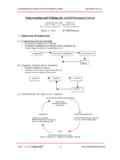
8 A Process Framework The process for defining linked, Personal Performance plans must start with a set of company-wide outcomes or critical success factors. These company goals for the business should have a 3 to 5 year perspective, agreed to by at least the top layer or two of managers in the business. And they should have a micro quality to them. (We have written elsewhere on a team process for long-term goal Setting for business units and have argued individual Performance management should start with these kinds of practices.)
9 Performance management usually need to be planned and measured in twelve- month increments; but each twelve-month horizon should be a logical extension of the last, rather than a new annual administrative ritual or cycle; and the success factors should not change frequently. The Translation Process The challenge is to create a cascade process of goal translation through the company, from a broad set of success factors for the entire business progressively toward a set of micro or Personal Performance commitments for each person in the company for which they have played a very active role in Setting .
10 The general manager of the unit poses a question to his or her team as a group: What are the critical accomplishments for the next twelve months that will be required to support our top 5 to 10 business goals for the next 3 to 5 years. Individual managers are responsible for identifying the key outcomes of their plan. Each manager prepares a draft of Personal outcome areas and exchanges them with his or her peers and the general manager. Both team and one-on-one negotiations occur to set the actual targets (how high the bar is set) and clarify ownership.