Transcription of Personal Protective Equipment POLICY
1 -1- Personal Protective Equipment (PPE). (Enter Company Name) hereinafter referred to as "The Company concerned about the protection of its employees from occupational injuries and illnesses. All employees of The Company have and assume the responsibility of working safely. The objective of this program is to: Provide safety standards specifically designed to cover Personal Protective Equipment (PPE). Ensure that each employee is trained and made aware of the safety procedures which are associated with Personal Protective Equipment (PPE). The Company (here after called THE COMPANY) knows that safe employees and improved employee morale are but a couple of the many benefits of working safely and having an effective safety program. Personal Protective Equipment (here after called PPE) is one tool THE COMPANY uses in their effort to eliminate on the job injuries and illnesses. Our standards require that PPE be used by employees whenever workplace hazards are discovered that could damage any part of the body.
2 In addition, THE COMPANY requires all employees to wear PPE, such as but not limited to, safety glasses, face shields, safety shoes, hearing protection (ear plugs/ear muffs), gloves, etc. as required by their job duties. PPE is to be used as a tool to eliminate and/or reduce the hazards employees face in their daily job duties. NOTE: PPE is not to be used and will not be used as a substitute for safe work practices, machine guards, or other controls designed by Equipment manufacturers or other engineering sources. PPE is to be used in conjunction with these controls to increase employee protection. This program serves as a reinforcement of THE COMPANY commitment to the safety and health of its employees. Again, PPE is a tool, which when used correctly, reduces the hazards employees face on the job. Conduct a Hazard Assessment You are required to conduct a hazard assessment of each job site to determine if hazards are present or likely to be present which require the use of PPE.
3 Help us out, you have to work on these job sites! If hazards or the likelihood of hazards are found, you must do the following: Use the PPE that will protect you from the hazards identified. Communicate the information found to other employees that will be affected by the hazards. Make certain selected PPE properly fits Pre-job briefings provide good opportunities to perform the needed Personal Protective Equipment (PPE). hazard assessment, which should also be done whenever there are significant changes to or problems with the work to be done. It is the responsibility of all departments to certify that hazard assessments are being properly performed. Personal Protective Equipment POLICY -2- Selection of PPE. Once the hazards of a workplace have been identified, the Safety Program Manager will determine if the hazards can first be eliminated or reduced by methods other than PPE, , methods that do not rely on employee behavior, such as engineering controls.
4 If such methods are not adequate or feasible, the Safety Program Manager will determine the suitability of the PPE presently available, and as necessary, will select new or additional Equipment that ensures a level of protection greater than the minimum required to protect our employees from the hazards. Care will be taken to recognize the possibility of multiple and simultaneous exposure to a variety of hazards. Adequate protection against the highest level of each of the hazards will be recommended for purchase. All Personal Protective clothing and Equipment will be of safe design and construction for the work to be performed and will be maintained in a sanitary and reliable condition. Only those items of Protective clothing and Equipment that meet NIOSH or ansi (American National Standards Institute) standards will be procured or accepted for use. Newly purchased PPE must conform to the updated ansi standards that have been incorporated into the PPE regulations as follows: Eye and Face Protection ansi Head Protection ansi Foot Protection ansi Hand Protection (There are no ansi standards for gloves; however, selection must be based on the performance characteristics of the glove in relation to the tasks to be performed.)
5 Use and Maintenance PPE is not to be used for purposes other than its intended use. For example, do not use a hard-hat as a hammer or a fall-protection harness as a tow-rope. Employees must inspect each piece of Equipment to make sure it is free of cracks, broken components or damaged components before and after each use. Store PPE in safe locations so that the PPE will not be damaged when it is not in use. PPE used properly, maintained properly, stored properly, and taken out of service when its useful life has expired will be more beneficial to the wearer. Eye and Face Protection- Regulatory requirements are contained in 29 CFR On any THE COMPANY job site when employees are exposed to any eye and/or face hazard ALL. EMPLOYEES MUST BE WEARING EYE AND/OR FACE PROTECTION. Employees exposed to any eye or face hazards such as, flying particles, liquid chemicals, putties, caulking, acids or other caustic liquids, along with injurious light radiation (such as Welding arcs) are required to wear the appropriate eye and face protection.
6 The specific work place hazard determines what type of Protective Equipment shall be worn. Description and Use of Eye/Face Protectors a) Safety Glasses. Safety eyeglasses (spectacles) are made with safety frames, tempered glass or plastic lenses, temple and side shields. Safety glasses provide eye protection from moderate impact and particles encountered in job tasks such as grinding, scaling, woodworking, etc. Safety glasses are also available in prescription form for those persons who need corrective glasses. b) Safety Goggles. Vinyl framed goggles of soft pliable body design provides adequate eye protection from many hazards such as hazardous chemicals. These goggles are available with clear or tinted lenses, and perforated, port vented or non-vented frames. Safety goggles provide superior protection to spectacles and may be worn in combination with spectacles or corrective lenses to insure protection along with proper vision.
7 Personal Protective Equipment POLICY -3- c) Face Shields. These normally consist of adjustable headgear and face shield of tinted/transparent acetate or polycarbonate materials. Face shields are available in various sizes, tensile strength, impact/heat resistance and injurious radiation filtering capacity. Face shields will be used in operations when the entire face needs protection and should be worn to protect eyes and face against flying particles, metal sparks, and chemical/biological splash. Face shields must always be worn over safety glasses or goggles. They must never be worn alone. The following Eye and Face Protection Chart describes some hazards that might be encountered and the proper Protective Equipment to be used. If unsure of the proper protection, ask a supervisor or safety specialist. Table 1. Eye and Face Protection Selection Chart Source Assessment of Hazard Protection IMPACT -- Chipping, grinding Flying fragments, Spectacles with side protection, goggles, machining, masonry work, woodworking, objects, large chips, face shields.
8 See notes (1), (3), (5), (6), sawing, drilling, chiseling, powered particles sand, dirt, etc (10). For severe exposure, use faceshield. fastening, riveting, and sanding CHEMICALS -- Acid and chemicals Splash Goggles, eyecup and cover types. For handling, degreasing plating severe exposure, use face shield. See notes (3), (9). Irritating mists Special-purpose goggles. DUST -- Woodworking, buffing, general Nuisance dust Goggles, eyecup and cover types. See note dusty conditions (8). Notes to Eye and Face Protection Selection Chart: (1) Care should be taken to recognize the possibility of multiple and simultaneous exposure to a variety of hazards. Adequate protection against the highest level of each of the hazards should be provided. Protective devices do not provide unlimited protection. (3) Faceshields should only be worn over primary eye protection (spectacles or goggles). (5) As required by the standard, persons whose vision requires the use of prescription (Rx) lenses must wear either Protective devices fitted with prescription (Rx) lenses or Protective devices designed to be worn over regular prescription (Rx) eyewear.
9 (6) Wearers of contact lenses must also wear appropriate eye and face protection devices in a hazardous environment. It should be recognized that dusty and/or chemical environments may represent an additional hazard to contact lens wearers. (8) Atmospheric conditions and the restricted ventilation of the protector can cause lenses to fog. Frequent cleansing may be necessary. (9) Ventilation should be adequate, but well protected from splash entry. Eye and face protection should be designed and used so that it provides both adequate ventilation and protects the wearer from splash entry. (Table 2 - 1 is adapted from the OSHA General Industry Standard for PPE -- 29 CFR ). If flying objects are present, such as saw dust and/or wood particles, eye wear with side protection is required to be used. Employees who wear prescription lenses while engaged in operations that may present an eye hazard are to wear eye protection designed to fit over their prescription glasses without disturbing the proper positioning of their prescription lenses or the over-sized Protective lenses.
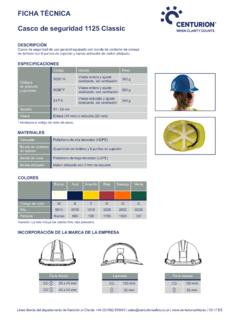
10 Prescription glasses with approved safety lenses, frames, and non-removable side shields may be used as well. The employee is to decide which eye Personal Protective Equipment POLICY -4- protection tool they would rather use. The employee may consult their registered optometrist for help in selecting such prescription safety glasses. Each piece of eye and face Protective Equipment is required by OSHA to: Have the manufacturers identity clearly marked. Be reasonably comfortable. Fit properly. Be durable. Be capable of being cleaned and disinfected. Be easily cleaned and disinfected. Be in good condition. Head Protection-Regulatory requirement are contained in 29 CFR Employees are to wear the proper head protection where there is a potential hazard of falling objects, where overhead work is being performed, or when heavy- Equipment operations are being performed in the immediate work area.