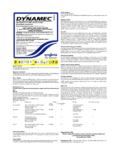
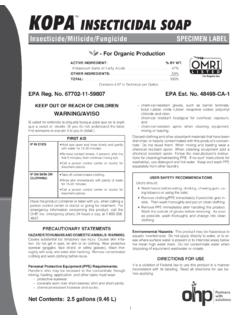
Transcription of Polytrin P 440 EC - Triachem
1 Mode of ActionPolytrin P contains two components:- Profenofos "Q": This is the more purified profenofos molecule with adistinctly less smell than other profenofos molecules, is a non-systemicinsecticide with contact and stomach action. It has ovicidal action onlepidopterous eggs (Heliothis and others). It easily penetrates foliar tissueand kills all sucking insects on the untreated side of the leaves(translaminar effect)- Cypermethrin: A non-systemic insecticide with strong contact action,rapid knock-down effect and excellent residual activity. It has repellenteffect on flying of ActivityPolytrin P is a broad spectrum insecticide. Both components, thoughchemically different, are especially active on caterpillars. In addition,profenofos provides some control of non-resistant aphids, spider mitesand other sucking pests. In cotton it is recommended for the completecontrol of the pest complex including sucking insects and spider , TomatoesTypical pests: - Leaf feeding caterpillars (Mamestra, Plutella, Heliothis, Keiferia, etc.)
2 - Sucking insects (aphids, bugs, jassids, thrips, white flies)- Mites (Tetranychus)Cotton BollwormsHeliothis sp- American bollwormEarias sp- Spiny bollwormDiparopsis sp- Red bollwormPectinophora sp- Pink bollwormCryptophlebia sp - False codling mothLeaf-eaters (leafworms)Spodoptera sp- leafwormsXanthodes graellsii - Sudan leafwormTrichoplusia ni - Cabbage looperCosmophila sp- Cotton looperSucking insectsAphis gossyipii - Cotton aphidThrips sp- thripsEmpoasca sp- Cotton jassidsBemisia tabaci- whitefliesHelopeltis sp- Helopeltis bugLygus sp- CapsidDysdercus sp- Cotton stainerCalidea dregii- blue cotton bugSpider mitesTetranychus sp- red spider miteTarsonemid sp- broad miteDIRECTIONS FOR USETo avoid risks to man and the environment, comply with theinstructions for The recommended dosage rate is - litres per ha ( - ).Cotton:Apply 100 ml - 150 ml per 20 litres of water - one knapsack sprayer - atleast minimum of 200 , CottonApply 30 ml per 15-litre knapsack (500 litres water/ha).
3 For dense foliageuse 25 ml per 15-litre knapsack (at least 600 litres of water per hectare).Apply 40 ml per 20 litre-knapsack (500 litres of water per ha). For densefoliage apply 30 ml per 20-litre knapsack sprayer (600 litres of water perhectare). Timing: Start treatment when the locally established economic injurylevel is reached or at first signs of sucking pest infestation; repeat asnecessary. In general, small larvae are easier to control than older apply at set intervals or on increasing infestation levels(according to egg and larvae counts). Apply as a protective sprayprogram on a 14 day schedule. Spray early morning to mid morning andlate Wet the whole plant thoroughly but avoid run-off and spray drift tonon-target sites. Treat only when there is little wind or no Do not spray during the hot hours of the day, if the foliage is wet or ifrain is Do not overdose by overlapping applications or by exceeding therecommended : Polytrin P should not be mixed with other tolerance: When used as recommended, Polytrin P is welltolerated by all vegetable crops and cotton.
4 In case of doubt check croptolerance Pest ManagementMonitor beneficials and pests and use local thresholds. If severaltreatments are required against the same pest, alternate products withdifferent modes of and Spray volume:Field crops: - ground application:Tractor sprayers with boom and nozzles, knapsack sprayers and motorisedmistblowers are recommended. Use at least 200 of water; thoroughcoverage of dense foliage requires 500 For aerial application use20-30 litres spray mixture per hectare (8-12 ). Make sure theequipment is properly calibrated to give even distribution at the correctvolume. Wash all equipment thoroughly after use. MixingAdd the measured quantity of concentrate to clean water in the halffilled spray tank. Maintain agitation while topping up. Always stir thespray mixture well and apply within a few hours. Do not pre-mix in each spray batch intervalCropDaysTomato, Cucurbits7 Cotton14 Operator SafetyPolytrin P is harmful upon ingestion, skin absorption and any contact with skin, eyes and clothing.
5 Do not breath spray or repeated exposure to spray mist may be harmful. Do noteat, drink or smoke during work; wash hands and face thoroughly protective clothing, , overalls, face shield, gloves, gumboots, etc.,when handling the product. Change contaminated clothing immediatelyand wash before re-use. After work change clothes and wash hands andexposed parts of body thoroughly with soap and water. Colour band: GREENREGISTRATION NO. PCPB(T) 0059 Emulsifiable concentrateGUARANTEE; Profenofos 400 g/lt.+Cypermethrin 40 AND AGRICULTURAL CLASSKEEP LOCKED OUT OF REACH OF CHILDRENREAD THE LABEL AND ATTACHED LEAFLET BEFOREUSES helf Life:At least 2 years from date of manufacture inoriginal unopened TO USER:This pest control product is to be usedonly in accordance with the directions on this label. It isan offence under the Pest Control Products Act to use orstore a pest control product under unsafe conditions. = registered trademark of a Syngenta Group CompanyManufactured by: Syngenta Crop Potection AG, Basle,SwitzerlandDistributor: Syngenta East Africa LtdP.
6 O. Box 3039300100 - NAIROBI - KENYATel: 254-020-532750/532983 Fax: 254-020-532753/535456 Foliar insecticide with acaricidal properties for usein cucrbits, tomatoes and OFAGROCHEMICALSASSOCIATION OF KENYAMEMBERSHIP NO. 226 PolytrinP440 EC Storage: Store in original tightly closed containers away from sun anddamp in a well-ventilated place away from food and feed under lock andkey. Avoid storage above 350C. Keep out of reach of children,unauthorized persons and and Container DisposalDispose of surplus product on a landfill site approved for pesticides orbury in a safe place away from water supplies. Dilute surplus applicationmixture and pour it broadcast on fallow land. Empty metal containers areto be flattened, perforated and disposed of on a landfill site or buried ina safe place. Dispose of plastic containers on a landfill site or burn at asafe place. For drums take re-cycling in account, otherwise crush and not re-use empty containers for any other purpose, especially not forstoring drinking water, food or and LeakageRemove heavily contaminated soil layer and bury at a safe place awayfrom water supplies.
7 Spillages: Soak up with sand, sawdust, soil or an oilbinding agent. Collect up the contaminated material thoroughly and buryin a safe place or put in a waste bin or plastic bag, mark and dispose of on a landfill site approved forpesticides. Treat spill areas with plenty of water. Spilt product should notbe and wildlifeDangerous to bees. Do not apply when bees are actively foraging in thearea. Application should be timed to give the maximum possible intervalbetween treatment and the next period of bee activity. Dangerous tofish. Do not contaminate water areas ( ponds, lakes, ditches,waterways, etc.). Birds feeding on treated area may be affected. Keep alllivestock out of freshly treated AID INSTRUCTIONSIf poisoning is suspected, stop work immediately and call a the patient in a well-ventilated area and strip off contaminatedclothing. Wash contaminated skin with soap and water, eyes with plentyof clean water. If the substance has been ingested, induce vomiting,provided the patient is conscious.
8 Do not administer anything by mouthto an unconscious to the physician: Inject intravenously 2-4 mg (adults) atropinesulphate. Repeat at 5-10 min. intervals until signs of atropinizationappear. The patient should be atropinized for 24-48 hours because ofcontinued possible absorption of the poison. If applied not later than 6hours, the additional injection of the oxime preparation may be INFORMATION Polytrin P is harmful upon ingestion, skin absorption and inhalation. Itcontains profenofos, a cholinesterase symptomsCholinergic overexcitation due to inhibition of cholinesterase laboratory conditions the following symptoms were observed inrats: dysponea, exopthalmus, curved posture, tonic-clonic muscle spasmand ruffled Class: II (moderately hazardous)Antidote: Atropine, in addition oxime preparations, preferablyTOXOGONIN, under medical to UserThis pest control product is to be used only in accordance with the direc-tions on the label. It is an offence under the Pest Control Products Act touse or store a pest control product under unsafe s RiskSeller's guarantee is limited to the terms set out on the label and subjectthereto, the buyer assumes the risk to persons or property arising fromthe use or handling of this product and accepts the product on using this product, please read the attached product labeland accompanying pesticides safely.
9 = registered trademark of a Syngenta Group Company, Basle,Switzerland = 2001 Syngenta Crop Protection AGManufactured by:Syngenta Crop Protection AG.,Basle, Switzerland.