Transcription of POST-MI - RxFiles
1 post -MITroubleshooting Practical IssuesOctober 2004 The RxFiles Academic Detailing Programin collaboration withDerek Jorgenson, Health Quality Council (HQC)701 Queen StreetSaskatoon City HospitalSaskatoon, SK S7K 0M7 Phone 306-655-8506 ; Fax 306-655-7980 Email: Message: Four types of medication (ACE-Inhibitors, beta-blockers,statins & ASA) have been shown to reduce cardiovascularrisk in POST-MI patients. 1 These benefits are in addition torisk factor management (eg. diet 2,3,4, lifestyle, exercise) andoccur regardless of the presence of hypertension,dyslipidemia, or LV dysfunction. Clinical judgment isessential to assess risk/benefit for individual are we doing in Saskatchewan?
2 An analysis of Saskatchewan dispensing rates by the HQCsuggests that important drugs are underutilized (See Figure 1).PRACTICAL ISSUES ACE Inhibitors (ACEI)Which patients will benefit? All post MI patients without contraindications 1 (indefinitely) Shown to reduce risk of CV events in POST-MI patients whoare high risk 5,6,7 (elderly, LV dysfunction); some benefit alsoin lower risk 8,9 patients ( young, no LV dysfunction) Beneficial when initiated soon after acute MI 1 (~first 24hrs) AHA 04 Initiation & dosing in patients with renal dysfunction 10 Ensure SCr is stable before initiating ACEI therapy Start with low doses, slowly titrating towards targets with closemonitoring. A moderate rise in SCr (that stabilizes within 1week) may occur after each dose increase.
3 (Of note: ACEI beneficial if existing renal impairment but may consider nephrologyconsult; trials exclude patients with high SCr ( >200umol/l TRACE). Check SCr, BUN, and lytes at baseline and 7-14 days after eachdose increase. If SCr rise (above baseline) is: 10 <30% - continue titration / no concern 30-50% decrease ACEI dose by 50% and recheck SCr in7-10 days. If SCr rise still >30%, stop the ACEI >50% stop ACEI When SCr rise is >30% consider investigating for renalartery stenosis and rule out other reversible causes. Common reversible causes include: heart failure, aggressivediuresis, volume depletion, NSAIDs/coxibs & dehydration. Potassium levels above during ACEI therapy shouldprompt reassessment of in patients with hyperkalemia Potassium should be before initiating Identify reversible causes of the baseline hyperkalemia: Concurrent NSAIDs/coxibs or potassium sparing diuretics eg.)
4 Spironolactone 11, dietary indiscretion -dietician counseling may be of angiotensin receptor blockers (ARBs) Acceptable alternative when ACEIs not tolerated 1 Studied only in POST-MI patients with LV dysfunction; valsartanat very high dosage showed equivalency to ACEI VALIANT 12;losartan at lower dose was less effective than an ACEI OPTIMAL 13 Combination of an ACEI + ARB no more effective but moreadverse effects than either ACEI or ARB alone VALIANTF igure 1: % of Sask. Patients on Target Therapy @90days * ~1,700 MI s/year; 18% on all 3 drugs at 1yr & 35% on none at 1year 2000-01;project 45 lives saved/year if benchmark 14 usage rates maintained long-term 15 PRACTICAL ISSUES Beta-blockers (BB)Which patients will benefit?
5 Shown to reduce all-cause mortality in all POST-MI patientsregardless of LV function, especially those at high risk (wheninitiated within 4 weeks ~ideally first 24hrs of MI and continued for up to 4 years) 1,16 Beta-blockers may be especially underutilized in the myths and preconceptions Many conditions that previously contraindicated the use of beta-blockers are not absolute . With cautious initiation and closemonitoring, benefits may outweigh the risks in the following17: COPD, diabetes, peripheral artery disease, & compensated HF;mild asthma (cardioselective BBs in those well controlled with inhaled steroids)18 PRACTICAL ISSUES StatinsWhich patients will benefit? ALL POST-MI patients appear to benefit from statin therapyregardless of lipid levels (HPS ~40% patients POST-MI history) 19, 1 AHA 04 Should high dose statins be used in acute MI?
6 Aggressive dose (atorvastatin 80mg OD) was better than moderatedose (pravastatin 40mg OD) when initiated <10 days after acuteMI and continued for 2 years. 20 PROVE IT {LDL achieved was : risk of adverse effects (liver, muscle) with aggressivestatin doses 20, 21,22 MIRACL. Potentially conflicting A-Z trial data 21}Monitoring Guidelines recommend baseline transaminase and CK levelsbefore starting any patient on a statin AHA 23, ATP III 24 Frequent laboratory monitoring may be necessary in patients athigh risk for adverse effects (ie. drug interactions, elderly, renal /hepatic dysfunction, high dose statins, niacin or fibrate combinations)PRACTICAL ISSUES ASA Recommend 81mg enteric coated daily (75mg-162mg) 1 AHA 04, 25 ATC 02 Consider H.
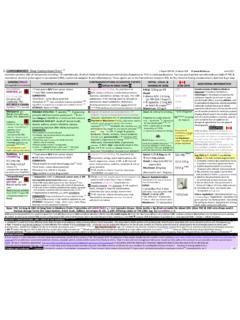
7 Pylori eradication and cytoprotection for patientsat high-risk of a GI bleed, even for 100mg ASA 26 Minimize 1,27 regular use of ibuprofen MOTRIN, ADVIL with ASAsince antiplatelet effects may be blocked (conflicting data 28) High-dose NSAIDs/COXIBs may be associated with adverseheart outcomes heart failure, MI (eg. rofecoxib VIOXX 29, 30; APPROVe)For specific drug & dosage considerations, see Page 2 - Table :85% BB & ACEI70% Statins Fiscal 1: POST-MI Drug & Dosage Considerations Prepared by D. Jorgenson, B. Jensen, L. Regier - - Oct 2004 POST-MI TARGET DOSES CONTROLLED TRIALS$/30dBENEFITSRISKSCOMMENTSACEIR amipril ALTACE 10mg HS HOPE; 5mg BID AIRE 31 Trandolapril MAVIK 4mg OD TRACE 6 Lisinopril ZESTRIL/PRINIVIL10mg OD GISSI-3 32(high dose) ~35mg OD ATLAS 33 (HF)Perindopril COVERSYL 8mg OD EUROPA 9 Enalapril VASOTEC 20mg OD CONSENSUS-II 34 Captopril CAPOTEN 50mg TID SAVE 7, BID in ISIS4 3541413065454852 all-cause mortality: 17-29% RRR whenstarted 2-16 days after event & continued for4-5 yrs in pts with LV dysfx AIRE, TRACE, SAVE;{TRACE: NNT=13 over 4yrs vs ,n=1749} prevents ventricular remodeling.
8 Proteinuria 16% RRR in all cause mortality when startedin high risk pts with remote history of MI andcontinued for 5 years HOPE ; NNT HOPE = 56 Adverse effectsinclude cough<10%,hypotension/dizzy ~2%,hyperkalemia~2-11%,renal insufficiency (in ptswith renal artery stenosis) &angioedema , Blacks 36;taste changes, rash; Rare:pancreatitis & blood dyscrasias. AHA STEMI Guidelines2004 suggest to use ACE inhibitors in all pts indefinitely. Most benefit if anterior infarction, pulmonary congestion or EF< , tachycardia, in the absence of hypotension (SBP<100mm Hg or < 30mm Hg below baseline) Contraindicated in pts with bilateral renal artery stenosis (or unilateral stenosis if only 1 kidney), history of angioedema to ACEI, & pregnancy Combo ACEI+ARB: option with persistent HF CHARM (more adverse effects & no greater efficacy VALIANT)ARBV alsartan DIOVAN160mg BID VALIANT 12 Candesartan ATACAND32mg OD CHARM (HF trial)37,388287 all-cause mortality.
9 Valsartan, captopril50mg TID,or combo equally effective VALIANT, n=14703, ~2yr proteinuria 39even in pts with SCr<265 40, 41 Angioedema (17 of 26 ptssafely put on ARB after ACEI)42;More: BP & SCr VS 3% VALIANTLess: cough VS 5% VALIANT,rash & taste changes than ACEI. VALIANT Alternative if ACEI not tolerated & HF/LVEF< (ARB: less cough & somewhat less angioedma) captopril 50mg TID reduced CV-death in POST-MI pts more than losartan 50mg OD OPTIMAAL - BLOCKERM etoprolol LOPRESSOR 100mg BID HJALMARSON 43 200mg SR OD MERIT-HF 44,45 Atenolol TENORMIN 100mg OD ISIS-1 46 Carvedilol COREG 25mg BID CAPRICORN 47 Propranolol INDERAL 60-80mg TID BHAT 48 Timolol BLOCADREN 10mg BID NMCG 49 Acebutolol & ISA MONITAN 200mg BID APSI 5016242058142522 all-cause mortality: 23% RRR when startedin any pt within 5-28 days of MI & continuedfor up to 4yr.
10 Meta-analysis: NNT=42 over 2yr (best long-term evidence with propranolol,metoprolol & timolol) FREEMANTLE n=24,974 16 sudden death, reinfarction & arrhythmias Less benefit: ISA agents (pindolol; acebutolol?) 1,51 Cardioselective agents ( ) preferred for mildasthma & diabetesAdverse effects 52include hypotension,dizziness, bradycardia,fatigue <10%, insomnia,vivid dreams, & sexualdysfunction ~4%;PAD, cold extremities;mask hypoglycemia . AHA STEMI Guidelines2004 suggest to use beta- blockers in all pts indefinitely {benefit less in low-risk pts eg. ~normal left ventricular fx, successful reperfusion, absence of significant ventricular arrhythmias} Contraindicated in pts with severe/poorly controlled asthma, 2nd or 3rd degree heart block, HR<50, SBP <90, & decompensated heart failure 53 some believe carvedilol better than metoprolol for HF but equivalent doses may not have been used COMET 54 CNS adverse effects (depression, impotence, fatigue) overestimated.