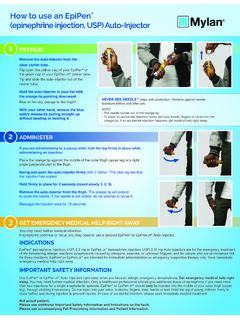
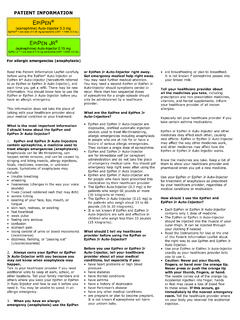
Transcription of PRESCRIBING INFORMATION INDICATIONS AND USAGE …
1 DESCRIPTIONEach EpiPen Auto-Injector delivers a single dose of mg epinephrine injection, USP, 1:1000 ( mL) in a sterile EpiPen Jr Auto-Injector delivers a single dose of mg epinephrine injection, USP, 1:2000 ( mL) in a sterile EpiPen Auto-Injector and EpiPen Jr Auto-Injector (henceforth referred to as EpiPen and EpiPen Jr Auto-Injector) each contain 2 mL epinephrine solution. Approximately mL remains in the auto-injector after activation and cannot be mL in the EpiPen Auto-Injector contains mg epinephrine, mg sodium chloride, mg sodium metabisulfite, hydrochloric acid to adjust pH, and Water for Injection. The pH range is mL in the EpiPen Jr Auto-Injector contains mg epinephrine, mg sodium chloride, mg sodium metabisulfite, hydrochloric acid to adjust pH, and Water for Injection.
2 The pH range is is a sympathomimetic catecholamine. Chemically, epinephrine is B-(3, 4-dihydroxyphenyl)-a-methyl-aminoethanol , with the following structure:Epinephrine solution deteriorates rapidly on exposure to air or light, turning pink from oxidation to adrenochrome and brown from the formation of melanin. Replace EpiPen and EpiPen Jr Auto-Injectors if the epinephrine solution appears and EpiPen Jr Auto-Injectors do not contain PHARMACOLOGYE pinephrine is the drug of choice for the emergency treatment of severe allergic reactions (Type I) to insect stings or bites, foods, drugs, and other allergens. It can also be used in the treatment of anaphylaxis of unknown cause (idiopathic anaphylaxis) or exercise-induced anaphylaxis. When given intramuscularly or subcutaneously it has a rapid onset and short duration of action.
3 Epinephrine acts on both alpha and beta adrenergic receptors. Through its action on alpha adrenergic receptors, epinephrine lessens the vasodilation and increased vascular permeability that occurs during anaphylaxis, which can lead to loss of intravascular fluid volume and hypotension. Through its action on beta-adrenergic receptors, epinephrine causes bronchial smooth muscle relaxation that helps alleviate bronchospasm, wheezing and dyspnea that may occur during anaphylaxis. Epinephrine also alleviates pruritus, urticaria, and angioedema and may be effective in relieving gastrointestinal and genitourinary symptoms associated with anaphylaxis because of its relaxer effects on the smooth muscle of the stomach, intestine, uterus, and urinary AND USAGEEpiPen and EpiPen Jr Auto-Injectors are indicated in the emergency treatment of allergic reactions (Type I) including anaphylaxis to stinging insects ( , order Hymenoptera, which include bees, wasps, hornets, yellow jackets and fire ants) and biting insects ( , triatoma, mosquitos), allergen immunotherapy, foods, drugs, diagnostic testing substances ( , radiocontrast media) and other allergens, as well as idiopathic anaphylaxis or exercise-induced anaphylaxis.
4 EpiPen and EpiPen Jr Auto-Injectors are intended for immediate administration in patients, who are determined to be at increased risk for anaphylaxis, including individuals with a history of anaphylactic reactions. Selection of the appropriate dosage strength is determined according to patient body weight (see DOSAGE AND ADMINISTRATION section). Such reactions may occur within minutes after exposure and consist of flushing, apprehension, syncope, tachycardia, thready or unobtainable pulse associated with a fall in blood pressure, convulsions, vomiting, diarrhea and abdominal cramps, involuntary voiding, wheezing, dyspnea due to laryngeal spasm, pruritus, rashes, urticaria or and EpiPen Jr Auto-Injectors are intended for immediate self-administration as emergency supportive therapy only and are not a substitute for immediate medical are no absolute contraindications to the use of epinephrine in a life-threatening and EpiPen Jr Auto-Injectors should only be injected into the anterolateral aspect of the thigh.
5 DO NOT INJECT INTO BUTTOCK. Injection into the buttock may not provide effective treatment of anaphylaxis. Advise the patient to go immediately to the nearest emergency room for further treatment of epinephrine is a strong vasoconstrictor, accidental injection into the digits, hands or feet may result in loss of blood flow to the affected area. Treatment should be directed at vasodilation in addition to further treatment of anaphylaxis (see ADVERSE REACTIONS). Advise the patient to go immediately to the nearest emergency room and to inform the healthcare provider in the emergency room of the location of the accidental NOT INJECT INTRAVENOUSLY. Large doses or accidental intravenous injection of epinephrine may result in cerebral hemorrhage due to sharp rise in blood pressure.
6 Rapidly acting vasodilators can counteract the marked pressor effects of epinephrine if there is such inadvertent is the preferred treatment for serious allergic reactions or other emergency situations even though this product contains sodium metabisulfite, a sulfite that may, in other products, cause allergic-type reactions including anaphylactic symptoms or life-threatening or less severe asthmatic episodes in certain susceptible persons. The alternatives to using epinephrine in a life-threatening situation may not be satisfactory. The presence of a sulfite in this product should not deter administration of the drug for treatment of serious allergic or other emergency situations even if the patient is should be administered with caution in patients who have heart disease, including patients with cardiac arrhythmias, coronary artery or organic heart disease, or hypertension.
7 In such patients, or in patients who are on drugs that may sensitize the heart to arrhythmias, , digitalis, diuretics, or anti-arrhythmics, epinephrine may precipitate or aggravate angina pectoris as well as produce ventricular arrhythmias. It should be recognized that the presence of these conditions is not a contraindication to epinephrine administration in an acute, life-threatening is light sensitive and should be stored in the carrier tube provided. Store at 20 to 25 C (68 to 77 F); excursions permitted to 15 C-30 C (59 F-86 F) (See USP Controlled Room Temperature). Do not refrigerate. Protect from light. Before using, check to make sure the solution in the auto-injector is not discolored. Replace the auto-injector if the solution is discolored or contains a (1) GeneralEpiPen and EpiPen Jr Auto-Injectors are not intended as a substitute for immediate medical care.
8 In conjunction with the administration of epinephrine, the patient should seek immediate medical or hospital care. More than two sequential doses of epinephrine should only be administered under direct medical supervision. Epinephrine is essential for the treatment of anaphylaxis. Patients with a history of severe allergic reactions (anaphylaxis) to insect stings or bites, foods, drugs, and other allergens as well as idiopathic and exercise-induced anaphylaxis should be carefully instructed about the circumstances under which epinephrine should be used. It must be clearly determined that the patient is at risk of future anaphylaxis, since the following risks may be associated with epinephrine administration (see DOSAGE and ADMINISTRATION).Epinephrine should be used with caution in patients who have cardiac arrhythmias, coronary artery or organic heart disease, hypertension, or in patients who are on drugs that may sensitize the heart to arrhythmias, , digitalis, diuretics, quinidine, or other anti-arrhythmics.
9 In such patients, epinephrine may precipitate or aggravate angina pectoris as well as produce ventricular effects of epinephrine may be potentiated by tricyclic antidepressants and monoamine oxidase patients may be at greater risk of developing adverse reactions after epinephrine administration. These include: hyperthyroid individuals, individuals with cardiovascular disease, hypertension, or diabetes, elderly individuals, pregnant women, pediatric patients under 30 kg (66 lbs.) body weight using EpiPen Auto-Injector, and pediatric patients under 15 kg (33 lbs.) body weight using EpiPen Jr these concerns, epinephrine is essential for the treatment of anaphylaxis. Therefore, patients with these conditions, and/or any other person who might be in a position to administer EpiPen or EpiPen Jr Auto-Injector to a patient experiencing anaphylaxis should be carefully instructed in regard to the circumstances under which epinephrine should be used.
10 (2) INFORMATION for PatientsComplete patient INFORMATION , including dosage, direction for proper administration and precautions can be found inside each EpiPen/EpiPen Jr Auto-Injector INFORMATION (Continued on back)Epinephrine may produce symptoms and signs that include an increase in heart rate, the sensation of a more forceful heartbeat, palpitations, sweating, nausea and vomiting, difficulty breathing, pallor, dizziness, weakness or shakiness, headache, apprehension, nervousness, or anxiety. These symptoms and signs usually subside rapidly, especially with rest, quiet and recumbency. Patients with hypertension or hyperthyroidism may develop more severe or persistent effects, and patients with coronary artery disease could experience angina. Patients with diabetes may develop increased blood glucose levels following epinephrine administration.