Transcription of PREVENTIVE MAINTENANCE CHECKLIST - District …
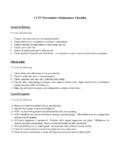
1 District Energy St. Paul PREVENTIVE MAINTENANCE CHECKLIST Fall A PREVENTIVE MAINTENANCE program is a way to assure that all mechanical equipment is operating efficiently and using energy wisely. Fall is the time of year when building operators need to prepare for the heating season so there is a smooth transition to cool weather. This is a list of common tasks that most manufacturers recommend for certain equipment. It is not a comprehensive list for any individual building and not all manufactures recommend the same MAINTENANCE . For personnel safety and to protect equipment, MAINTENANCE tasks should be performed by qualified and trained individuals. For any questions please contact District Energy customer service at Building Loop Test the system water/glycol mixture for proper glycol levels and chemical treatment levels for corrosion inhibitors, pH, microbiological growth, etc. as recommended by the chemical treatment consultant.
2 (Chemical) Check that the air pressure on expansion tank is set to the system water pressure. (Mechanical) Verify system loop pressure is within normal range based on height of building and system size. Too low of pressure indicates piping/valve/coil leak. Too high indicates heat exchangers failure and incoming water from District loop. (Mechanical) Heat Exchangers Visually check heat exchanger for leaks at the connection points to the heat exchanger as well as the body of the heat exchanger. Insulation may be hiding small leaks so also check for areas of wet or water stained insulation. (Mechanical) Confirm plate and frame units are tightened as recommended by the manufacturer. (Mechanical) Check the pressure gauges and thermometers for accuracy. (Mechanical) Check the heat exchanger and strainers for pressure drop. If greater than 5 psi, clean and the screens. Annually blowdown strainer regardless of pressure drop.
3 (Mechanical) PREVENTIVE MAINTENANCE CHECKLIST Fall 2 Every 5 years flush heat exchanger(s) with mild cleaning solution to remove buildup on heat transfer surfaces. Use chemicals dilutions and velocities as recommended by approved chemical vendor(Mechanical) Check the safety relief valves. (Mechanical) Controls Heat Exchangers Manually cycle temperature control valves. (Controls/Mechanical) Check accuracy and calibrate instruments and transmitters as necessary. (Controls) Check the room thermostats. Repair or replace if necessary (Controls) Verify that control valves positively shut off when no heat transfer is required. (Controls/Mechanical) Pumps Visually check the pump alignment and coupling. (Mechanical) Check VFD operating conditions if installed. (Electrical) Inspect, clean, and check the VFD heat sink and cooling fan. (Electrical) Lubricate the pump bearings according to the manufacturer's recommendations.
4 (Mechanical) Check the motor mounts and vibration pads. Repair or replace if necessary. (Mechanical) Inspect the mechanical seals or pump packing. Replace if necessary. (Mechanical) Air Handling/Makeup Air Units (Fans and Coils) Brush and vacuum the coil, fan, and housing. (Mechanical) Lubricate the fan and motor bearings according to the manufacturer's recommendations. (Mechanical) Clean the condensate drain pans and the drains from the pans. (Mechanical) Clean the outside air intake screen. (Mechanical) Check the electrical connections, contactors and relays. Repair or replace if necessary. (Mechanical) Inspect, clean, and check the VFD heat sink and cooling fan. (Electrical) Check the belts and sheaves. Tighten or Replace the belts and adjust if necessary. (Mechanical) Check the minimum setting for the outside air damper. Ensure proper operation and a tight shutoff. Replace any seals that are cracked or falling off.
5 (Mechanical) PREVENTIVE MAINTENANCE CHECKLIST Fall 3 Lubricate and adjust the dampers and linkage. (Mechanical) Check the fan motor mounts and vibration pads. (Mechanical) Check the control valve packing and lubricate if necessary. (Mechanical) Adjust the schedule of system starts and stops based on currently occupant loading. (Controls/Mechanical) Test freeze stat for proper operation. (Mechanical) Radiators and Reheat Coils Visually inspect the fins on the radiation element and coils. Vacuum clean if necessary. (Mechanical) Check air vents to make sure they are in operating condition. (Mechanical) Check system air releases and remove air from the loop if necessary. (Mechanical) Domestic Hot Water Inspect Circulation Pump for proper operation(Mechanical) Test RPZ(s) annually and rebuild every five years (Plumbing) Flush potable side of the heat exchanger with citric acid approved by chemical vendor annually(Mechanical)