Transcription of PRODUCT IDENTIFICATION, PACKING LIST, AND …
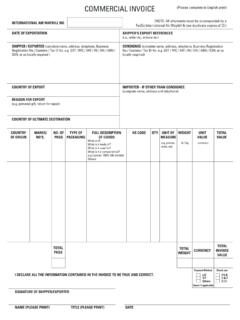
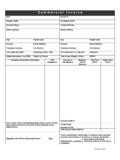
1 PRODUCT identification , PACKING LIST, AND PACKAGING REQUIREMENTS Unless otherwise stated on the purchase order, the PACKING list and containers or boxes must conform to the requirements listed below. Any deviation from the PRODUCT identification information on the PACKING list may result in a delay of processing the documentation and could result in a delay of payment. There must be a three-way match of all information on the PACKING list, supplier invoice , and EWT purchase order [PO#, line item #, line item quantity, part number, description, and project # (when applicable). PACKING lists /Invoices o Must include the EWT part number-both the SAP part number and the previous part number.]
2 For example: SAP P/N = W2T307692, Previous P/N = 14476-110-102. Both part numbers must appear on all of the documentation as well as the part. o When provided, the item number must appear on the PACKING list/ invoice . Item numbers are shown on the drawing as an encircled number. Not all parts have item numbers. o When provided by EWT, our customer s PO number may be required on the PACKING list/ invoice . o If there is more than one box or container, a box count and the total count of all boxes on the shipment must appear. Example, if there are four (4) boxes, each box must be identified as 1 of 4, 2 of 4, 3 of 4, and 4 of 4. Listing the box count on the PACKING list to identify which box an individual part number can be located is mandatory.
3 For example, part 4053-7 box 2 of 4. o Do not list items that did not ship on the PACKING list/ invoice . o When a PACKING list/ invoice cannot comply with the above requirements, provide separate documentation with all of the appropriate information as an attachment to the PACKING list. Containers, boxes o Each container must have a label on the outside of the box/container with the following information: EWT part number as described in PACKING list/ invoice and may include the suppliers part number Purchase order number EWT Project Number EWT customer PO number- if required Quantity of parts included in box/container If multiple items are in one container, the quantity for each EWT part number must appear on a label on the outside of the box.
4 Tag at least one in ten parts within the box or container unless the part number is identified on the PRODUCT . Use common sense for small items (such as a bag of washers or pins). The part number needs to be on the bag and not the parts. o Box spare parts separately from production orders. It is acceptable to pack spare parts together. The packaging must clearly identify box as SPARE PARTS . The part numbers of all of the parts within the box or container must appear on the label. o The label on boxes or containers must be clear and visible. Do not place the label across taped joints (where label is destroyed during inspection of contents of the box/container). When palletizing a shipment, ensure the label is visible.
5 PRODUCT identification , PACKING LIST, AND PACKAGING REQUIREMENTS Please note: ALL of the packaging requirements apply to any of your suppliers as well. Especially when your supplier sends PRODUCT direct to EWT or EWT s customer. All suppliers need to be aware of pervious problems with material identification and PACKING lists . The supplier must do everything possible to those past problems are not repeated. Casting, Shafts and Machined Parts 1. Each supplier of castings, shafts, or machined parts must stamp a unique identifier on each part. The first two or three letters of the suppliers name become the supplier s unique identifier ( Fred s Machining is FRE ).
6 2. Next identifier is date of manufacture: MM DD YYYY 3. Example: FRE 07-09-2009 Where: FRE = Fred s Machining 07 = Month (07 = July) 09 = Day (09 = 9th day of the month) 2009 = Year 4. Stamp in a non-functional area (area not machined). The identification must be clear after any blasting and painting. For example: shafts-stamped on end of shaft; castings stamped in non-machined area (typically painted area). 5. Stamp size is dependent on part size. Size of part may limit ability to stamp. 6. If there are any questions regarding the location, size of a stamp, the supplier is to contact Quality or Engineering for direction. Fabrications 1. Stainless steel parts: Tagged with embossed stainless steel tags and wire 2 Galvanized parts: Written on piece parts with permanent marker after galvanizing.
7 NOTE: PRODUCT identification must be maintained throughout galvanizing process. 3. Finished painted, prime painted or bare metal projects: Tagged with water and tear resistant tags and write information with permanent marker. 4. All tags or permanent markings to have at a minimum: Material item number Part number quantity Project number 5. Minimum 1 part in 10 identical parts smaller items bundled together HISTORICAL PROBLEMS ARE AS FOLLOWS: o Parts not tagged or identified. o Parts intermixed throughout several boxes (and not properly identified). o PACKING list does not provide adequate detail of parts shipped as well as parts not shipped. o Project number not listed on PACKING list.
8 O Purchase order not listed on PACKING list. o No notification of what parts shipped direct to EWT customer. o Material not shipped but listed on the PACKING list. o Wrong material shipped. PRODUCT identification , PACKING LIST, AND PACKAGING REQUIREMENTS o Wrong quantity shipped. o PRODUCT shipped before due date. o No PACKING list provided o PACKING lists received late on PRODUCT shipped direct to EWT customer. NOTE: Please provide an example of your PACKING list to EWT Supplier Quality for review. PACKAGING Boxes for smaller parts need to be constructed using an adequately thick material to prevent any crushing damage to the contents. When the quantity and size of boxes allows, the boxes should be on a pallet and secured with shrink-wrap or by other appropriate means.
9 Larger PRODUCT such as structural steel, are to be loaded and secured on trucks in such a manner as to prevent damage during the loading process as well as during transportation. The PRODUCT must be adequately secured to the truck to ensure PRODUCT does not fall off during the loading/unloading process or during transportation. Trucking companies must be instructed not to add additional tie downs after the truck leaves the suppliers facility. Fabrication suppliers must take pictures of the PRODUCT after the PRODUCT is secured to the truck and provide those pictures to EWT. While lifting and securing PRODUCT to the truck, the lifting and tie down devices must not cause damage to the PRODUCT (such as gouging, scratching painted surfaces, or create potential defects such as rust with stainless steel).
10 See special handling requirements for aluminum and stainless steel PRODUCT . To reduce the probability of damaging PRODUCT , it is recommended to avoid stacking of structural material. If it is not possible to avoid stacking, devices such as dunnage, wood, plastic, rubber, or other material (that does not deteriorate during shipping) must be used to protect the surface of the metal (especially if the PRODUCT is painted). Labels When EWT provides PRODUCT identification labels, it is the suppliers responsibility to ensure each box receives a label. If multiple parts boxes are placed within a larger box, follow the PRODUCT identification method listed above under PRODUCT identification , Containers (boxes).