Transcription of PRODUCT INFORMATION Axit - Medicines
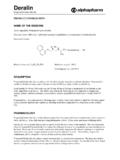
1 PRODUCT INFORMATION Axit Mirtazapine NAME OF THE MEDICINE Active ingredient : Mirtazapine Chemical name : ( )-1,2,3,4,10,14b-hexahydro-2-methyl-pyra zino[2,1-a]pyrido[2,3-c][2]benzazepine Structural formula : Molecular formula : C17H19N3 Molecular weight : CAS Registry no. : 61337-67-5 DESCRIPTION Mirtazapine is a tetracyclic piperazinoazepine analogue of mianserin, a chemical structure unrelated to tricyclic antidepressants, monoamine oxidase inhibitors or selective serotonin reuptake inhibitors. Mirtazapine is a white to creamy white crystalline powder which is slightly soluble in water. Each Axit tablet contains either 15 mg, 30 mg or 45 mg of mirtazapine. Excipients for Axit 15 mg, 30 mg and 45 mg tablets are outlined below. Core: maize starch, hydroxypropylcellulose, magnesium stearate, colloidal anhydrous silica, lactose.
2 Coating layer: Opadry II complete film coating system 39F52901 Yellow (15 mg tablet only, containing quinoline yellow CI47005 and iron oxide yellow CI77492), Opadry Buff OY-LS-37200 (30 mg tablets containing iron oxide yellow CI77492, iron oxide red CI77491 and iron oxide black CI77499) and Opadry White OY-LS-28908 (45 mg tablets only). PHARMACOLOGY Axit (mirtazapine) is an antidepressant, which can be given as treatment for episodes of major depression. The presence of symptoms such as anhedonia, psychomotor inhibition, sleep disturbances (early wakening) and weight loss, increase the chance of a positive response. Other symptoms are loss of interest, suicidal thoughts and changes in mood (better in the evening than in the morning). Mirtazapine begins to exert its effect generally after 1 to 2 weeks of treatment.
3 The results of three pivotal placebo-controlled double-blind studies (161 patients received placebo and 161 patients received mirtazapine) have demonstrated that mirtazapine is statistically significantly more effective than placebo in the short term treatment of a major depressive episode; the efficacy is maintained during continuation treatment with mirtazapine. The efficacy of mirtazapine has been found to be comparable to several standard Axit PRODUCT INFORMATION 2 antidepressant agents (amitriptyline, doxepin, clomipramine). As of 1996 no comparative studies have been performed with selective serotonin reuptake inhibitors (SSRIs) or mianserin (to which mirtazapine has structural similarities). Pharmacodynamics Mirtazapine is an antagonist of central 2-auto and hetero-adrenoceptors which causes an increase in both noradrenaline and serotonin release.
4 The effect of released serotonin is exerted specifically via 5-HT1 (hydroxytryptamine1) type receptors, because 5-HT2 and 5-HT3 type receptors are specifically blocked by mirtazapine. Mirtazapine is accordingly a noradrenergic and specific serotonergic antidepressant. The 2, 5HT2 and 5HT3 antagonistic effects all contribute to the antidepressant profile of mirtazapine. The presentation of mirtazapine is as a racemate. The two enantiomers contribute differently to its pharmacological profile. The 2 and 5HT2 receptor blocking activity is contained in the (S)+ enantiomer, whereas the 5HT3 receptor blocking activity is contained in the (R)- enantiomer. The presence of both enantiomers is therefore considered to be essential for the antidepressant activity of mirtazapine.
5 In one study, there was no efficacy difference indicated between the two enantiomers, despite their different receptor affinities. Mirtazapine is generally well tolerated. The histamine H1-antagonistic activity of mirtazapine may cause a degree of sedation in the first weeks of treatment. It has practically no anticholinergic activity. Mirtazapine has been associated with acute postural hypotension in healthy volunteer studies but this occurred rarely in patient studies (see ADVERSE EFFECTS). Pharmacokinetics Absorption After oral administration of mirtazapine tablets, the active constituent mirtazapine is rapidly and well absorbed (bioavailability approximately 50%), reaching peak plasma levels after about 2 hours. Food intake has no clinically significant influence on the pharmacokinetics of mirtazapine.
6 Distribution Binding of mirtazapine to plasma proteins is approximately 85%. The half-life of elimination is 20 to 40 hours; longer half-lives, up to 65 hours, have occasionally been recorded and shorter half-lives have been seen in young men. The half-life of elimination is sufficient to justify once-a-day dosing. Steady state is reached after 3 to 6 days, after which there is no further accumulation. Mirtazapine displays linear pharmacokinetics within the recommended dose range. Metabolism In vitro data from human liver microsomes indicate that cytochrome P450 enzymes CYP 2D6 and CYP 1A2 are involved in the formation of the 8-hydroxy metabolite of mirtazapine, whereas CYP 3A4 is considered to be responsible for the formation of the N-demethyl and N-oxide metabolites. The presentation of mirtazapine is as a racemate.
7 It is not known whether first pass extraction of the drug is stereoselective but it is known that the clearance of the two enantiomers is by different metabolic processes. Excretion Mirtazapine is extensively metabolised and its metabolites are eliminated via the urine and faeces within four days. Major pathways of biotransformation are demethylation and oxidation, followed by conjugation. The demethyl metabolite is pharmacologically active and appears to have the same pharmacokinetic profile as the parent compound. Special populations Renal and/or hepatic impairment. The clearance of mirtazapine may be decreased as a result of renal or hepatic insufficiency. Mirtazapine is substantially excreted by the kidney (75%) and the risk of decreased clearance of this drug is greater in patients with impaired renal function (see DOSAGE AND ADMINISTRATION).
8 Axit PRODUCT INFORMATION 3 Geriatric. The recommended dosage regimen is the same as for adults. Increases should be monitored carefully (see DOSAGE AND ADMINISTRATION). Children and adolescents. The safety and effectiveness of mirtazapine has not been established in children and adolescents and therefore should not be prescribed in these patient groups (see PRECAUTIONS). Sex. The half-life of elimination of mirtazapine ranged from 20 to 40 hours, longer half-lives up to 65 hours have occasionally been recorded and shorter half-lives have been seen in young men. Race. There is no INFORMATION available regarding the effect of race on the pharmacokinetics of mirtazapine. CLINICAL TRIALS Several placebo controlled double blind studies have demonstrated that mirtazapine is statistically significantly more effective than placebo in the short-term treatment of a major depressive episode; the efficacy is maintained during continuation treatment with mirtazapine.
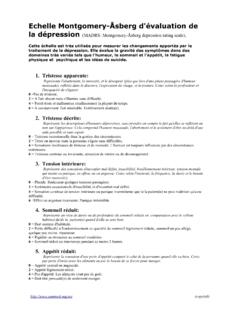
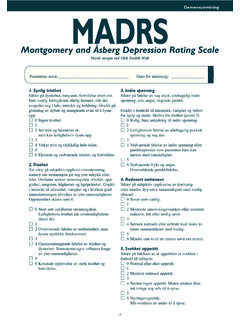
9 Active controlled studies The efficacy of mirtazapine has been found to be comparable to several standard antidepressant agents (amitriptyline, doxepin, clomipramine). In addition, eleven six or eight week studies and a 24 week study have been performed in moderately to severely depressed patients in which efficacy and tolerability of mirtazapine were compared to selective serotonin reuptake inhibitors (SSRIs) (four versus fluoxetine, three versus paroxetine, two versus sertraline, two versus fluvoxamine and one versus citalopram). The primary efficacy parameters in these studies were: Change from baseline on HAM-D total score (Hamilton depression rating scale, 17 items) (seven studies); Proportion or number of HAM-D 50% responders (three studies); Change from baseline on MADRAS total score (Montgomery-Asberg depression rating scale, ten items) (one study); VAMRS six items (Visual Analogue Mood Rating Scale) (one study).
10 Change in HAM-D (12 items) total score was a secondary parameter in this study. On an intention to treat basis, a total of 1,402 patients were treated with mirtazapine and 1,405 patients were treated with the comparator. In all twelve studies, mirtazapine proved to be at least comparable in efficacy to the SSRIs. In eleven of these studies, statistically significant greater reductions in HAM-D or MADRS total scores and more responders were observed in the mirtazapine groups at one or more timepoints in the first four weeks. A meta-analysis of these twelve studies provides further comparison of the onset of efficacy of mirtazapine relative to the SSRIs studied. The primary efficacy parameter for this meta-analysis was time to first 50% reduction on recalculated HAM-D total score (17 items) or recalculated MADRS total score (ten items).