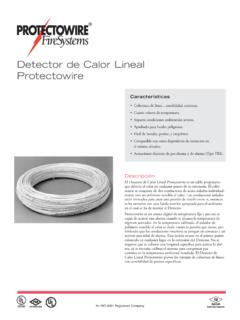
Transcription of Protectowire Linear Heat Detector
1 Installation, Operation & Maintenance ManualProtectowireLinear heat 3/29/11 9:50 AM Page 1 Protectowire Linear heat DetectorInstallation Har dwareTYPE EPC VINYL JA CKETPHSC-155-EPC 155 (68 C)Max. Recommended Ambient Temp 115 F (46 C)PHSC-190-EPC 190 (88 C)Max. Recommended Ambient Temp 150 F (66 C)PHSC-220-EPC 220 (105 C)Max. Recommended Ambient Temp 175 F (79 C)PHSC-280-EPC 280 (138 C)Max. Recommended Ambient Temp 200 F (93 C)PHSC-356-EPC 356 (180 C)Max. Recommended Ambient Temp 221 F (105 C)TYPE XCRFLUOROPOLYMER JA CKETPHSC-155-XCR 155 (68 C)Max.
2 Recommended Ambient Temp 115 F (46 C)PHSC-190-XCR 190 (88 C)Max. Recommended Ambient Temp 150 F (66 C)PHSC-220-XCR 220 (105 C)Max. Recommended Ambient Temp 175 F (79 C)PHSC-280-XCR 280 (138 C)Max. Recommended Ambient Temp 200 F (93 C)PHSC-356-XCR 356 (180 C)Max. Recommended Ambient Temp 250 F (121 C)TYPE PLR-RTHERMOPLASTIC ELASTOMER JA CKETPLR-155R 155 (68 C)Max. Recommended Ambient Temp 115 F (46 C)PLR-190R 190 (88 C)Max. Recommended Ambient Temp 150 F (66 C)TYPE XLT PROPRIETARY POLYMER JA CKETPHSC-135-XLT 135 (57 C)Max.
3 Recommended Ambient Temp 100 F (38 C)PWSK-3 Serviceable Splicing ConnectorPFLF lexible LeadPM-3 Pipe StrapBC-2 Beam ClampWAW ClipOHS-SSStainless Steel Line ClipHPC-2 CableTray ClipCC-2 Cable Tray ClipPWSCS plicing Connector Protectowire Linear heat DetectorInstallation Har dwareTYPE EPC VINYL JA CKETPHSC-155-EPC 155 (68 C)Max. Recommended Ambient Temp 115 F (46 C)PHSC-190-EPC 190 (88 C)Max. Recommended Ambient Temp 150 F (66 C)PHSC-220-EPC 220 (105 C)Max. Recommended Ambient Temp 175 F (79 C)PHSC-280-EPC 280 (138 C)Max.
4 Recommended Ambient Temp 200 F (93 C)PHSC-356-EPC 356 (180 C)Max. Recommended Ambient Temp 221 F (105 C)TYPE XCRFLUOROPOLYMER JA CKETPHSC-155-XCR 155 (68 C)Max. Recommended Ambient Temp 115 F (46 C)PHSC-190-XCR 190 (88 C)Max. Recommended Ambient Temp 150 F (66 C)PHSC-220-XCR 220 (105 C)Max. Recommended Ambient Temp 175 F (79 C)PHSC-280-XCR 280 (138 C)Max. Recommended Ambient Temp 200 F (93 C)PHSC-356-XCR 356 (180 C)Max. Recommended Ambient Temp 250 F (121 C)TYPE PLR-RTHERMOPLASTIC ELASTOMER JA CKETPLR-155R 155 (68 C)Max.
5 Recommended Ambient Temp 115 F (46 C)PLR-190R 190 (88 C)Max. Recommended Ambient Temp 150 F (66 C)TYPE XLT PROPRIETARY POLYMER JA CKETPHSC-135-XLT 135 (57 C)Max. Recommended Ambient Temp 100 F (38 C)PWSK-3 Serviceable Splicing ConnectorPFLF lexible LeadPM-3 Pipe StrapBC-2 Beam ClampWAW ClipOHS-SSStainless Steel Line ClipHPC-2 CableTray ClipCC-2 Cable Tray ClipPWSCS plicing Connector Note: Colors shown are for illustrative purposes only. Actual jacket colors may the present time there is no code or recommended standards in the United States specificallycovering system design requirements for Linear heat Detection Systems.
6 In the past, informationpertinent to designing this type of system has been difficult to locate and generally based uponexisting requirements for spot heat detection view of these factors, this manual has been designed to outline basic principles which shouldbe utilized in the design and layout of a Protectowire Linear heat Detection System. These prin-ciples are based upon years of system design experience as well as nationally recognized coderequirements or approval agency standards. In addition, these principles recognize the operatingcharacteristics of the Protectowire Detector and the environmental factors which may either aidor hinder its is important to realize that codes, standards and other relevant material which may have beenused in preparing this manual, are dynamic documents which are subject to change over have made a conscientious effort to ensure that all references in this manual which pertain tooutside approvals, regulatory requirements, codes or standards are current and as up-to-date aspossible.
7 However, we recommend that in applications where a specific code requirement orinstallation standard is required, the Authority Having Jurisdiction (AHJ) be consulted to ensurecompliance. In all cases, local codes or installation requirements as stipulated or approved by theAHJ shall take PageIntroduction ..1 Product Description ..1 How It Works ..2 Electrical Arrangement ..2 Maximum Copper Feed Cable Length (Table 1).
8 3 General Ratings ..5 Detector Location and Spacing ..6 Protectowire Model Numbers and Maximum Listed Spacing ..6 Pre-Action Sprinkler Systems ..9 Environmental Considerations ..10 PWS Splicing Sleeves ..10 Splicing Connectors ..11 Installation Detail ..12 Fasteners ..12 General Purpose ..12 Cable Trays ..15 Pipe Mounting ..15 Messenger Wire ..16 Installation Warnings ..17 Special Application Installations ..18 Cable Trays ..18 Power Distribution Dust Collectors/Baghouses ..21 Open Rack Storage.
9 21 Floating Roof Tanks ..21 Refrigerated Storage Self-Storage Warehouses ..23 Inspection and Testing ..24 Protectowire Test Resistant Chart for Protectowire Jacket Materials EPC, XLT, CTI, PLR-R ..26 Chemical Resistant Chart for Protectowire Jacket Material XCR, 2015, The Protectowire Co., Inc, Pembroke, Massachusetts 02359 1 IntroductionSince The Protectowire Company introducedthe first Linear Type heat Detector in the UnitedStates over 75 years ago, this type of Detector ,with its unique characteristics, has beenemployed in applications where it has provento be a highly reliable form of fire construction and operating principles ofthe various Linear heat detectors that are avail-able today, can with few exceptions, be classi-fied in the following major categories.
10 Analog (Integrating) Linear Type HeatDetectors - These detectors are composed of sensing ele-ments whose response to temperature issummed in some way along the length of theentire cable. The resistance of the insulationbetween the conductors is monitored by acontrol unit which may have adjustable alarmthreshold settings. Typically, as the temperature of the cableincreases, the wire s resistance will the preset alarm threshold is reached analarm condition is signaled by the control Linear Type heat detectors - Digital type detectors , such as Protectowire ,consist of sensing elements which respond toa specific temperature at any point along theirlength.