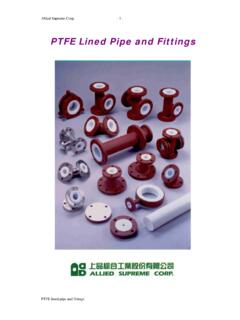
Transcription of PTFE - Material Safety Data Sheet
1 - Material Safety Data SheetProduct Identification Product Name: ptfe - PolytetrafluoroethyleneComposition and Information on Ingredients 1) Virgin ptfe 2) Chemically Modified Virgin PTFE3) 15%-25% Glass Filled ptfe 4) 5%-15% Glass + 5% MOS2 Filled ptfe 5) 25%-35% Carbon Filled PTFE6) 15% Graphite Filled PTFE7) 40%-60% Bronze Filled ptfe 8) 55% Bronze + 5% MOS2 Filled ptfe Physical and Chemical Properties Heated above 400 C (750 F) can evolve as degradation products: Hydrogen fluoride 7664 39 3 <1 Carbonyl fluoride 353 50 4< PointNot ApplicableMelting Point327 372 C (621 648 F)Flash Point (Method used)530 550 C (986 1022 F), ASTM D1929 Auto Ignition temperature520 560 C (968 1040 F), ASTM D1929UL 94 Flammability Rating: V 0 Limiting Oxygen Index Method >95, ASTM D 2863 Appearance and OdourTranslucent to milky white ptfe products or related product: no odourColourTranslucent to milky whiteSpecific Gravity (h2o=1) at 25 FVapour Pressure (mm hg)Not ApplicableVapour Density (air=1)Not ApplicableEvaporation Rate (butyl acetate=1)Not ApplicableSolubility in WaterInsolubleRemarks: Material is not known to contain Toxic Chemicals under Section 313 of Title III of the Superfund Amendments and Reauthorization Act of 1986 and 40 CFR part 372 Potential Health Effects Eye Contact May cause eye irritation with discomfort, tearing, or blurring of ContactMay cause skin irritation with discomfort or rash.
2 The product diluted 1:4 with water was not a skin irritant or a skin sensitizer in human patch cause non-specific discomfort, such as nausea, headache, or weakness, heartburn, vomiting, or of Hexylene glycol may cause temporary nervous system depression with anaesthetic effects such as dizziness, headache, confusion, in-coordination, and loss of cause irritation of the upper respiratory passages or lung irritation effects with cough, discomfort, difficulty breathing, shortness of breath, or pulmonaryedema (body fluid in the lungs). Symptoms may be modest initially followed in hours by severe shortness of breath requiring prompt medical HazardsMedical Conditions aggravated By ExposureCarcinogenNone of the components present in this Material at concentrations equal to or greater than is listed by IARC, NTP, OSHA or ACGIH as a Aid MeasuresEye Contact In case of contact, immediately flush eyes with plenty of water and get medical attention if irritation ContactThe ptfe PRODUCTS is not likely to be hazardous by skin specific intervention is indicated as the ptfe PRODUCTS is not likely to be hazardous by ingestion.
3 If gastrointestinal symptoms develop, get medical attentionInhalationNo specific intervention is indicated as the ptfe PRODUCTS is not likely to be hazardous by inhalation. Consult a physician if necessary. If exposed from fumes from overheating or combustion, move to fresh air. Consult a physician if symptoms to Physicians: Activated charcoal mixture may be administered. To prepare activated charcoal mixture, suspend 50 grams activated charcoal in 400 ml water and mix thoroughly. Administer 5 ml/kg or 350 ml for an average Fighting MeasuresFlash Point530 550 C (986 1022 F), ASTM D1929 Flammability LimitsExtinguishing MediaWater, foam, dry chemical, CO2, as appropriate for surrounding fireSpecial Fire Fighting ProceduresWear self contained breathing Wear full protective equipment, Wear full protective Fire and Explosion Hazards Unusual fire and explosion hazards products will emit toxic fumes at high temperatures.
4 Does not burn without an external flame. Protect from hydrogen fluoride fumes which react with water to form hydrofluoric acid. Wear neoprene gloves when handling refuse from a fire involving ptfe (Polytetrafluoroethylene). Difficult to ignite, and flame goes out when initiating source is removed (UL 94). Limited flame spread and low smoke generation (NFPA 262 1990, UL 910). Complies with NFPA definition of limited combustible Material . High self ignition and auto ignition temperatures (ASTM D1929). Hazardous gases/vapours produced in a fire are hydrogen fluoride (HF), carbon monoxide, and potentially toxic fluorinated Combustion Products:Accidental Release Measures Personal precautions and emergency proceduresWhere the Material temperature is above 300 C (572 F), use a positive pressure supplied air respirator.
5 In case of emergency, evacuate the area and ventilate the area with fresh and Material for containment and cleaning upRecover undamaged Material , clean as needed, and reuse. Prevent Material from entering sewers, waterways, or low areas. Soak up with sawdust, sand, oil dry or other absorbent Material . Shovel or sweep up. Place in container for spill area with PrecautionIn handling and storage Above 275 C (527 F), ptfe PRODUCTS can evolve toxic gaseous products. Provide good ventilation or respirator if there exists a probability of exceeding 260 CHandling and StorageAvoid breathing vapours or mist. Avoid contact with eyes, skin, or clothing. Wash thoroughly after handling. Do not store or consume food, drink, or tobacco in areas where they may become contaminated with this Material .
6 Avoid circumstances that produce respirable particles unless suitable ventilation and ControlsKeep container tightly closed. Use only with adequate ventilation. Vent heated extruder or dryer fumes outside work area. Do not aerosolize. In spray applications, use airless type pressure spray equipment at less than 60 psi, and exhaust ducts, drip pans, or other design features to minimize worker exposure to mists and clothingWhere there is potential for skin contact have available and wear as appropriate, impervious gloves, apron, pants, and Information Avoid release to the ConsiderationsPreferred methods for disposal are recycling and landfill. With incineration, gaseous products should be removed by alkaline scrubbing. Separate waste of this Material from others and comply with Federal, State, and Local regulations concerning health and environmentDisclaimerTo the best of our knowledge the information contained in this publication is accurate; however, we do not assume any liability whatsoever for the accuracy or completeness of such information.
7 We strongly recommend that users seek and adhere to the manufacturer s or supplier s current instructions for handling each Material they use and they satisfy themselves that they can meet all applicable Safety and health standards. This information is based upon technical information believed to be reliable. It is subject to revision as additional knowledge and experience is gained.