Transcription of PUBLIC SWIMMING POOL MONTHLY OPERATION …
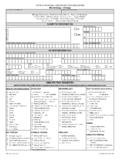
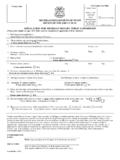
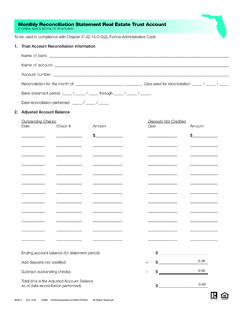
1 MICHIGAN DEPARTMENT OF ENVIRONMENT, GREAT LAKES, AND ENERGY DRINKING WATER AND ENVIRONMENTAL HEALTH DIVISION PUBLIC SWIMMING POOL MONTHLY OPERATION REPORT Issued under authority of Part 125 of the PUBLIC Health Code, 1978 PA 368, as amended, and its Administrative Rules (ACT 368) EGLE Environmental Assistance Center Page 1 of 2 Phone: 800-662-9278 EQP1719 (Rev. 09/2020) Within ten (10) days after the end of the month, mail a copy of this completed form to the local health department. Pool Establishment Name SP Number ( , 99-9999-01) Month and Year Covered by This Report Street Address Municipality County Pool Usage Cleaning Water Treatment Water Conditions Date No. of Hours No. of People Pool Bottom Deck Bathhouse Water Added (inches) Filters Flow Rate (gpm) Chemical Addition Disinfectant Residuals Chlorine Bromine pH Cyanuric Acid (mg/L or ppm) Water Clarity (Main Drains Clearly Visible) Temps Maximum Total No.
2 Hours Operated Wash Minimum Maximum Disinfectant (Lbs. or Gals.) (Lbs. or Gals.) Time mg/L or ppm Time mg/L or ppm Time mg/L or ppm Water Air 1 2 3 4 5 6 7 8 9 10 11 12 13 14 15 16 17 18 19 20 21 22 23 24 25 1 2 3 4 5 6 7 8 9 10 11 12 13 14 15 16 17 18 19 20 21 22 23 24
3 25 26 27 28 29 30 31 Bacteriologic Analysis REMARKS: Date Residual mg/L pH No. of People Standard Plate Count Coliform Index 26 27 28 29 30 31 This report is submitted in compliance with 1978 PA 368, as amended, and is true to the best of my knowledge. Signature Date Page 2 of 2 PUBLIC SWIMMING POOL MONTHLY OPERATION REPORT EQP1719 INSTRUCTIONS FOR USING PUBLIC SWIMMING POOL MONTHLY OPERATION REPORTS Rule 99 requires that SWIMMING pool operational data and information about rescues, submersions, and accidents given medical attention be recorded daily by the pool operator on a report form furnished by or acceptable to the department.
4 The owner shall submit a completed OPERATION report to the local health department within ten (10) days after the end of each month in which the SWIMMING pool was in OPERATION . Failure to complete this form is a violation of 1978 PA 368, as amended (Act 368), and is subject to the penalties as outlined in Act 368. COLUMN NUMBER POOL USAGE 2 Record the number of hours the pool is open for use. 3 Record the maximum number of people using the pool at one time. Include both those in the water and on the deck. 4 Record the total number of swimmers at the pool during the day. CLEANING 5 Check this column when the pool bottom is vacuumed or otherwise cleaned. 6-7 Check these columns when the respective areas are cleaned. WATER TREATMENT 8 Record the depth of water added to the pool in inches or gallons.
5 If the water is added automatically and cannot be measured, write automatic in the column. 9 Record the number of hours the water is recirculated, filtered, and disinfected. Rule 96 requires 24-hours per day OPERATION . 10 Check this column when the filters are cleaned. Multiple filters should be cleaned the same day. 11-12 Record the flow meter readings, in gallons per minute. 13 Record the total amount of disinfectant (chlorine or bromine) added to the feeding equipment. Indicate if the measurement is pounds of dry chemical or gallons of liquid. Rule 96 requires the disinfectant to be applied continuously. 14 If an additional chemical is used, record the amount added. Indicate the chemical name or type and whether the measurement is pounds or gallons.
6 WATER CONDITIONS 15-20 Indicate whether the disinfectant residuals are chlorine or bromine. Record the time and the reading each time the residual is tested. The water should be tested before the SWIMMING pool is opened for the day and at least twice more during the day. The water for testing should be from the pool itself rather than the recirculation system. The required minimum disinfectant residuals, in milligrams per liter (mg/L) or parts per million (ppm), depend on the pH of the water and are: 21 Test and record the pH of the SWIMMING pool water daily. 22 If cyanuric acid or a chlorinated cyanurate is used, test and record the cyanuric acid level of the pool water at least weekly. A concentration of 20 mg/L is considered necessary for the stabilization of chlorine.
7 Concentrations above 40 mg/l are not advantageous, and above 80 mg/l concentrations are prohibited as they cause cloudy water. 23 Indicate whether the water is clear (OK) or cloudy (No) as determined by viewing the main drains from the far end of the pool. 24-25 Record the water and air temperatures, in degrees Fahrenheit. The water temperature may be higher than 86 F but must not exceed 104 F. If more than 86 F, a sign shall be posted indicating the maximum water temperature, appropriate health warnings, and prohibiting pool use by young children. The air temperature generally should be 3 F to 5 F higher than the water temperature. BACTERIOLOGIC ANALYSIS Rule 95 requires that water samples be collected for bacteriological analysis at a frequency established by the local health department or EGLE but sets a minimum frequency of at least one sample per quarter.
8 The SWIMMING pool owner or operator is responsible for the collections and analysis of the samples. 26 Record the date the sample is collected. 27 Test and record the chlorine or bromine residual when the sample is collected. 28 Test and record the pH of the pool water when the sample is collected. 29 Record the number of people in the pool when the sample is collected. Collect samples while people are in the pool and preferably during periods of peak pool usage. 30 Record the standard plate count, as determined by the laboratory analysis. 31 Record the coliform index, as determined by the laboratory analysis. Rule 95(2) states: The presence of organisms of the coliform group or a standard plate count of more than 200 bacteria per milliliter, or both, is unacceptable water quality.
9 REMARKS Record any unusual situation, such as an equipment failure, draining of the pool, or an accident requiring first aid or medical attention. Disinfectant Type of Residual pH to > to Bromine Bromine Chlorine Free available chlorine Chlorinated cyanurate* Free available chlorine * *At 20 to 40 parts per million (ppm) cyanuric acid (cya). For higher levels of cya, add mg/l for each additional 20 ppm cya, or fraction of 20 ppm above 40 ppm.