Transcription of Reaching and Engaging with Hispanic Communities
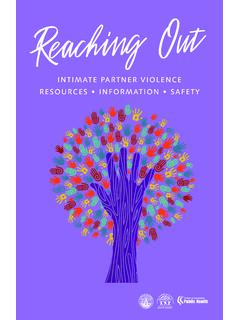
1 Reaching and Engaging with Hispanic Communities : A Research-Informed Communication Guide for Nonprofits, Policymakers, and FundersAlicia Torres, PhD, Luz Guerra, MA, Selma Caal, PhD, and Weilin Li, PhDReaching and Engaging with Hispanic Communities : A Research-Informed Communication Guide for Nonprofits, Policymakers, and FundersA Letter from The Crimsonbridge FoundationThe Crimsonbridge Foundation is honored to present Reaching and Engaging with the Hispanic Community: A Research-Informed Communication Guide for Nonprofits, Policymakers and Funders. This guide is designed to help service providers and educators build communication strategies to more easily and effectively reach out to Latino children and families.
2 We are grateful for our partnership with Child Trends, the nation s leading nonprofit research organization focused on conducting and sharing research to improve the lives of children and youth. Throughout this collaborative effort, we have been inspired by them and by so many others who contributed their ideas, experiences and talent to help create this necessary working is a nonpartisan, entrepreneurial, philanthropic organization; we believe in the transformative power of education and are privileged to have worked for children and families of all backgrounds and across sectors. Our mission is to build bridges of collaboration and strategically invest in education, leadership development, and capacity building programs to help America s youth and nonprofit organizations achieve their potential.
3 Why create a communications guide? Because we have tremendous respect for the work of nonprofit organizations, and we aim to strengthen their communications capacity so they can better engage with the Hispanic Communities they serve. There is an increasing awareness of the need for strategic outreach to more effectively work with this underserved sector. We expect this guide will help organizations reach out to Latino families with information and guidance about opportunities in education, health, English literacy, job training, and many other programs already in place. It is our heartfelt hope that it will help overcome communication barriers and facilitate positive engagement and collaboration.
4 Why focus on the Hispanic community? The Hispanic population represents the United States largest, and youngest, minority group. One out of four children in the United States is Hispanic . And 90 percent of Latino children in the country are citizens. By the year 2050, one out of three children and over 30 percent of the population will be of Hispanic heritage. These young children today will constitute a significant segment of the country s future. But they and their families face serious challenges, and two thirds of them live in or near poverty. It is clear, but not widely recognized, that their education and well-being will have a profound impact not only on their Communities , but on the country as a whole.
5 This is a rising national challenge. Working to help these families access quality education has evolved from being a needed and important service, to becoming an imperative for the future competitiveness of our Crimsonbridge, we humbly hope that this guide will serve as an informative tool for nonprofits, funders and policymakers working to meet this challenge. We encourage these organizations to download it (free of charge) and share it with like-minded organizations. We dedicate this guide to them and to the many and diverse Communities they serve. We believe that by working together we are building a stronger America for all.
6 Sincerely, Gabriela Smith Danielle ReyesPresident and Founder Executive Director Reaching and Engaging with Hispanic Communities : A Research-Informed Communication Guide for Nonprofits, Policymakers, and FundersAbout the Authors Alicia Torres is a senior director of communications and Hispanic outreach at Child Trends. She has more than 15 years of experience in the development of strategic, evidenced-based communication programs for scientific associations. Alicia has devoted much of her career to the public understanding of science and equity in access to STEM education, particularly among under-served Communities .
7 At Child Trends, she leads the Hispanic Institute s communication and outreach work aimed at shining a light on the evolving needs of Latino children in order to achieve their healthy development. She holds a PhD from the University of Texas, Austin, in strategic communications and mass media studies. Luz Guerra has worked with Child Trends as an independent contractor since 2014, lending her skills as editor, translator, and researcher to several projects. Her career spans over 35 years; she has worked with Latino Communities in the United States, and with NGOs in Guatemala, Mexico, El Salvador, Nicaragua, Colombia, and Puerto Caal is a research scientist at Child Trends.
8 Her focus is on the factors associated with the social and emotional development of children and youth and, more recently, on Reaching out to and Engaging with low-income Latino parents. She has also studied immigrant parents perspectives on their preschool children s education, the protective and risk factors associated with Latino adolescent risky behavior, and educational attainment, and has worked with others developing culturally sensitive survey items. In addition to her research experience, Selma has extensive experience working with Latino families, children, and youth in applied settings, as a preschool teacher (including in Head Start) and as a family counselor.
9 She has a PhD in applied developmental psychology from George Mason Li is a research scientist in the early childhood research area at Child Trends. Her research focuses on evaluation of early childhood programs, fidelity of curriculum implementation, and dosage and quality in early care. She has substantive expertise in a variety of quantitative methods. Dr. Li has been involved in several national-level research projects that examined impacts of quality care on school readiness. She was also the residential methodologist for the meta-analysis project in the National Forum on Early Childhood Programs and Policy. Dr. Li is an EMC certified data scientist.
10 She has a PhD in education from the University of California at and Engaging with Hispanic Communities : A Research-Informed Communication Guide for Nonprofits, Policymakers, and FundersTable of Contents Executive Summary ..1 Overview Qualitative research ..8 Purpose and audiences ..9 Focus on Latino children and families ..10 The Communication Framework Framework component 1: Objectives and target audiences ..13 Framework component 2: Messaging ..18 Framework components 3 and 4: Outreach strategy and tactical execution ..20 Framework component 5: Data collection and assessment ..30 Next steps ..32 Recommendations for Service Providers.