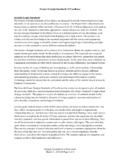
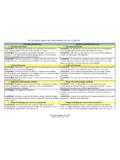
Transcription of READING LITERARY (RL) READING INFORMATIONAL (RI)
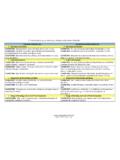
1 9th-10th Grade English Language Arts georgia standards of Excellence (ELA GSE). READING LITERARY (RL) READING INFORMATIONAL (RI). Key Ideas and Details Key Ideas and Details ELAGSE9-10RL1: Cite strong and thorough textual evidence to support analysis of what the ELAGSE9-10RI1: Cite strong and thorough textual evidence to support analysis of what the text says explicitly as well as inferences drawn from the text. text says explicitly as well as inferences drawn from the text. ELAGSE9-10RL2: Determine a theme and/or central idea of text and closely analyze its ELAGSE9-10RI2: Determine a central idea of a text and analyze its development over the development over the course of the text, including how it emerges and is shaped course of the text, including how it emerges and is shaped and refined by specific details.
2 And refined by specific details; provide an objective summary of the text. provide an objective summary of the text. ELAGSE9-10RL3: Analyze how complex characters ( , those with multiple or conflicting ELAGSE9-10RI3: Analyze how the author unfolds an analysis or series of ideas or events, motivations) develop over the course of a text, interact with other characters, and advance including the order in which the points are made, how they are introduced and developed, the plot or develop the theme. and the connections that are drawn between them. Craft and Structure Craft and Structure ELAGSE9-10RL4: Determine the meaning of words and phrases as they are used in the text, ELAGSE9-10RI4: Determine the meaning of words and phrases as they are used in a text, including figurative and connotative meanings; analyze the cumulative impact of specific including figurative, connotative, and technical meanings; analyze the cumulative impact of word choices on meaning and tone ( , how the language evokes a sense of time and specific word choices on meaning and tone ( , how the language of a court opinion differs place.))
3 How it sets a formal or informal tone.) from that of a newspaper). ELAGSE9-10RL5: Analyze how an author's choices concerning how to structure a text, order ELAGSE9-10RI5: Analyze in detail how an author's ideas or claims are developed and refined events within it ( , parallel plots), and manipulate time ( , pacing, flashbacks) create by particular sentences, paragraphs, or larger portions of a text ( , a section or chapter). such effects as mystery, tension, or surprise. ELAGSE9-10RL6: Analyze a particular point of view or cultural experience reflected in a work ELAGSE9-10RI6: Determine an author's point of view or purpose in a text and analyze how of literature from outside the United States, drawing on a wide READING of world literature.
4 An author uses rhetoric to advance that point of view or purpose. Integration of Knowledge and Ideas Integration of Knowledge and Ideas ELAGSE9-10RL7: Analyze the representation of a subject or a key scene in two different ELAGSE9-10RI7: Analyze various accounts of a subject told in different mediums ( , a artistic mediums ( , Auden's poem Mus e de Beaux Arts and Breughel's painting person's life story in print and multimedia), determining which details are emphasized in Landscape with the Fall of Icarus), including what is emphasized or absent in each treatment. each account. ELAGSE9-10RL8: (Not applicable to literature) ELAGSE9-10RI8: Delineate and evaluate the argument and specific claims in a text, assessing whether the reasoning is valid and the evidence is relevant and sufficient; identify false statements and fallacious reasoning.
5 ELAGSE9-10RL9: Analyze how an author draws on and transforms source material in a ELAGSE9-10RI9: Analyze seminal documents of historical and LITERARY significance ( , Washington's specific work ( , how Shakespeare treats a theme or topic from Ovid or the Bible or how Farewell Address, the Gettysburg Address, Roosevelt's Four Freedoms speech, King's Letter from Birmingham a later author draws on a play by Shakespeare). Jail , Nelson Mandela's Nobel Peace Prize Speech, The Universal Declaration of Human Rights), including how they address related themes and concepts. Range of READING and Level of Text Complexity Range of READING and Level of Text Complexity ELAGSE9-10RL10: By the end of grade 9, read and comprehend literature, including stories, ELAGSE9-10RI10: By the end of grade 9, read and comprehend LITERARY nonfiction in the dramas, and poems, in the grades 9-10 text complexity band proficiently, with scaffolding grades 9-10 text complexity band proficiently, with scaffolding as needed at the high end of as needed at the high end of the range.
6 The range. By the end of grade 10, read and comprehend literature, including stories, dramas, and By the end of grade 10, read and comprehend LITERARY nonfiction in the grades 9-10 text poems, in the grades 9-10 text complexity band proficiently, with scaffolding as needed at complexity band independently and proficiently. the high end of the range. georgia Department of Education April 15, 2015 Page 1 of 5. 9th-10th Grade English Language Arts georgia standards of Excellence (ELA GSE). WRITING (W). Text Types and Purposes ELAGSE9-10W1: Write arguments to support claims in an analysis of substantive topics or texts, using valid reasoning and relevant and sufficient evidence.
7 A. Introduce precise claim(s), distinguish the claim(s) from alternate or opposing claims, and create an organization that establishes clear relationships among claim(s), counterclaims, reasons, and evidence. b. Develop claim(s) and counterclaims fairly, supplying evidence for each while pointing out the strengths and limitations of both in a manner that anticipates the audience's knowledge level and concerns. c. Use words, phrases, and clauses to link the major sections of the text, create cohesion, and clarify the relationships between claim(s) and reasons, between reasons and evidence, and between claim(s) and counterclaims.
8 D. Establish and maintain an appropriate style and objective tone. e. Provide a concluding statement or section that follows from and supports the argument presented. ELAGSE9-10W2: Write informative/explanatory texts to examine and convey complex ideas, concepts, and information clearly and accurately through the effective selection, organization, and analysis of content. a. Introduce a topic; organize complex ideas, concepts, and information to make important connections and distinctions; include formatting ( , headings), graphics ( , figures, tables), and multimedia when useful to aiding comprehension.
9 B. Develop the topic with well-chosen, relevant, and sufficient facts, extended definitions, concrete details, quotations, or other information and examples appropriate to the audience's knowledge of the topic. c. Use appropriate and varied transitions to link the major sections of the text, create cohesion, and clarify the relationships among complex ideas and concepts. d. Use precise language and domain-specific vocabulary to manage the complexity of the topic. e. Establish and maintain an appropriate style and objective tone. f. Provide a concluding statement or section that follows from and supports the information or explanation presented ( , articulating implications or the significance of the topic).
10 ELAGSE9-10W3: Write narratives to develop real or imagined experiences or events using effective technique, well-chosen details, and well-structured event sequences. a. Engage and orient the reader by setting out a problem, situation, or observation, establishing one or multiple point(s) of view, and introducing a narrator and/or characters; create a smooth progression of experiences or events. b. Use narrative techniques, such as dialogue, pacing, description, reflection, and multiple plot lines, to develop experiences, events, and/or characters. c. Use a variety of techniques to sequence events so that they build on one another to create a coherent whole.