Transcription of Reasonable Accommodations for Diabetes Management in …
1 Reasonable Accommodations for Diabetes Management in the Workplace Brian L. Dimmick Dania Douglas*. I. Introduction For individuals with Diabetes , life is an ongoing balancing act. Diabetes is a persistent, serious, and chronic disease that in the short term may cause serious illness, and in the long term may lead to dangerous complications. Diabetes must be managed at work, just as during other daily activities, and Management needs, while they vary from person to person, can impact the work environment. For this reason, people with Diabetes sometimes need Accommodations on the job to allow them to properly manage their condition. This paper explores the types of Accommodations that can benefit people with Diabetes , and the legal standards governing when such Accommodations must be provided under federal disability discrimination laws.
2 This paper focuses on Accommodations that may be needed for Diabetes Management ; but also briefly discusses other Accommodations that may be needed due to complications related to Diabetes , such as mobility impairments and vision loss. Section II of this paper gives a brief overview of the science and medicine of Diabetes , and Section III introduces the legal concepts of Reasonable Accommodations , undue hardship and the interactive process, Section IV examines the reasonableness of self-care Accommodations in the workplace, and Section V takes a brief look at common Accommodations for long-term complications, and Section VI addresses reassignment, which may be required as an accommodation if the person is not able to perform a job due to Diabetes or another condition. II. The Science and Medicine of Diabetes A.
3 Basic Information on Diabetes Diabetes is a serious, chronic endocrine system disorder that affects over 29 million individuals in the United States. 1 Diabetes results from the body's inability to produce or utilize insulin, a hormone responsible for regulating glucose (sugar) levels in the bloodstream. The pancreas is *. Brian L . Dimmick is the Director of Litigation at the American Diabetes Association. Dania Douglas is State Advocacy Manager at the National Alliance on Mental Illness, and a former staff attorney at the American Diabetes Association. 1. CTRS. FOR DISEASE CONTROL & PREVENTION, DEP'T OF HEALTH AND HUMAN SERVS., NATIONAL Diabetes . STATISTICS REPORT (2014), available at 1. responsible for making (in specialized cells called beta cells) and secreting insulin, a hormone that is used to regulate the level of glucose in the blood.
4 Normally, during digestion, the body changes sugars, starches, and other foods into a form of sugar called glucose. The blood then carries this glucose to cells throughout the body. There, with the help of insulin, glucose enters the cells and is changed into quick energy for the cells to use or store for future needs. Even in people without Diabetes , blood glucose levels go up and down throughout the day in response to food and the needs of the body. However, in the person without Diabetes , this is a finely tuned system that keeps blood glucose levels within the normal, healthy range. Yet for individuals with Diabetes , this well-regulated process is disrupted, because the pancreas does not produce insulin, or because the insulin present in the body cannot be used properly. B. Types of Diabetes There are three common types of Diabetes : type 1, type 2, and gestational Diabetes .
5 Type 1. Diabetes is an autoimmune disorder in which the body's immune system attacks beta cells in the pancreas, the cells responsible for producing insulin. As a result, the pancreas either no longer produces insulin at all, or produces it in very small quantities. Thus, a person with type 1. Diabetes needs to receive insulin from an outside source, generally through insulin injections or an insulin pump, in order to survive. 2. In type 2 Diabetes , the pancreas is still able to produce insulin, but either it cannot make enough, or the insulin that is produced is not fully utilized by the body. Researchers believe that type 2. Diabetes results from a condition known as insulin resistance, in which the body's cells are unable to recognize insulin or use it effectively. Over time, this hampers the ability of the pancreas to make insulin and causes blood glucose levels to rise.
6 Some individuals with type 2. Diabetes are able to regulate their Diabetes through diet and exercise alone. Other individuals need medications to help control their Diabetes . Some individuals with type 2 Diabetes need to manage their Diabetes with insulin as individuals with type 1 Diabetes do. Gestational Diabetes is diagnosed during pregnancy. Researchers believe that gestational Diabetes develops when hormones produced during pregnancy reduce the effectiveness of insulin, which results in insulin resistance and high blood glucose levels. Gestational Diabetes occurs in about 18 percent of pregnancies and usually resolves when the pregnancy ends, though individuals who develop gestational Diabetes are at greater risk for developing type 2 Diabetes later. 2. Type 1 Diabetes is sometimes still referred to as juvenile Diabetes or insulin-dependent Diabetes , while type 2.
7 Diabetes is sometimes referred to as adult-onset Diabetes or non-insulin dependent Diabetes . However, these alternative terms are no longer favored by the Diabetes health care community and should be avoided because they are ambiguous. 2. C. Complications Associated with Diabetes 1. Hypoglycemia Hypoglycemia, or low blood glucose, is a serious condition associated with Diabetes that can develop very suddenly. Hypoglycemia most often occurs in individuals using insulin or certain types of oral medications (sulfonylureas). 3 Symptoms of mild to moderate hypoglycemia include tremors, sweating, lightheadedness, irritability, confusion, and drowsiness. Symptoms of severe hypoglycemia include inability to swallow, convulsions, and unconsciousness. Mild to moderate hypoglycemia can generally be treated easily and effectively, often by consuming a source of fast-acting carbohydrates.
8 If left untreated, hypoglycemia can be life-threatening. 2. Hyperglycemia As discussed above, Diabetes occurs when an individual's pancreas no longer makes insulin for the body or fails to properly utilize the insulin that is produced. As a result, glucose collects in the bloodstream causing high blood glucose levels or hyperglycemia. Symptoms of hyperglycemia include thirst, dry mouth, frequent or increased urination, changes in appetite and nausea, blurry vision, and fatigue. Hyperglycemia can be caused by too little insulin or other glucose-lowering medications, food intake that has not been properly covered by insulin, or decreased physical activity. Hyperglycemia may also be triggered by illness, infection, injury, or stress. Unlike hypoglycemia, hyperglycemia usually onsets slowly, occurring over several hours or even days.
9 If left untreated, acute hyperglycemia can lead to diabetic ketoacidosis, a buildup of ketones in the blood and dehydration. Signs of ketoacidosis include abdominal pain, vomiting, dry mouth, extreme thirst, fruity breath, heavy breathing, shortness of breath, lethargy, and disorientation. If left untreated diabetic ketoacidosis can be life-threatening. 3. Long term complications Over the long term, Diabetes increases a person's risk for heart disease, stroke, eye disease and blindness, kidney failure, neuropathy (nerve disease), gum disease and dental problems, hearing loss, and amputations. Statistics indicate that: Retinopathy: percent of people with Diabetes have diabetic retinopathy, and %. have advanced retinopathy that can lead to severe vision loss;. Kidney disease: Diabetes is the leading cause of kidney failure, accounting for 44 percent of new cases in 2011.
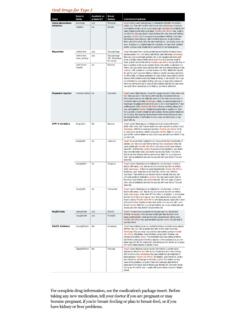
10 Cardiovascular disease: in 2010, death rates from cardiovascular disease are times higher for adults with than those without Diabetes , and hospitalization rates for heart attacks are times higher for those with Diabetes ;. 3. Other classes of Diabetes drugs include those that keep the liver from releasing too much glucose (biguanides), slow the digestion of starches (alpha-glucosidase inhibitors), or that make muscle cells more sensitive to insulin (thiazolidinediones). Like sulfonylureas, meglitinides also stimulate insulin release by the pancreas, but do not typically cause hypoglycemia. For more information about oral Diabetes medications, see American Diabetes Association Complete Guide to Diabetes , at 169-180. 5th ed. Alexandria, VA, American Diabetes Association, 2011. 3. Cerebrovascular disease: hospitalization rates for stroke are times higher among people with Diabetes .