Transcription of Request for Expressions Interest - Welcome to …
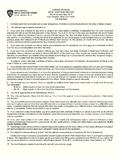
1 NYC DEPARTMENT OF TRANSPORTATION Request for Expressions of Interest NYCDOT Connected Vehicle Pedestrian Application using Designated Short Range Communications (DSRC) as part of the Connected Vehicle Pilot Project PIN: 84117 MBAD041 NYCDOT NYC DOT Request for expression of Interest (RFEI) NYCDOT Connected Vehicle Pedestrian Application using Designated Short Range Communications (DSRC) as part of the Connected Vehicle Pilot Project, PIN: 84117 MBAD041. 1 Purpose New York City Department of Transportation ( NYCDOT or the Agency or the City ) is issuing this Request for Expressions of Interest ( RFEI ) to evaluate vendor Interest in providing mobile wearable devises that utilize Designated Short Range Communications (DSRC) to be integrated into NYCDOT's Connected Vehicle Pilot project. The responses to this RFEI will assist NYCDOT in determining the mobile device(s), application(s) and service(s) that are able to utilize DSRC technology.
2 It is anticipated that DSRC will be used for both vehicle to pedestrian communications as well as vehicle to . infrastructure communications. The DSRC spectrum is seen as particularly useful for V2x communications because it can support very low latency, secure transmissions, fast network acquisition and in general, the ability to handle rapid and frequent handovers that are inherent in a mobile phone/vehicle environment. This RFEI will enable NYCDOT to adjust the project requirements for the next phase in the procurement process to increase competition. Additionally, this RFEI will provide interested parties with the opportunity to form joint venture partnerships, where appropriate. 2 Background NY City DOT has identified several use cases leveraging mobile phone technologies that include DSRC that will be deployed as part of the Connected Vehicle Pilot Deployment Project funded by USDOT. The integration of DSRC technology ( GHz) into mobile technology is critical to the deployment of the Pedestrian oriented application.
3 Vision NYCDOT intends to deploy a vendor developed application to support NYC visually impaired pedestrians to safely manage New York City signalized Intersections. This application and service will be available through a mobile wearable device, interacting with the signalized intersection in order to communicate intersection and roadway information to the visually impaired pedestrian. The agency is seeking to explore the possible role of broader adoption of the DSRC mobile application and service, and the opportunities it may serve to expand the use of this technology to a wide variety technology uses for all vulnerable road users (VRU). Mobile devices using DSRC based communications serves as the basis for the connected vehicle and mobility application integration. Opportunity DSRC communications two way short to medium range wireless communications with the capability to transmit critical data to mobile applications is a desirable way to connect the pedestrian with intersection information.
4 In support of this approach, the Federal Communications Commission (FCC) allocated 75 MHz of spectrum in the GHz band for use by Intelligent Transportations Systems (ITS) vehicle safety and mobility applications under Order FCC 03 324. Additionally, DSRC based communications is a major research priority of the Joint Program Office (ITS JPO) at the Department of Transportation ( DOT) Research and Innovative Technology Administration (RITA). The cross . modal program is conducting research using DSRC and other wireless communications technologies to ensure safe, interoperable connectivity to enhance mobility and environmental benefits across all transportation system modes. Pedestrian (V2P) and Vehicle applications that use vehicle to vehicle (V2V) and vehicle to infrastructure (V2I) communications need secure, wireless interface dependability in extreme weather conditions, and short time delays; all of which are facilitated by DSRC.
5 3 Project Overview This RFEI seeks vendor expression of Interest in delivery of a mobile device using DSRC Based Communications Capabilities from cell/mobile manufacturers, wireless service providers, DSRC equipment manufacturers and network and system developers. Goal 1 of the RFEI is to establish the opportunity or incentive that motivates aggressive pursuit of commercial development for mobile connectivity with respect to DSRC enabled devices. Goal 2 of this RFEI is to identify established standards as part of this development effort. The output is to identify rigorous standards and protocols for licensing DSRC technology and moving forward with a large scale implementation. Goal 3 of this RFEI is to identify vendor commitment to interoperability with an open platform. These are crucial to deployment of DSRC in devices or services. 4 Opportunities for DSRC Usage at NYCDOT NY City DOT has identified several use cases leveraging mobile technologies that include DSRC.
6 These include but are not limited to: Roadside communications equipment Traffic signal controller interfaces for applications that require signal phase and timing data. Systems and processes required to support security credentials and ensure a trusted network. Mapping services that provide highly detailed road geometries, road and asset locations for applications. Positioning services for resolving pedestrian locations to high accuracy and precision. Based on the RFEI responses, NYCDOT may offer some of the respondents the opportunity to demonstrate their product to show the effectiveness of the products or systems submitted by respondents. The date, time, location and other terms and conditions as respondent's product scope and possibility of NYCDOT's compensation for the product demonstration will be later determined by NYCDOT as per a future demonstration agreement. Respondents providing responses to this RFEI are required to provide answer the following questions and provide additional questions/comments that may be necessary for the development/deployment of the application: What additional functions might be added to the mobile device in the future?
7 How do you envision people with disabilities using your mobile device with DSRC? What does your mobile device use to provide communications services? And what other communication services are provided as part of the mobile device? What functions (GPS, etc.) does your mobile device include? Where is user data stored on your mobile device? How will your device differentiate between DSRC communications and other communication signals available? Does your application allow for an open application architecture via an Application Programming Interface (API) or other integrated data feed? How do you envision supporting DSRC technology by chip set? When do you expect your DSRC enabled mobile device to be ready for a limited roll out to 100 200 users? Given the Connected Vehicle approach outlined in this document, how do you envision integrating your mobile device into the Connected Vehicle Pilot program?
8 Are there any issues and/or needs in integrating your mobile device into the pilot project that would need to be resolved? Do you have experience adding additional communication types into your existing mobile device architecture? Do you have experience defining mobile devices for people with disability roles? How has your company addressed the privacy concerns for public use? Given the Connected Vehicle Pilot approach outlined in this document, how do you envision mobile devices using DSRC technology moving to a larger public use past the pilot project? 5 Submission Requirements Content The RFEI response must be provided in PDF format not exceeding 50 pages. The RFEI response shall contain: Contact information, including the legal name of the respondent, business address, name of contact, telephone number and email address. A summary of respondent's background and experiences related to the development and deployment of similar products (not more than 5 pages).
9 Responses to the questions listed in Section 4 and any other information that would be informative and responsive to this RFEI. Submission Details Any inquiries related to this RFEI should be directed by e mail, with the subject line DSRC Mobile device RFEI Q&A , to The deadline for submission of written requests for clarification is August 10, 2016 at 2:00 EST. NYCDOT will circulate questions and answers to respondents who provide e mail addresses no later than August 12, 2016 and will also post answers to all submitted questions on the NYCDOT webpage at: RFEI responses are due by August 18, 2016 at 2:00 EST. PDF format of the response shall be submitted via email to A demonstration agreement would be issued by August 31st . 6 Additional Information This RFEI is not intended as a formal offering for the award of a contract and participation by a respondent is not a requirement for participation in any future solicitation that NYCDOT may undertake.
10 NYCDOT does not intend to grant or issue any agreements on the basis of this RFEI. NYCDOT, the City and their officials, officers, agents and employees make no representation or warranty and assume no responsibility for the accuracy of the information set forth in this RFEI. Neither NYCDOT nor the City shall be liable for any costs incurred by any Respondent in the preparation, submittal, presentation, clarification or revision of its submission. Neither NYCDOT nor the City shall be obligated to pay and shall not pay any costs in connection with the preparation of such submissions. All submissions shall become the property of NYCDOT and the City and shall not be returned. Respondents acknowledge and understand that none of the information contained in the submissions shall be deemed confidential. Furthermore, information in the submissions will likely be shared with other governmental entities. Therefore, Respondents should not submit any information deemed to be proprietary information.