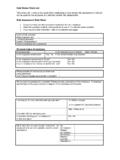
Transcription of RISK MANAGEMENT FOR OPERATING A WINCH
1 WINCH INDUSTRIES PTY. LTD. ABN 57 003 958 923 2 Coin Street, MOOROOKA. Q. 4105 PO Box 206, ACACIA RIDGE. Q. 4110 Ph. 0738751568 Fax 0732774316 Web address: Email address: RISK MANAGEMENT FOR OPERATING A WINCH RISK MANAGEMENT & assessment FOR OPERATING A WINCH HAZARD RESULT PRECAUTIONS GENERAL SAFETY PRECAUTIONS Moving part hazard. To prevent serious injury and property damage Do not operate or install WINCH without reading and understanding the operator s manual. Keep hands clear of wire rope, hook and fairlead opening during operation and when spooling. Stand clear of wire rope and load during operation. Keep others away. Inspect WINCH installation and wire rope condition before OPERATING WINCH . Do not use to move persons. Do not exceed WINCH s rated capacity. Never touch wire rope or hook while in tension.
2 Be certain the anchor you select will withstand load. Never wrap wire rope back onto itself. Use a choker chain, wire choker rope or tree truck protector on the anchor. Prior to initiating winching operation be sure any element which can interfere with safe winching operations is removed. Take your time, sloppy rigging causes accidents. Know your WINCH , take the time to fully understand your WINCH and the winching operation. Do not use WINCH to secure a load during transport. Do not submerse in water. Wear heavy leather gloves when handling the wire rope. Never WINCH with less than five (5) wraps of wire rope around the drum. RISK MANAGEMENT & assessment FOR OPERATING A WINCH HAZARD RESULT PRECAUTIONS OPERATOR Untrained Inexperienced Impatience No Safety Equipment or Attire The load may not be prepared for winching properly. The rope may not be properly attached to the load.
3 The load may not be secured properly for transport. May be a danger to others. Injury or Death Read and understand the manual. Keep a copy with you for reference. If there is something you don t understand Do not guess seek assistance from experienced operators. Be patient and assess the situation thoroughly. Always use accredited and rated accessories hook chains etc. Wear safety attire always. Think safety first, middle and last. WINCH MOUNTING WINCH mounted out of alignment. Mounted so it is very difficult to remove or service Mounting bolt may vibrate loose Excessive wear on parts, may cause WINCH to seize, WINCH may work inefficiently. The harder the WINCH is to service, the less it may be looked after and if the WINCH is impossible to be removed without destroying things, the less likely the small problems will be fixed leading to a major failure.
4 Leading to stripped threads, oil leakage, WINCH damage and potential failure Refer to the manual. It is critical the WINCH is set up correctly. Fit the WINCH so it can easily be removed. Give thought for the service engineer who has to check an add oil and grease and may have to remove the WINCH for repair. It may cost a bit more now but easy accessibility will save money and down time eventually. Use Loctite 567 thread locker sealer or similar on mounting bots. Check periodically and or when recommended by the instructions. RISK MANAGEMENT & assessment FOR OPERATING A WINCH HAZARD RESULT PRECAUTIONS LUBRICATION OIL & GREASE ARE THE CHEAPEST COMPONENT OF THE WHOLE UNIT YET CAN CAUSE THE MOST DAMAGE TO THE UNIT Wrong oil Low oil level Too infrequently greased. Laziness. May lead to breakdown of incompatible parts. May not have the correct properties to lubricate the unit efficiently enough causing eventual failure.
5 Insufficient lubrication of bearings, bushes etc. will cause breakages and eventual failure. Eventual seizure to free- wheeling apparatus the drum will not free- wheel, the dog clutch will not engage or disengage etc. resulting in eventual failure. Unit will run out of lubrication causing eventual failure. Check manual - seek manufacturer s advice. Check oil level regularly. Grease frequently, more is best. Check - fill and grease regularly. COMMISSIONING OF WINCH Excessive heat. Bolts and fixtures not secured properly. Lack of lubrication. Dog clutch may not be engaged properly May cause damage WINCH may become dislodged or move. WINCH may seize, dog clutch may slip. When winding the rope on the drum for the first time, check for heat buildup. Check the bolts are tensioned. Make sure the oil in the box is full. Grease the nipples, especially on one in the WINCH drum.
6 Move the dog in and out to get the feel. Listen for unusual noise. Most equipment requires a running in period so do not run the WINCH at full speed for at least the first 30 minutes. Do not exceed half the rated load for the first 30minutes. After one hour of operation check it all once more. RISK MANAGEMENT & assessment FOR OPERATING A WINCH HAZARD RESULT PRECAUTIONS ENGAGING DOG CLUTCH MANUALLY Not fully engaged. Broken pins in selector fork. Shock loading to the WINCH . Excessive wear in clutch engagement mechanism May cause WINCH breakage or load release. Clutch handle becomes loose and free moving. May cause limiting to the clutch movement because twisted shaft. May cause load release The WINCH may have a detent in the shaft which will be identified by a spring loaded ball that seats itself into the detent when engaged or disengaged.
7 Make sure you feel the detent and ball make the connection. If the handle is loose repair it. If the clutch is stiff grease it. If that doesn t fix it make immediate repairs. Repairs should be carried out as soon as they become apparent. Do not wait. They may become life threatening. Remember safety, first, middle and last. Dog clutch locks are available. See manufacturer. ENGAGEMENT OF DOG CLUTCH - AIR OPERATED Not fully engaged. Broken pins in selector fork. Shock loading to the WINCH . Excessive wear in clutch engagement mechanism Excessive pressure in air cylinder can lead to the above hazards SPECIAL FITTING CONSIDERATIONS May cause WINCH breakage or load release. Clutch handle becomes loose and free moving. May cause limiting to the clutch movement because twisted shaft. May cause load release As above SEE AIR RAM SECTION IN MANUAL The WINCH may have a detent in the shaft which will be identified by a spring loaded ball that seats itself into the detent when engaged or disengaged.
8 Make sure you feel the detent and ball make the connection. If the handle is loose repair it. If the clutch is stiff grease it. If that doesn t fix it make immediate repairs. Repairs should be carried out as soon as they become apparent. Do not wait. They may become life threatening. Remember safety, first, middle and last. Dog clutch locks are available. See manufacturer. As above AIR RAM SEE SPECIAL NOTE RISK MANAGEMENT & assessment FOR OPERATING A WINCH HAZARD RESULT PRECAUTIONS WIRE ROPE Frayed Kinked Over Size Under Size Breakage Breakage - steel splinters when rope is being handled. Breakage - kink may catch on things The end of the tray etc. Severely weakens rope Breakage - too big a rope wrapped around a small diameter drum will cause early fatigue. Too small a rope may not meet rated capacity. To have a rope break under load can be catastrophic.
9 It can whip in any direction causing injury or death and may allow your load to run free to cause further havoc. Replace. Replace. Replace. Always use recommended rope size. Seek advice from accredited wire rope manufacturer. Replace. Always use recommended rope size. Seek advice from accredited wire rope manufacturer. Replace. Never stand between the load and the WINCH always WINCH on level ground. Always wear safety attire/equipment on hands, feet body and eyes especially. WINCHING LOADS Winching on uneven ground. Winching on a hill or slope. Winching rolling loads. Not preparing load for winching. Shock loads Load may WINCH on unevenly and fall. Winching uphill may put far more load on your equipment than it is rated for. Winching downhill may allow the load to over-run the rope resulting in the bird-nesting of you rope. (See Rope consideration while winching section) The load may not be prepared for winching properly.
10 This type of load imposes a strain on the WINCH many times the actual weight of the load and can cause failure of the cable or of the WINCH . Always load on the most level ground you can find and within reason, load across the hill so your load will not roll away if it becomes dislodged. Be patient, be safe, and take a minute to analyze all the potential dangers. Read and understand the manual. Keep a copy with you for reference. Avoid shock loads at all costs. You must make sure that there is tension on the rope at all times whilst winching, this becomes a problem when winching loads slightly down hill or powered load traveling faster then winching speed. RISK MANAGEMENT & assessment FOR OPERATING A WINCH HAZARD RESULT PRECAUTIONS WINCHING OVER A LONG DURATION. Overheating of gear box. Breakdown of oil causing eventual failure. Excessive wear, shorter life span, eventual failure.