Transcription of S PRIMARY SOURCE COLLECTION THE T WENTIES …
1 BECOMING MODERN: AMERICA IN THE 1920S. PRIMARY SOURCE COLLECTION . THETWENTIES C IN. O N T E M P O R A R Y. OMMENTARY. *.. Black & White in America . As black soldiers returned from Europe after World War I, and southern blacks migrated to northern cities by the thousands; as black writers and artists in Harlem spawned the New Negro movement, and black political leaders commanded national attention, race announced itself as a rapidly changing factor in postwar America. How black and white commentators viewed the phenomenon is sampled in the excepted commentary presented here. An educator and clergyman, Mordecai Johnson delivered The Faith of the Mordecai Wyatt Johnson American Negro as the commencement address for the 1922 graduating class of Harvard Divinity School. Four years later he was appointed the The Faith of the American Negro.
2 First black president of Howard University in Washington, DC. The Crisis, August 1922. When the United States Government set forth its war aims, called upon Negro soldiers to stand by the colors and Negro civilians, men, women, and children, to devote their labor and earnings to the cause, and when the war shortage of labor permitted a quarter million Negroes to leave the former slave States for the better conditions of the North, the entire Negro people experienced a profound sense of spiritual release. For the first time since emancipation they found themselves comparatively free to sell their labor on the open market for a living wage, found themselves launched on a great world enterprise with a chance to vote in a real and decisive way, and, best of all, in the heat of the struggle they found themselves bound with other Americans in the spiritual fellowship of a common cause.
3 At the close of the war, however, the Negro's hopes were suddenly dashed to the ground. Southern newspapers began at once to tell the Negro soldiers that the war was over and the sooner they forgot the better. Pull off your uniform, they said, find the place you had before the war, and stay in it. Act like a Negro should act, said one newspaper, work like a Negro should work, talk like a Negro should talk, study like a Negro should study. Dismiss all ideas of independency or of being lifted up to the plane of the white man. Understand the necessity of keeping a Negro's place. In connection with such admonitions there came the great collective attacks on Negro life and property in Washington, Chicago, Omaha, Elaine, and Tulsa. There came also the increasing boldness of lynchers who advertised their purposes in advance of their victims.
4 There came vain appeals by the colored people to the President of the United States and to the houses of Congress. And finally there came the reorganization and rapid growth of the Ku Klux Klan.. From those terrible days until this day the Negro's faith in the righteous purpose of the Federal Government has sagged. Some have laid the blame on the parties in power. Some have laid it elsewhere. But all the colored people, in every section of the United States, believe that there is something wrong, and not accidentally wrong, at the very heart of the Government. *. National Humanities Center, AMERICA IN CLASS, 2012: Some punctuation and spelling modernized for clarity. Middletown excerpt reproduced by permission of Mr. Staughton Lynd. Newspaper captures courtesy of ProQuest Historical Newspapers.
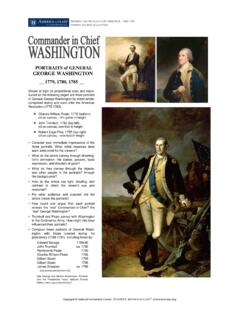
5 Title font (TestarossaNF) courtesy of Nick's Fonts at Images on this page: Schomburg Center for Research in Black Culture/NYPL (#1, 3), The New Yorker (#2), The [Baltimore] Afro-American. (#4; Feb. 23, 1923); see following pages for photo information. Images in public domain or printed with permission; complete image credits at sources/becoming In his first of two novels on race in America, Walter F. White Walter White, an NAACP official who investi- The Fire in the Flint gated race riots and lynchings, gave voice to his WHAT IS. RACE PREJUDICE? . novel, 1924 speculations on the problem of race in America . through his protagonist, Dr. Kenneth Harper, a black physician in a small Georgia town. Definition Contest, The Forum, 1928. Inviting readers' definitions for terms What was the elusive solution to this problem of race in looming large in current discussion was America?
6 Why couldn't the white people of the South see where a regular feature of the periodical The their course was leading them? Ewing was right. No white man of Forum. In February 1928, five defini- tions chosen by the editors were Tom Ewing: white business leader of the South had ever come out in com- published, inviting readers to vote for the town who opts to let well plete defiance of the present regime their favorites. enough alone in race relations which was so surely damning the South Race Prejudice is the snobbishness of Rev. Ezekiel Wilson: pastor of the and America. Kenneth saw his people the mob. The snob as an individual is black Baptist church kept in the bondage of ignorance. Why? hostile or unsociable or patronizing in Because it was to the economic his attitude, and unjust, unkind, and discourteous in his actions toward advantage of the white South to have it so.
7 Why was a man like those who by reason of heredity or Reverend Wilson patted on the back and every Negro told that environment differ from himself. When men of his kind were safe and sane leaders ? Why was every such an attitude is assumed and such Negro who too audibly or visibly resented the brutalities and actions pursued and advocated by large classes of people toward alien races, proscriptions of race prejudice instantly labelled as a radical a thus impairing the social, economic, or dangerous character as one seeking social equality ? What was political opportunities of individuals of this thing called social equality anyhow? That was an easy any race to complete on equal terms in question to answer. It was about the only one he could answer all aspects of the game called Life.
8 Then we have Race Prejudice. with any completeness. White folks didn't really believe that -Dr. William R. Tymms, Fairfield, Maine Negroes sought to force themselves in places where they weren't wanted, any more than decent white people wanted to force Race Prejudice one's dominant themselves where they were not invited. No, that was the smoke- mental attitude when: My country, habits, prayers, my folks, my skin screen to hide something more sinister. Social equality would lead Make me a better man than Gunga Din. to intermarriage, they thought, and the legitimatizing of the -Dr. Con O. Lee, Tampa, Florida countless half-colored sons and daughters of these white people. Why, if every child in the South were a legitimate one, more than Race Prejudice instinctive recogni- tion of biologic incompatibility.
9 Half of the land and property in the South would belong to colored -James Bond, Tarentum, Pennsylvania owners. Did the white people who were always talking about social Race Prejudice a people's presum- equality think they really were fooling anybody with their ably proper pique at pigment. constant denunciation of it? Twenty-nine states of America had -Minnie Hite Moody, Columbus, Indiana laws against intermarriage. All these laws were passed by white Every race has its salient characteristics legislators. Were these laws passed to keep Negroes from seizing of color and physiognomy, emotions, some white woman and forcing her to marry him against her will? and mentality, which differentiate it .. No, the laws were passed because white men wanted to have from all others.
10 Race Prejudice is an innate sense of the fitness of things their own women and use colored women too without any law which recognizes the inherent incom- interfering with their affairs or making them responsible for the patibility of certain races, on account of consequences. such differences, to enter into marital relations or mingle socially with certain others. It is the conviction that such Langston Hughes When the old junk man Death ineradicable differences oblige these Question Comes to gather up our bodies races, when dwelling together, to move And toss them into the sack of oblivion, on parallel lines. Never the twain shall The Crisis meet, yet in economic mutual respect I wonder if he will find March 1922 is the rule, and sincere affection often The corpse of a white multi-millionaire exists between their respective Worth more pennies of eternity, members.