Transcription of S9 Step 5 Nonclinical evaluation for anticancer ...
1 May 2010 EMA/CHMP/ICH/646107/2008 ICH guideline S9 on Nonclinical evaluation for anticancer pharmaceuticals step 5 Transmission to CHMP December 2008 Adoption by CHMP for release for consultation December 2008 End of consultation (deadline for comments) March 2009 Final adoption by CHMP November 2009 Date for coming into effect May 2010 7 Westferry Circus Canary Wharf London E14 4HB United Kingdom An agency of the European Union Telephone +44 (0)20 7418 8400 Facsimile +44 (0)20 7418 8416 E-mail Website European Medicines Agency, 2013. Reproduction is authorised provided the source is acknowledged. Table of contents 1. Introduction .. 3 Objectives of the guideline.
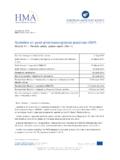
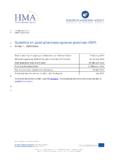
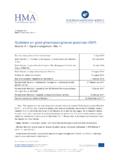
2 3 Background .. 3 Scope .. 3 General principles .. 4 2. Studies to support Nonclinical evaluation .. 4 Pharmacology .. 4 Safety pharmacology .. 5 Pharmacokinetics .. 5 General toxicology .. 5 Reproduction toxicology .. 5 Genotoxicity .. 6 Carcinogenicity .. 6 Immunotoxicity .. 6 Photosafety testing .. 6 3. Nonclinical data to support clinical trial design and marketing .. 7 Start dose for first administration in humans .. 7 Dose escalation and the highest dose in a clinical trial .. 7 Duration and schedule of toxicology studies to support initial clinical trials .. 7 Duration of toxicology studies to support continued clinical development and marketing.
3 7 Combination of pharmaceuticals .. 8 Nonclinical studies to support trials in pediatric populations .. 8 4. Other considerations .. 8 Conjugated products .. 8 Liposomal products .. 8 evaluation of drug metabolites .. 9 evaluation of impurities .. 9 5. Notes .. 10 ICH guideline S9 on Nonclinical evaluation for anticancer pharmaceuticals EMA/CHMP/ICH/646107/2008 Page 2/10 1. Introduction Objectives of the guideline The purpose of this guidance is to provide information to assist in the design of an appropriate program of Nonclinical studies for the development of anticancer pharmaceuticals. The guidance provides recommendations for Nonclinical evaluations to support the development of anticancer pharmaceuticals in clinical trials for the treatment of patients with advanced disease and limited therapeutic options.
4 This guideline aims to facilitate and accelerate the development of anticancer pharmaceuticals and to protect patients from unnecessary adverse effects, while avoiding unnecessary use of animals, in accordance with the 3R principles (reduce/refine/replace), and other resources. As appropriate, the principles described in other ICH guidelines should be considered in the development of anticancer pharmaceuticals. Specific situations where recommendations for Nonclinical testing deviate from other guidance are described in this document. Background Because malignant tumors are life-threatening, the death rate from these diseases is high, and existing therapies have limited effectiveness, it is desirable to provide new, effective anticancer drugs to patients more expeditiously.
5 There have been no internationally accepted objectives or recommendations on the design and conduct of Nonclinical studies to support the development of anticancer pharmaceuticals in clinical trials for the treatment of patients with advanced disease and limited therapeutic options. Nonclinical evaluations are conducted to: 1) identify the pharmacologic properties of a pharmaceutical, 2) establish a safe initial dose level for the first human exposure, and 3) understand the toxicological profile of a pharmaceutical ( , identification of target organs, exposure-response relationships, and reversibility). In the development of anticancer drugs, clinical studies often involve cancer patients whose disease condition is progressive and fatal.
6 In addition, the dose levels in these clinical studies often are close to or at the adverse effect dose levels. For these reasons, the type, timing and flexibility called for in the design of Nonclinical studies of anticancer pharmaceuticals can differ from those elements in Nonclinical studies for other pharmaceuticals. Scope This guideline provides information for pharmaceuticals that are intended to treat cancer in patients with serious and life threatening malignancies. For the purpose of this guideline, this patient population is referred to as patients with advanced cancer. The guideline applies to both small molecule and biotechnology-derived pharmaceuticals (biopharmaceuticals), regardless of the route of administration.
7 This guideline describes the type and timing of Nonclinical studies in relation to the development of anticancer pharmaceuticals in patients with advanced cancer and references other guidance as appropriate. It describes the minimal considerations for initial clinical trials in patients with advanced cancer whose disease is refractory or resistant to available therapy, or where current therapy is not considered to be providing benefit. The Nonclinical data to support Phase I and the ICH guideline S9 on Nonclinical evaluation for anticancer pharmaceuticals EMA/CHMP/ICH/646107/2008 Page 3/10 clinical Phase I data would normally be sufficient for moving to Phase II and into second or first line therapy in patients with advanced cancer.
8 The guideline also describes further non-clinical data to be collected during continued clinical development in patients with advanced cancer. When an anticancer pharmaceutical is further investigated in cancer patient populations with long expected survival [ , those administered pharmaceuticals on a chronic basis to reduce the risk of recurrence of cancer], the recommendations for and timing of additional Nonclinical studies depend upon the available Nonclinical and clinical data and the nature of the toxicities observed. This guideline does not apply to pharmaceuticals intended for cancer prevention, treatment of symptoms or side effects of chemotherapeutics, studies in healthy volunteers, vaccines, or cellular or gene therapy.
9 If healthy volunteers are included in clinical trials, the ICH M3 guideline should be followed. Radiopharmaceuticals are not covered in this guideline, but some of the principles could be adapted. General principles The development of each new pharmaceutical call for studies designed to characterize its pharmacological and toxicological properties according to its intended use in humans. Modification of "standard" Nonclinical testing protocols generally is warranted to address novel characteristics associated with the pharmaceutical or with the manner in which it is to be used in humans. The manufacturing process can change during the course of development. However, the active pharmaceutical substance used in Nonclinical studies should be well characterized and should adequately represent the active substance to be used in the clinical trials.
10 In general, Nonclinical safety studies that are used to support the development of a pharmaceutical should be conducted in accordance with Good Laboratory Practices. 2. Studies to support Nonclinical evaluation Pharmacology Prior to Phase I studies, preliminary characterization of the mechanism(s) of action and schedule dependencies as well as anti-tumor activity of the pharmaceutical should have been made. Appropriate models should be selected based on the target and mechanism of action, but the pharmaceutical need not be studied using the same tumor types intended for clinical evaluation . These studies can: provide Nonclinical proof of principle; guide schedules and dose-escalation schemes; provide information for selection of test species; aid in start dose selection and selection of investigational biomarkers, where appropriate; and, if relevant, justify pharmaceutical combinations.