Transcription of SAFETY DATA SHEET
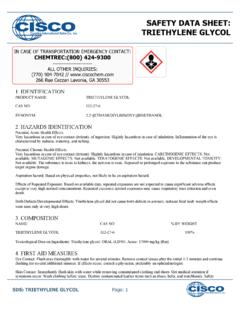
1 SAFETY DATA SHEET1. IdentificationPVC Medium Clear CementProduct identifierOther means of identification1101 ESDS numberPart Numbers: Clear - 30350, 31017, 31018, 31019, 31020, 31021, 31550, 31551, 31552, 31553,31946, 31947, 31948, 31949, 32222, 32223, 32224, 32225 SynonymsJoining PVC PipesRecommended useNone restrictionsManufacturer/Importer/Suppli er/Distributor informationCompany NameOatey West 160th , OH EmergencyChemtrec 1-800-424-9300 (Outside the US 1-703-527-3887)Emergency First Aid1-877-740-5015 Contact personMSDS Coordinator2. Hazard(s) identificationCategory 2 Flammable liquidsPhysical hazardsCategory 4 Acute toxicity, oralHealth hazardsCategory 2 Skin corrosion/irritationCategory 2 ASerious eye damage/eye irritationCategory 3 respiratory tract irritationSpecific target organ toxicity, single exposureCategory 3 narcotic effectsSpecific target organ toxicity, single exposureCategory 1 Aspiration hazardNot defined hazardsLabel elementsSignal wordDangerHazard statementHighly flammable liquid and vapor.
2 Harmful if swallowed. May be fatal if swallowed and entersairways. Causes skin irritation. Causes serious eye irritation. May cause respiratory irritation. Maycause drowsiness or statementPreventionKeep away from heat/sparks/open flames/hot surfaces. - No smoking. Use only outdoors or in awell-ventilated area. Keep container tightly closed. Ground/bond container and receivingequipment. Use explosion-proof electrical/ventilating/lighting equipment. Use only non-sparkingtools. Take precautionary measures against static discharge. Avoid breathing mist or vapor. Washthoroughly after handling. Do not eat, drink or smoke when using this product. Wear protectivegloves/protective clothing/eye protection/face mouth. Do NOT induce vomiting. If skin irritation occurs: Get medical advice/attention. Ifeye irritation persists: Get medical advice/attention. Take off contaminated clothing and washbefore reuse. In case of fire: Use appropriate media to in a well-ventilated place.
3 Keep container tightly closed. Keep cool. Store locked of contents/container in accordance with local/regional/national/international Medium Clear CementSDS US926291 Version #: 01 Revision date: - Issue date: 27-May-20151 / 10 Hazard(s) not otherwiseclassified (HNOC)Frequent or prolonged contact may defat and dry the skin, leading to discomfort and form explosive peroxides. Contains a chemical classified by the US EPA as a suspectedpossible informationNot Composition/information on ingredientsMixtures109-99-930-50 Furan, Tetrahydro-CAS number%Chemical name67-64-110-25 Acetone78-93-310-25 methyl ethyl ketone9002-86-212-20 Polyvinyl chloride108-94-110-20 Cyclohexanone112945-52-51-5 Fumed Silica*Designates that a specific chemical identity and/or percentage of composition has been withheld as a trade First-aid measuresRemove victim to fresh air and keep at rest in a position comfortable for breathing.
4 Call a POISONCENTER or doctor/physician if you feel off immediately all contaminated clothing. Wash with plenty of soap and water. If skinirritation occurs: Get medical advice/attention. Take off contaminated clothing and wash contactImmediately flush eyes with plenty of water for at least 15 minutes. Remove contact lenses, ifpresent and easy to do. Continue rinsing. If eye irritation persists: Get medical contactCall a physician or poison control center immediately. Do not induce vomiting. If vomiting occurs,keep head low so that stomach content doesn't get into the lungs. Aspiration may causepulmonary edema and may include stinging, tearing, redness, swelling, and blurred vision. Skin have a narcotic effect and may cause headache, fatigue, dizziness and nausea. Maycause redness and importantsymptoms/effects, acute anddelayedProvide general supportive measures and treat symptomatically. Thermal burns: Flush with waterimmediately.
5 While flushing, remove clothes which do not adhere to affected area. Call anambulance. Continue flushing during transport to hospital. In case of shortness of breath, giveoxygen. Keep victim warm. Keep victim under observation. Symptoms may be of immediatemedical attention and specialtreatment neededTake off all contaminated clothing immediately. IF exposed or concerned: Get medicaladvice/attention. Ensure that medical personnel are aware of the material(s) involved, and takeprecautions to protect themselves. Wash contaminated clothing before information5. Fire-fighting measuresAlcohol resistant foam. Water fog. Dry chemical powder. Carbon dioxide (CO2).Suitable extinguishing mediaDo not use water jet as an extinguisher, as this will spread the extinguishingmediaVapors may form explosive mixtures with air. Vapors may travel considerable distance to a sourceof ignition and flash back. During fire, gases hazardous to health may be hazards arising fromthe chemicalSelf-contained breathing apparatus and full protective clothing must be worn in case of protective equipmentand precautions for firefightersIn case of fire and/or explosion do not breathe fumes.
6 Move containers from fire area if you can doso without fightingequipment/instructionsUse standard firefighting procedures and consider the hazards of other involved methodsHighly flammable liquid and vapor. This product contains tetrahydrofuran that may form explosiveorganic peroxide when exposed to air or light or with fire hazardsPVC Medium Clear CementSDS US926291 Version #: 01 Revision date: - Issue date: 27-May-20152 / 106. Accidental release measuresKeep unnecessary personnel away. Keep people away from and upwind of spill/leak. Keep out oflow areas. Eliminate all ignition sources (no smoking, flares, sparks, or flames in immediate area).Wear appropriate protective equipment and clothing during clean-up. Avoid inhalation of vapors ormists. Do not touch damaged containers or spilled material unless wearing appropriate protectiveclothing. Ventilate closed spaces before entering them. Local authorities should be advised ifsignificant spillages cannot be contained.
7 For personal protection, see section 8 of the precautions,protective equipment andemergency proceduresEliminate all ignition sources (no smoking, flares, sparks, or flames in immediate area). Takeprecautionary measures against static discharge. Use only non-sparking tools. Keep combustibles(wood, paper, oil, etc.) away from spilled Spills: Stop the flow of material, if this is without risk. Dike the spilled material, where this ispossible. Cover with plastic SHEET to prevent spreading. Use a non-combustible material likevermiculite, sand or earth to soak up the product and place into a container for later disposal. Usewater spray to reduce vapors or divert vapor cloud drift. Prevent entry into waterways, sewer,basements or confined areas. Following product recovery, flush area with Spills: Wipe up with absorbent material ( cloth, fleece). Clean surface thoroughly toremove residual return spills to original containers for re-use.
8 For waste disposal, see section 13 of the and materials forcontainment and cleaning upAvoid discharge into drains, water courses or onto the precautions7. Handling and storageVapors may form explosive mixtures with air. Do not handle, store or open near an open flame,sources of heat or sources of ignition. Protect material from direct sunlight. Take precautionarymeasures against static discharges. All equipment used when handling the product must begrounded. Use non-sparking tools and explosion-proof equipment. Do not taste or swallow. Avoidbreathing mist or vapor. Avoid contact with skin. Avoid contact with eyes. Avoid prolongedexposure. Avoid contact with clothing. Provide adequate ventilation. Wear appropriate personalprotective equipment. Observe good industrial hygiene practices. When using, do not eat, drink orsmoke. Wash hands thoroughly after for safe handlingStore locked up. Keep away from heat, sparks and open flame.
9 Prevent electrostatic chargebuild-up by using common bonding and grounding techniques. Store in original tightly closedcontainer. Store in a cool, dry place out of direct sunlight. Store in a well-ventilated place. Storeaway from incompatible materials (see Section 10 of the SDS). Keep in an area equipped for safe storage,including any incompatibilities8. Exposure controls/personal protectionOccupational exposure - Silica (CAS112945-52-5)20 OSHA Specifically Regulated Substances (29 CFR )ValueTypeComponentsSTEL5 ppmPolyvinyl chloride (CAS9002-86-2)TWA1 ppmUS. OSHA Table Z-1 Limits for Air Contaminants (29 CFR )ValueTypeFormComponentsPEL2400 mg/m3 Acetone (CAS 67-64-1)1000 ppmPEL200 mg/m3 Cyclohexanone (CAS108-94-1)50 ppmPEL590 mg/m3 Furan, Tetrahydro- (CAS109-99-9)200 ppmPVC Medium Clear CementSDS US926291 Version #: 01 Revision date: - Issue date: 27-May-20153 / 10US. OSHA Table Z-1 Limits for Air Contaminants (29 CFR )ValueTypeFormComponentsPEL590 mg/m3 methyl ethyl ketone (CAS78-93-3)200 ppmPEL5 mg/m3 Respirable chloride (CAS9002-86-2)15 mg/m3 Total OSHA Table Z-3 (29 CFR ) mg/m3 Fumed Silica (CAS112945-52-5)20 mppcfUS.
10 ACGIH Threshold Limit ValuesValueTypeFormComponentsSTEL750 ppmAcetone (CAS 67-64-1)TWA500 ppmSTEL50 ppmCyclohexanone (CAS108-94-1)TWA20 ppmSTEL100 ppmFuran, Tetrahydro- (CAS109-99-9)TWA50 ppmSTEL300 ppmMethyl ethyl ketone (CAS78-93-3)TWA200 ppmTWA1 mg/m3 Respirable chloride (CAS9002-86-2) - NIOSHV alueTypeFormComponentsREL6 Silica (CAS112945-52-5)US. NIOSH: Pocket Guide to Chemical HazardsValueTypeComponentsTWA590 mg/m3 Acetone (CAS 67-64-1)250 ppmTWA100 mg/m3 Cyclohexanone (CAS108-94-1)25 ppmTWA6 mg/m3 Fumed Silica (CAS112945-52-5)STEL735 mg/m3 Furan, Tetrahydro- (CAS109-99-9)250 ppmTWA590 mg/m3200 ppmSTEL885 mg/m3 methyl ethyl ketone (CAS78-93-3)300 ppmTWA590 mg/m3200 ppmPVC Medium Clear CementSDS US926291 Version #: 01 Revision date: - Issue date: 27-May-20154 / 10 Biological limit valuesACGIH Biological Exposure IndicesValueSampling TimeDeterminantSpecimenComponents50 mg/lAcetoneUrine*Acetone (CAS 67-64-1)80 mg/l1,2-Cyclohexanediol,withhydrolysisUr ine*Cyclohexanone (CAS108-94-1)8 mg/lCyclohexanol,with hydrolysisUrine*2 mg/lTetrahydrofuranUrine*Furan, Tetrahydro- (CAS109-99-9)2 mg/lMEKU rine* methyl ethyl ketone (CAS78-93-3)* - For sampling details, please see the source guidelinesUS - California OELs.