Transcription of SAFETY DATA SHEET EP2 GREASE - Farnell
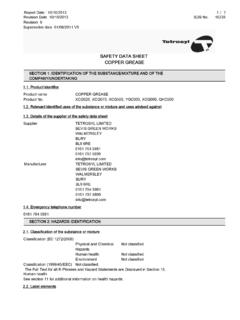
1 Report Date : 19/04/20138/1 Revision Date 05/02/2013 Revision 7 Supersedes date 17/04/2012 V6 SDS No. 16241 SAFETY DATA SHEET EP2 GREASESECTION 1: IDENTIFICATION OF THE SUBSTANCE/MIXTURE AND OF THE Product identifierProduct nameEP2 GREASEP roduct , XGE050, XGE125, XGE400, XGE500, YGE400, SLG400, Relevant identified uses of the substance or mixture and uses advised againstIdentified Details of the supplier of the SAFETY data sheetTETROSYL LIMITEDS upplierBEVIS GREEN WORKSWALMERSLEYBURYBL9 6RE0161 764 59810161 797 LIMITEDM anufacturerBEVIS GREEN WORKSWALMERSLEYBURYBL9 6RE0161 764 59810161 797 Emergency telephone number0161 764 5981 SECTION 2: HAZARDS Classification of the substance or mixtureClassification (1999/45/EEC)Not healthSee section 11 for additional information on health Label elementsRisk PhrasesNCNot PhrasesS2 Keep out of the reach of children.
2 Report Date : 19/04/20138/2 SDS No. 16241EP2 GREASES46If swallowed, seek medical advice immediately and show this container or Other hazardsSECTION 3: COMPOSITION/INFORMATION ON MixturesPETROLEUM DISTILLATES< : 64742-82-1EC No.: 265-185-4 Classification (67/548/EEC)Xn;R65. N;R51 ,R66, (EC 1272/2008)Flam. Liq. 3 - H226 EUH066 STOT SE 3 - H336 Asp. Tox. 1 - H304 Aquatic Chronic 2 - H411 ZINC DIALKYLDITHIOPHOSPHATE1-5%CAS-No.: 68649-42-3EC No.: 272-028-3 Classification (67/548/EEC)Xi;R38,R41. N;R51 (EC 1272/2008)Skin Irrit. 2 - H315 Eye Dam. 1 - H318 Aquatic Chronic 2 - H411 The Full Text for all R-Phrases and Hazard Statements are Displayed in Section 4: FIRST AID Description of first aid measuresGeneral informationRemove affected person from source of contamination. Get medical attention immediately!
3 InhalationMove injured person into fresh air immediately. Call an ambulance. Be aware that symptoms of lung oedema (shortness of breath) may develop up to 24 hours after exposure. Bring these instructions. Place unconscious person on the side in the recovery position and ensure breathing can take rinse mouth and drink plenty of water or milk. Keep person under observation. Do not induce vomiting. If vomiting occurs, keep head low. Transport immediately to hospital and bring along these contactRemove contaminated clothing immediately and wash skin with soap and water. Consult a physician for specific advice. Burns: Flush with water immediately. While flushing, remove clothes which do not adhere to affected area. Call an ambulance. Continue flushing during transport to contactImmediately flush with plenty of water for up to 15 minutes.
4 Remove any contact lenses and open eyes wide apart. Immediately transport to hospital or eye Most important symptoms and effects, both acute and delayed Report Date : 19/04/20138/3 SDS No. 16241EP2 GREASEG eneral informationThe severity of the symptoms described will vary dependant of the concentration and the length of exposure. NOTE! Effects may be delayed. Keep affected person under cause an asthma-like shortness of breath. Vapours may cause headache, fatigue, dizziness and cause discomfort if swallowed. May cause stomach pain or vomiting. May cause nausea, headache, dizziness and contactProlonged or repeated contact with skin may cause redness, itching, irritation and eczema/chapping. Allergic contactMay cause temporary eye Indication of any immediate medical attention and special treatment neededNo recommendation given, but first aid may still be required in case of accidental exposure, inhalation or ingestion of this chemical.
5 If in doubt, GET MEDICAL ATTENTION PROMPTLY!SECTION 5: FIREFIGHTING Extinguishing mediaExtinguishing mediaUse fire-extinguishing media appropriate for surrounding extinguishing mediaDo not use water jet as an extinguisher, as this will spread the Special hazards arising from the substance or mixtureHazardous combustion productsDuring fire, toxic gases (CO, CO2) are Fire & Explosion HazardsNo unusual fire or explosion hazards hazardsIn case of fire, toxic and corrosive gases may be Advice for firefightersSpecial Fire Fighting ProceduresBeware, risk of formation of toxic and corrosive equipment for fire-fightersLeave danger zone 6: ACCIDENTAL RELEASE Personal precautions, protective equipment and emergency proceduresWear protective clothing as described in Section 8 of this SAFETY data SHEET .
6 In case of spills, beware of slippery floors and Environmental precautionsThe product should not be dumped in nature but collected and delivered according to agreement with the local Methods and material for containment and cleaning upFor waste disposal, see section 13. When dealing with a spillage, please consult the section relating to suitable protective measures. Absorb spillage with non-combustible, absorbent material. Ventilate well. Prevent discharge of larger quantity to Reference to other sections Report Date : 19/04/20138/4 SDS No. 16241EP2 GREASEWear protective clothing as described in Section 8 of this SAFETY data SHEET . Collect and dispose of spillage as indicated in section 7: HANDLING AND Precautions for safe handlingRead and follow manufacturer's recommendations.
7 Always remove GREASE with soap and water or skin cleaning agent, never use organic solvents. Good personal hygiene is necessary. Wash hands and contaminated areas with water and soap before leaving the work site. Do not eat, drink or smoke when using the Conditions for safe storage, including any incompatibilitiesKeep away from heat, sparks and open flame. Store in tightly closed original container in a dry, cool and well-ventilated Specific end use(s)The identified uses for this product are detailed in Section 8: EXPOSURE CONTROLS/PERSONAL Control parametersSTDSTEL - 15 MinTWA - 8 HrsNameNotes600 mg/m3 WELPETROLEUM DISTILLATESWEL = Workplace Exposure Exposure controlsProtective equipmentProcess conditionsUse engineering controls to reduce air contamination to permissible exposure level.
8 Provide eyewash measuresProvide adequate ventilation, including appropriate local extraction, to ensure that the defined occupational exposure limit is not equipmentWear suitable respiratory protection. Check that mask fits tight and change filter protectionNitrile gloves are protectionWear tight-fitting goggles or face ProtectionProvide eyewash station. AVOID ALL SKIN AND RESPIRATORY CONTACT!Hygiene measuresWash contaminated clothing before reuse. Wash hands at the end of each work shift and before eating, smoking and using the protectionProtection suit must be 9: PHYSICAL AND CHEMICAL PROPERTIES Report Date : 19/04/20138/5 SDS No. 16241EP2 Information on basic physical and chemical propertiesAppearanceGreaseColourDark. in waterInitial boiling point and boiling range ( C)>250 CMelting point ( C)Not 20 CVapour density (air=1)Not pressureNot rateNot >30, 000 cP 20 CDecomposition temperature ( C)Not Threshold, LowerNot Threshold, UpperNot point ( C)>150 CAuto Ignition Temperature ( C)Not determined.
9 >250 Flammability Limit - Lower(%)Not Limit - Upper(%)Not Coefficient (N-Octanol/Water)Not propertiesNot Other 10: STABILITY AND ReactivityNo specific reactivity hazards associated with this Chemical stabilityNo particular stability Possibility of hazardous reactionsNot Conditions to avoidNo specific conditions are likely to result in a hazardous Incompatible materials Report Date : 19/04/20138/6 SDS No. 16241EP2 GREASEM aterials To AvoidNo incompatible groups Hazardous decomposition productsNone under normal 11: TOXICOLOGICAL Information on toxicological effectsToxicological informationNo information WarningsThis chemical can be hazardous when inhaled and/or touched. This chemical may cause skin/eye irritation and burns (corrosive). May cause severe internal injury.
10 Vapour from this chemical can be hazardous when of entryInhalation. Ingestion. Skin and/or eye contact. Skin 12: ECOLOGICAL INFORMATIONE cotoxicityThe product components are not classified as environmentally hazardous. However, this does not exclude the possibility that large or frequent spills can have a harmful or damaging effect on the ToxicityAcute Toxicity - FishNot Toxicity - Aquatic InvertebratesNot Persistence and degradabilityDegradabilityThere are no data on the degradability of this Bioaccumulative potentialBioaccumulative potentialNo data available on coefficientNot Mobility in soilAdsorption/Desorption CoefficientNot Results of PBT and vPvB assessmentNot Classified as PBT/vPvB by current EU Other adverse effectsNot 13: DISPOSAL CONSIDERATIONSG eneral informationWhen handling waste, consideration should be made to the SAFETY precautions applying to handling of the product.