Transcription of SAFETY DATA SHEET - Graphics IV
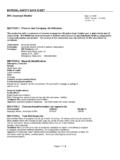
1 -MERCURY SAFETY data SHEET section 1: CHEMICAL PRODUCT AND COMPANY IDENTIFICATION HAR Adhesive Technologies 60 South Park Bedford, OH 44146 440-786-7185 PRODUCT INFORMATION PRODUCT NAME: -MERCURY PRODUCT DESCRIPTION: RECOMMENDED USES: RESTRICTIONS ON USE: CHEMICAL FORMULA: Adhesive Carbonless Paper Adhesive Industrial use only Not Applicable to mixtures Emergency Phone Number (CHEMTREC): 1-800-424-9300 section 2: HAZARDS IDENTIFICATION GHS Classification: This material is considered hazardous by the OSHA Hazard Communication Standard (29 CFR ). Classification of Mixture Combustible Liquids: Category 3 Eye Damage/Eye Irritation: Category 2B Skin Irritation: Category 3 Signal Word.
2 Warning Hazard Statements: Combustible liquid and vapor May cause moderate eye irritation. May cause drowsiness and dizziness. Precautionary Statements: General: Read label before use. Keep out of reach of children. If medical advice is needed, have product container or label at hand. Wear protective gloves. Wear eye protection. Keep away from heat, sparks, open flames and hot surfaces. No smoking. Use explosion-proof electrical, ventilating, lighting and all material-handling equipment.
3 Use only non-sparking tools. Take precautionary measures against static discharge. Keep container tightly closed. Use only in a well ventilated area. Avoid breathing vapor. Wash hands thoroughly after handling. Response: IF INHALED: Remove victim to fresh air and keep at rest in a position comfortable for breathing. Call a POISON CONTROL CENTER or physician if you feel unwell. IF ON SKIN (or hair): Take off contaminated clothing immediately. Rinse skin with water or shower. IF IN EYES: Rinse cautiously with water for several minutes. Remove contact lenses, if present and easy to do. Continue rinsing. If eye irritation persist, get medical attention. Storage: Store in a well-ventilated place in accordance with local regulations.
4 Keep cool. Disposal: Dispose of contents and container in accordance with all local, regional, national and international regulations. Hazards not otherwise classified: None known. Potential Health Effects Carcinogenicity: IARC, ACGIH, OSHA, NTP: No component of this product is greater or equal to and identified as a potential carcinogen. section 3: COMPOSITION/INFORMATION ON INGREDIENTS Chemical Family: Mixture of Water based Resin and Solvent COMPONENT CAS NUMBER CONCENTRATION (% by weight) Denatured Ethyl Alcohol 64-17-5 <15% Glycol Ether DE 111-90-0 <12% section 4: FIRST AID MEASURES If Inhaled: Move to fresh air.
5 If rapid recovery does not occur, transport to nearest medical facility for additional treatment. In Case of Skin Contact: Wash with soap and water. If skin irritation persists, call a physician. If on clothes, remove clothing and wash. In Case of Eye Contact: Immediately flush eye(s) with plenty of water. Remove contact lenses if present and easy to do. Protect unharmed eye. Keep eye wide open while rinsing. Transport to nearest medical facility for additional treatment. If Swallowed: Swallowing small amounts of this material during normal handling is not likely to cause harmful effects. If swallowed, do not induce vomiting: transport to nearest medical facility for additional treatment. Give nothing by mouth to an unconscious person.
6 section 5: FIRE FIGHTING MEASURES Clear fire area of all non-emergency personnel. Flash Point: 110 F Auto Ignition Temperature: Not established Lower Explosion Limit: Not established Upper Explosion Limit: Not established Extinguishing Media: Alcohol-resistant foam, water spray or fog. Dry chemical powder, carbon dioxide sand or earth may be used for small fires only. Unusual Firefighting Hazard: There is a possibility of pressure buildup in closed containers when heated. Water spray may be used to cool containers. Protective Equipment for Firefighters: Wear full protective clothing and self-contained breathing apparatus.
7 Firefighters Additional Info: Keep adjacent containers cool by spraying with water. section 6: ACCIDENTAL RELEASE MEASURES Observe all relevant local, state, national and international regulations. Protective Measures: Avoid contact with spilled or released material. Shut off all ignition sources. No smoking. Do touch or walk through spilled material. Avoid breathing vapor or mist. Provide adequate ventilation. Wear appropriate respirator when ventilation is inadequate. Put on appropriate personal protective equipment. Evacuate surrounding area. Environmental Precautions: Avoid dispersal of spilled material and runoff and contact with soil, waterways, drains, and sewers.
8 Inform the relevant authorities if the product has caused environmental pollution. Clean-up: Absorb with inert dry material and place in the appropriate waste disposal container. Dispose of via a licensed waste disposal contractor. section 7: HANDLING AND STORAGE Handling: Moderately irritating material. Use only in well ventilated area. Wash thoroughly after handling. Keep container closed. Empty container retains vapor and product residue. Storage: Store in accordance with local regulations in a segregated, approved area. Store in original container protected in a cool and well-ventilated area, away from incompatible materials.
9 Keep container tightly closed and sealed until ready for use. section 8: EXPOSURE CONTROLS/PERSONAL PROTECTION EYE PROTECTION: Wear SAFETY glasses with side shields when handling this product. Have an eye wash station available. SKIN PROTECTION: Avoid skin contact by wearing chemically resistant, impervious gloves. GLOVES: Chemical-resistant, impervious gloves. RESPIRATORY PROTECTION: No respiratory protection required under normal, ventilated conditions of use. If respirators are used select by and used following requirements found in OSHA s standard 29 CFR VENTILATION: Use local exhaust ventilation when practical. HYGIENE MEASURES Wash hands, forearms and face thoroughly after handling chemical products, before eating, smoking and using the lavatory and at the end of the working period.
10 EXPOSURE LIMITS: Chemical Name CAS ACGIH TWV TWA (OSHA) Denatured Ethyl Alcohol 64-17-5 1000 ppm 1000 ppm section 9: PHYSICAL AND CHEMICAL PROPERTIES PHYSICAL STATE: Liquid COLOR: White ODOR: Alcohol like ODOR THRESHOLD: Not established SPECIFIC GRAVITY: Approximately WEIGHT PER GALLON: Approximately BOILING POINT (deg. C): Not established FREEZING/MELTING POINT (deg. C): Not established VAPOR DENSITY: Not established EVAPORATION RATE: Not established OCTANOL/WATER COEFFICIENT: Not established section 10: STABILITY AND REACTIVITY STABILITY: Stable under normal conditions. CHEMICAL INCOMPATIBILITY: Not established CONDITIONS TO AVOID: Strong Acids or Bases, Heat, Flames and sparks HAZARDOUS POLYMERIZATION: Will not occur.