Transcription of SAFETY DATA SHEET Material Name: Oxygen, Compressed …
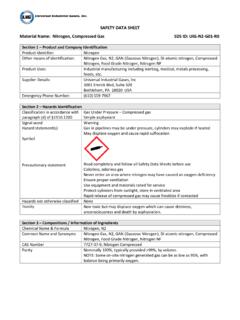
1 SAFETY data SHEET Material Name: Oxygen, Compressed Gas SDS ID: UIG-O2-G01-R0 Section 1 Product and Company Identification Product Identifier: Oxygen, Compressed Gas Other means of identification: Oxygen Gas, O2, GOX (Gaseous Oxygen), Di-atomic oxygen, Medical Oxygen Product Uses: Industrial manufacturing including steel making, various combustion processes, oxidation processes, metal cutting, medical, etc. Supplier Details: Universal Industrial Gases, Inc 3001 Emrick Blvd, Suite 320 Bethlehem, PA 18020 USA Emergency Phone Number: (610) 559-7967 Section 2 Hazards Identification Classification per OSHA paragraph (d) of Compressed gas Oxidizing Gas Category 1 Signal word Hazard statement(s)
2 Symbol Precautionary statement Danger Oxidizer, may cause or intensify combustion Gas in pipelines may be under pressure, cylinders may explode if heated Respiratory irritant Read completely and follow all SAFETY data Sheets before use Colorless, odorless gas Keep valves, fittings, piping free from grease and oil, use only with equipment cleaned for oxygen service Keep away from incompatible and combustible materials including clothing Do not allow smoking, open flames or other ignition sources near oxygen source or oxygen enriched atmosphere. Never enter an area where oxygen may have caused an oxygen enriched atmosphere Ensure proper ventilation Use equipment and materials rated for service Protect cylinders from sunlight, store in ventilated area Rapid release of Compressed gas may cause frostbite if contacted Hazards not otherwise classified None Toxicity Refer to Section 11 Non-toxic but prolonged exposure to >75% concentration may cause central nervous system depression, headache, dizziness, drowsiness, slowed reaction time, slurred speech, and unconsciousness.
3 Section 3 Compositions / Information of Ingredients Chemical Name & Formula Oxygen, O2 Common Name and Synonyms Oxygen Gas, O2, GOX (Gaseous oxygen), Di-atomic oxygen, Medical Oxygen CAS Number 7782-44-7, Oxygen Compressed Purity Nominally 100%, typically provided 93% and above, by volume Material Name: Oxygen, Compressed Gas SDS ID: UIG-O2-G01-R0 Oxygen Compressed Gas SDS, Issue Date 29 June 2018 Rev 0 Page 2 of 6 Section 4 First Aid Measures Inhalation Immediately remove victim to fresh air if it can be done safely. If not breathing provide artificial respiration or oxygen by trained personnel, get immediate medical attention.
4 Skin Contact No adverse effects expected from gas at normal temperature. Very cold gas may cause frostbite. Eye Contact No adverse effects normally expected from gas. Avoid high pressure or very cold gas. Remove contact lenses. Flush with water, seek medical attention if irritation persists. Ingestion Not an expected route of exposure, refer to inhalation section above. Most important symptoms, effects, acute and delayed Prolonged exposure to >75% concentration may cause central nervous system depression, headache, dizziness, drowsiness, slowed reaction time, slurred speech, and unconsciousness.
5 Immediate medical attention and special treatment needed If symptoms occur, seek medical advice and attention. Section 5 Fire Fighting Measures Suitable extinguishing media Use appropriate extinguishing media for surrounding fire. Special hazards arising ( nature of any hazardous combustion process) Oxygen is not flammable, but vigorously supports combustion, materials that are not normally combustible in air can ignite if exposed to ignition source. If product under pressure in closed contained, heat from fire may cause pressure to rise and container to burst. Cool any containers with water if possible.
6 Special protective equipment and precautions for firefighters Wear appropriate protective gear and self-contained breathing apparatus. Evacuate personnel from danger area Normal fire protective clothing may burn in oxygen enriched atmosphere. Oxygen gas is slightly denser than air at same temperature which can cause it to concentrate in low areas and lead to oxygen enriched atmosphere. Section 6 Accidental Release Measures Personal precautions, protective equipment, emergency procedures First responders should ensure oxygen concentration in area is safe and there are no open flames in area Evacuate personnel to safe area, never enter suspected oxygen enriched area, do not walk or drive through a potentially oxygen enriched area.
7 Clothing exposed to high oxygen concentrations can become saturated and retain oxygen increasing hazard of ignition. Shut off or eliminate any ignition sources. Oxygen gas is slightly denser than air at same temperature which can cause it to concentrate in low areas and lead to an oxygen enriched atmosphere. Methods and materials for containment and clean up Isolate any leaking sources if it can be done safely. Ventilate the area if possible. Material Name: Oxygen, Compressed Gas SDS ID: UIG-O2-G01-R0 Oxygen Compressed Gas SDS, Issue Date 29 June 2018 Rev 0 Page 3 of 6 Section 7 Handling and Storage Precautions for safe handling Protect system components against physical damage.
8 Use adequate ventilation. Never work on a pressurized system. Use spark proof tools when working around potential enriched oxygen areas. Wear gloves when moving cylinders. SAFETY glasses always recommended when working with Compressed gases. Refer to CGA SAFETY Bulletin SB-2 for additional recommendations. Conditions for safe storage, including any incompatibilities Use storage containers, piping, valves and fittings designed for storage and distribution of gaseous oxygen. Protect cylinders against physical damage. Store in cool, dry, well-ventilated, fireproof area, away from flammable materials and corrosive atmospheres.
9 Store away from heat and ignition sources and out of direct sunlight. Do not store near elevators, corridors or loading docks. Do not allow area where cylinders are stored to exceed 52 C (125 F). Move cylinders with a suitable hand-truck. Do not drag, slide or roll cylinders. Do not drop cylinders or permit them to strike each other. Secure cylinders firmly. Leave the valve protection cap in-place (where provided) until cylinder is placed into service and after it is taken out of service. Use designated CGA fittings and other support equipment. Do not heat cylinder by any means to increase the discharge rate of the product from the cylinder.
10 Use check valve or trap in discharge line to prevent hazardous backflow into the cylinder. Do not use non-compatible oils or grease on gas-handling fittings or equipment. Oxygen gas is slightly denser than air at same temperature which can cause it to concentrate in low areas and lead to an oxygen enriched atmosphere. Section 8 Exposure Controls / Personal Protection Permissible exposure limits There are no exposure limits for this product. Oxygen levels should be kept above and below for all personnel. Appropriate Engineering Controls Ensure adequate ventilation. Use spark-proof tools and explosion proof equipment in areas where potential high oxygen concentrations may occur.