Transcription of SAFETY DATA SHEET - Micro Powders Inc.
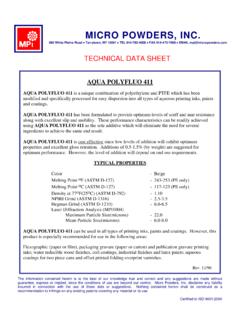
1 Micro Powders , INC. 580 WHITE PLAINS ROAD TARRYTOWN, NY 10591. TEL 914-793-4058 FAX 914-472-7098 EMAIL SAFETYWHITE. data SHEET . PLAINS ROAD TARRYTOWN, NY 10591. TEL 914-793-4058 FAX 914-472-7098 EMAIL Micro Powders , INC. SECTION 1 - Identification: 580 WHITE PLAINS ROAD TARRYTOWN, NY 10591. TEL 914-793-4058 FAX 914-472-7098 EMAIL PRODUCT NAME: Polysilk 14. TECHNICAL data SHEET . SDS NUMBER: PS-14. MANUFACTURER'S NAME: Micro Powders , PLAINS ROAD TARRYTOWN, NY 10591. ADDRESS: 580 WhiteTEL. Plains Road FAX 914-472-7098 EMAIL 914-793-4058. Tarrytown, NY 10591. Micro Powders , INC. CHEMTREC PHONE: 800-424-9300 580 WHITE PLAINSSDS TARRYTOWN, NY 10/23/2014. DATE: ROAD 10591. INFORMATION PHONE: TEL 914-793-4058 FAX 914-472-7098. 914-793-4058 PREPARED EMAIL. BY: EH&S Group INTENDED USE: Wax additive TECHNICAL data SHEET .
2 WHITE PLAINS ROAD TARRYTOWN, NY 10591. TEL 914-793-4058 FAX 914-472-7098 EMAIL SECTION 2 - Hazard identification: Micro Powders , INC. CLASSIFICATION: 580 WHITE PLAINS ROAD TARRYTOWN, NY 10591. TEL 914-793-4058 FAX 914-472-7098 EMAIL OSHA 29 CFR Combustible dust TECHNICAL data SHEET . REGULATION (EC) No 1272/2008. Not a hazardous substance or mixture WHITE PLAINS ROAD TARRYTOWN, NY 10591. TEL 914-793-4058 FAX 914-472-7098 EMAIL LABEL ELEMENTS: Micro Powders , INC. OSHA 580 WHITE PLAINS ROAD TARRYTOWN, NY 10591. WARNING May form combustible dust concentrations in the TEL 914-793-4058 914-472-7098 EMAIL FAXair REGULATION (EC) No 1272/2008 TECHNICAL data SHEET . Not a hazardous substance or mixture EMERGENCY ROAD TARRYTOWN, NY 10591. OVERVIEW. WHITE PLAINS. These products are micronized Powders . Static charges TEL 914-793-4058 on the Powders FAX 914-472-7098 EMAIL may ignite flammable atmospheres.
3 High levels of product dust in the atmosphere may present a dust explosion Micro Powders , 580 WHITE PLAINS ROAD TARRYTOWN, NY 10591. (See Dust TELH azard Reference 914-793-4058 in Section FAX 914-472-7098 16.) EMAIL. TECHNICAL data SHEET . HMIS CODES: H = 1, F = 1, R = 0, P = E. INHALATION HEALTH RISKS AND SYMPTOMS OFWHITE EXPOSURE: PLAINS ROADT reat powder as aNY. TARRYTOWN, nuisance 10591 dust. Keep dust level below 5mg/m3 for respirable fraction and 10mg/m3 for TEL 914-793-4058 FAX. total914-472-7098 EMAIL dust (ACGIH/TWA). OSHA PEL 5mg/m3. Exposure may cause dizziness, headache, respiratory irritation or unconsciousness. Micro Powders , INC. 580 WHITE PLAINS ROAD TARRYTOWN, NY 10591. TEL 914-793-4058 FAX 914-472-7098 EMAIL Micro Powders , INC. SDS# PS-14. TECHNICAL page data 1 of 7. SHEET . EYE CONTACT HEALTH RISKS AND SYMPTOMS OF EXPOSURE: Particulates may cause mechanical eye irritation.
4 Flush eyes with copious amounts of water for at least 15 minutes. SKIN CONTACT HEALTH RISKS AND SYMPTOMS OF EXPOSURE: Negligible dermal irritant. Exposure may lead to itching, scaling, drying and irritation of skin. INGESTION HEALTH RISKS AND SYMPTOMS OF EXPOSURE: Generally non toxic unless large quantities are ingested. HEALTH HAZARDS (ACUTE & CHRONIC): ACUTE EFFECTS: High concentrations of polymer fumes may cause eye, nose and respiratory irritation, dizziness or unconsciousness. CHRONIC EFFECTS: Repeated skin contact can lead to drying, defatting, itching, stinging and irritation. CARCINOGEN: No CARCINOGEN: No OSHA REGULATED: No MEDICAL CONDITIONS GENERALLY AGGREVATED BY EXPOSURE: May irritate people with skin problems, asthma and lung diseases. Susceptible individuals may have an allergic reaction.
5 SECTION 3 - Composition/information on ingredients: Fluorinated hydrocarbon mixture NJRTK # 80100348-5004P. AVOID HIGH CONCENTRATIONS OF POLYMER FUMES WHEN MELTING. SECTION 4 - First-aid measures: IF IN EYES: Flush with copious amounts of water for at least 15 minutes. IMMEDIATE MEDICAL ATTENTION IS. NECESSARY. IF ON SKIN: If burned by hot wax, quench immediately with cold tap water. Dry burn area and loosely cover to protect against infection. Do not apply ointment or salves. IMMEDIATE MEDICAL ATTENTION IS NECESSARY. For skin irritation, wash skin with soap and water and use emollient skin cream. IF INHALED: Treat as a nuisance dust. Remove victim to fresh air and provide oxygen if breathing is difficult. Immediate medical attention not normally required. No delayed effects expected. IF INGESTED: Not a normal or expected route of introduction.
6 If large quantities are ingested - IMMEDIATE. MEDICAL ATTENTION IS NECESSARY. Do not give anything to an unconscious person. INSTRUCTION FOR PHYSICIANS: No specific advice. Treat according to symptoms present. SECTION 5 - Fire-fighting measures: OSHA FLAMMABILITY CLASS: Combustible solid. SUITABLE EXTINGUISHING MEDIA: Carbon Dioxide, dry chemical or fine water spray. Avoid water stream on molten burning material as it may scatter and spread the fire. SPECIAL FIREFIGHTING PROCEDURES: Wear self-contained breathing apparatus and protective clothing approved by NIOSH. Watch footing on floors and stairs because of possible melting and spreading of material. Use spray to keep containers cool. Micro Powders , INC. SDS# PS-14 page 2 of 7. UNUSUAL FIRE AND EXPLOSION HAZARDS: Flash point >450 F 232 C. Melts in proximity to fires, causing slippery floors and stairs.
7 When powder is suspended in air, these products could be FLAMMABLE/EXPLOSIVE. In these circumstances, keep away from heat, sparks and open flames. Static charges on Powders or Powders in liquids may ignite flammable atmospheres. See Section 7 "HANDLING AND STORAGE" for suggestions on how to use these products under such conditions. Also refer to NFPA Bulletin 654, "Prevention of Fire and Dust Explosions in the Chemical, Dye, Pharmaceutical, and Plastics Industries", for safe handling procedures. HAZARDOUS DECOMPOSITION PRODUCTS AND/OR BY PRODUCTS: These products may emit hydrogen fluoride, tetrafluoroethylene > 800 F, hexafluoropropylene > 825 F, perfluoroisobutylene > 885 F, carbonyl fluoride > 930 F. ADVICE FOR FIREFIGHTERS: - Wear self-contained breathing apparatus and protective suit. - When intervention in close proximity wear acid resistant over suit.
8 - Evacuate personnel to safe areas. - Approach from upwind. - Protect intervention team with a water spray as they approach the fire. - Keep containers and surroundings cool with water spray. - Keep product and empty container away from heat and sources of ignition. SECTION 6 - Accidental release measures: STEPS TO BE TAKEN IN CASE MATERIAL IS RELEASED OR SPILLED: Wear recommended personal protective equipment. Remove ignition sources. Sweep up with a minimum of dusting. Keep away from heat or flame. Collect in containers ( fiberboard drums or cartons). If hot liquid, attempt to confine spill and let the polymer solidify. Once solid, it may be recovered as the powder. Report major leaks and spills to the appropriate local, state and federal government agencies. HAZARD WARNING. These products are micronized Powders .
9 Static charges on the Powders may ignite flammable atmospheres. High levels of product dust in the atmosphere may present a dust explosion hazard. (See Dust Hazard Reference in Section 16. Read Section 7.). See the Regulatory Information (Section 15) regarding reporting requirements. SECTION 7 - Handling and storage: SPECIAL HANDLING AND STORAGE: (Always wear recommended personal protective equipment.) Avoid breathing fumes from heating operations. Avoid spillage which can cause very slippery conditions on floors. Use good personal hygiene and housekeeping. STATIC ELECTRICITY AND FINE PARTICLE SIZE WAXES. Electrostatic charges of non-conductive materials is a natural phenomenon ranging from harmless to a nuisance to a hazard, depending on the degree of charging and the environment where the discharge takes place.
10 In the case of micronized polymers and waxes, very high levels of static electricity develop in their manufacture, transportation and handling. These products, being poor conductors of electricity, can and will hold a static charge for long periods of time. With this in mind, a great deal of care should be exercised when handling this type of product in or around flammable liquids, particularly if the liquid is at or near its flashpoint. The generation of static electricity cannot be prevented because its intrinsic origins are present at every particle interface. Some common sense approaches to the hazards involved with static electricity are as follows: - Use only conductive equipment and keep all components grounded and bonded to the same vessel in order to equalize any potential charge. - Avoid projections and probes that could lead to discharge between the charged polymer and probe.