Transcription of SAFETY DATA SHEET - rb-msds.com.au
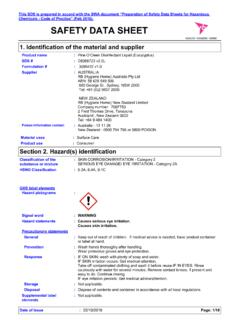
1 Mortein Fast knockdown Multi Insect Killer Aerosol1. Identification of the material and supplierSAFETY data SHEETP roduct nameMortein Fast knockdown Multi Insect Killer Aerosol:SDS no.:NamesMaterial usesHousehold insecticide:D0146683 - 13 11 26 New Zealand - 0800 764 766 or 0800 POISON Poison Information contact::Formulation #:0145172 :200 g, 300 g, Aerosol CanSupplier:AUSTRALIA RB (Hygiene Home) Australia Pty Ltd ABN: 58 629 549 506 680 George St , Sydney, NSW 2000 Tel: +61 (0)2 9857 2000 NEW ZEALAND RB (Hygiene Home) New Zealand Limited Company number: 7097753 2 Fred Thomas Drive, Takapuna Auckland , New Zealand 0622 Tel: +64 9 484 1400 Consumer:Product useThis SDS is prepared in accord with the SWA document Preparation of SAFETY data Sheets for Hazardous Chemicals - Code of Practice (Feb 2016).Section 2. Hazard(s) identificationFLAMMABLE AEROSOLS - Category 1 GASES UNDER PRESSURE - Compressed gasSKIN CORROSION/IRRITATION - Category 2 Classification of the substance or mixture:Signal word:DANGERH azard statements:Extremely flammable gas under pressure; may explode if skin pictograms:Precautionary statementsGHS label elementsGeneral:Read label before use.
2 Keep out of reach of children. If medical advice is needed,have product container or label at of issuePage: 1/1114/12/2016:D0146683 Section 2. Hazard(s) identificationPrevention:Wear protective gloves. Keep away from heat, hot surfaces, sparks, open flames and other ignition sources. No smoking. Pressurized container: Do not pierce or burn, even after use. Do not spray on an open flame or other ignition source. Wash hands thoroughly after :IF ON SKIN: Wash with plenty of soap and water. Take off contaminated contaminated clothing before reuse. If skin irritation occurs: Get medical :Protect from sunlight. Do not expose to temperatures exceeding 50 C/122 in a well-ventilated :Not hazards which do not result in classification:None label elements:Not 3. Composition and ingredient informationButane 60 - 75106-97-8propane 10 - 3074-98-6 Ingredient nameCAS number Other Non-hazardous ingredients to 100%Substance/mixture:Occupational exposure limits, if available, are listed in Section (w/w)Supplier's information : Product Contains less than 0,1% w/w 1, 3 ButadieneWash out mouth with water.
3 Remove dentures if any. Remove victim to fresh air and keep at rest in a position comfortable for breathing. If material has been swallowed and the exposed person is conscious, give small quantities of water to drink. Stop if the exposed person feels sick as vomiting may be dangerous. Do not induce vomiting unless directed to do so by medical personnel. If vomiting occurs,the head should be kept low so that vomit does not enter the lungs. Get medical attention if adverse health effects persist or are severe. Never give anything by mouth to an unconscious person. If unconscious, place in recovery position and get medical attention immediately. Maintain an open airway. Loosen tight clothing such as a collar, tie, belt or flush eyes with plenty of water, occasionally lifting the upper and lower eyelids. Check for and remove any contact lenses. Continue to rinse for at least 10 minutes.
4 Get medical contaminated skin with plenty of water. Remove contaminated clothing and shoes. Continue to rinse for at least 10 minutes. Get medical attention. Wash clothing before reuse. Clean shoes thoroughly before victim to fresh air and keep at rest in a position comfortable for not breathing, if breathing is irregular or if respiratory arrest occurs, provide artificial respiration or oxygen by trained personnel. It may be dangerous to the person providing aid to give mouth-to-mouth resuscitation. Get medical attention if adverse health effects persist or are severe. If unconscious, place in recovery position and get medical attention immediately. Maintain an open airway. Loosen tight clothing such as a collar, tie, belt or 4. First aid measuresEye contactSkin contactInhalationIngestion::::Descriptio n of necessary first aid measuresMost important symptoms/effects, acute and delayedPotential acute health effectsDate of issuePage: 2/1114/12/2016:D0146683 Section 4.
5 First aid measuresProtection of first-aiders:No action shall be taken involving any personal risk or without suitable training. It may be dangerous to the person providing aid to give mouth-to-mouth to physician:Treat symptomatically. Contact poison treatment specialist immediately if large quantities have been ingested or treatments:No specific :No known significant effects or critical known significant effects or critical hazards.:IngestionSkin contact:Causes skin known significant effects or critical hazards.:Eye contactOver-exposure signs/symptomsSkin contactIngestionInhalationAdverse symptoms may include the following:respiratory tract irritationcoughingNo specific symptoms may include the following:irritationredness:::Eye contact:Adverse symptoms may include the following:pain or irritationwateringrednessSee toxicological information (Section 11)Indication of immediate medical attention and special treatment needed, if necessarySection 5.
6 Firefighting measuresPromptly isolate the scene by removing all persons from the vicinity of the incident if there is a fire. No action shall be taken involving any personal risk or without suitable training. Move containers from fire area if this can be done without water spray to keep fire-exposed containers thermal decomposition productsSpecific hazards arising from the chemicalDecomposition products may include the following materials:carbon dioxidecarbon monoxideExtremely flammable aerosol. In a fire or if heated, a pressure increase will occur and the container may burst, with the risk of a subsequent explosion. Gas may accumulate in low or confined areas or travel a considerable distance to a source of ignition and flash back, causing fire or explosion. Bursting aerosol containers may be propelled from a fire at high speed. Runoff to sewer may create fire or explosion should wear appropriate protective equipment and self-contained breathing apparatus (SCBA) with a full face-piece operated in positive pressure protective equipment for fire-fightersUse an extinguishing agent suitable for the surrounding media:::None extinguishing media:Unsuitable extinguishing media:Special protective actions for fire-fighters:Hazchem code:2 YEDate of issuePage: 3/1114/12/2016:D0146683 Section 6.
7 Accidental release measuresEnvironmental precautionsPersonal precautions, protective equipment and emergency proceduresStop leak if without risk. Move containers from spill area. Use spark-proof tools and explosion-proof equipment. Approach the release from upwind. Prevent entry into sewers, water courses, basements or confined areas. Wash spillages into an effluent treatment plant or proceed as follows. Contain and collect spillage with non-combustible, absorbent material sand, earth, vermiculite or diatomaceous earth and place in container for disposal according to local regulations (see Section 13).Dispose of via a licensed waste disposal contractor. Contaminated absorbent material may pose the same hazard as the spilt product. Note: see Section 1 for emergency contact information and Section 13 for waste disposal.::No action shall be taken involving any personal risk or without suitable surrounding areas.
8 Keep unnecessary and unprotected personnel from entering. In the case of aerosols being ruptured, care should be taken due to the rapid escape of the pressurised contents and propellant. If a large number of containers are ruptured, treat as a bulk material spillage according to the instructions in the clean-up section. Do not touch or walk through spilt off all ignition sources. No flares, smoking or flames in hazard area. Avoid breathing vapour or mist. Provide adequate ventilation. Wear appropriate respirator when ventilation is inadequate. Put on appropriate personal protective dispersal of spilt material and runoff and contact with soil, waterways, drains and sewers. Inform the relevant authorities if the product has caused environmental pollution (sewers, waterways, soil or air).Large spill:Stop leak if without risk. Move containers from spill area.
9 Use spark-proof tools and explosion-proof equipment. Dilute with water and mop up if , or if water-insoluble, absorb with an inert dry material and place in an appropriate waste disposal container. Dispose of via a licensed waste disposal spill:Methods and material for containment and cleaning upFor non-emergency personnelFor emergency responders:If specialised clothing is required to deal with the spillage, take note of any information in Section 8 on suitable and unsuitable materials. See also the information in "For non-emergency personnel".See Section 1 for emergency contact Section 8 for information on appropriate personal protective Section 13 for additional waste treatment 7. Handling and storageAdvice on general occupational hygieneEating, drinking and smoking should be prohibited in areas where this material is handled, stored and processed. Workers should wash hands and face before eating, drinking and smoking.
10 Remove contaminated clothing and protective equipment before entering eating areas. See also Section 8 for additional information on hygiene measures.:Protective measuresPut on appropriate personal protective equipment (see Section 8). Pressurised container: protect from sunlight and do not expose to temperature exceeding 50 not pierce or burn, even after use. Do not ingest. Avoid contact with eyes, skin and clothing. Avoid breathing gas. Avoid breathing vapour or mist. Use only with adequate ventilation. Wear appropriate respirator when ventilation is and use away from heat, sparks, open flame or any other ignition source. Use explosion-proof electrical (ventilating, lighting and material handling) only non-sparking tools. Empty containers retain product residue and can be hazardous.:Precautions for safe handlingDate of issuePage: 4/1114/12/2016:D0146683 Section 7.