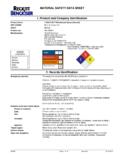
Transcription of SAFETY DATA SHEET - rbnainfo.com
1 Brasso Metal PolishMetal DATA SHEETP roduct nameDistributed byProduct use1. Product and company identification:::SDS #Formulation #:UPC Code / Sizes: D8049596 : #8043677 : 26600-89331-00 (Brasso Metal Polish 8oz), 56200-81382-01 (Brasso Metal Polish 142ml), 56200-00049-4 (Brasso Metal Polish 142ml) Brasso Metal Polish:Website: telephone number (Medical)Emergency telephone number (Transport):1-800-338-61671-800-424-9300 ( & Canada) CHEMTREC Outside and Canada (North America), call Chemtrec:703-527-3887:This SDS is designed for workplace employees, emergency personnel and for other conditions and situations where there is greater potential for large-scale or prolonged exposure, in accordance with the requirements of USDOL Occupational SAFETY and Health SDS is not applicable for consumer use of our products. For consumer use, all precautionary and first aid language is provided on the product label in accordance with the applicable government regulations, and shown in Section 15 of this to USDOL OSHA 29 CFR HAZCOMR eckitt Benckiser Corporate Center IV 399 Interpace Parkway ( Box 225)Parsippany, New Jersey 07054-0225 +1 973 404 2600 Reckitt Benckiser (Canada) Tech Avenue, Unit #2 Mississauga, Ontario L4W 5S9 CANADA Telephone: +1 905 283 70001/1309/06 of issue:SDS #FF8043677 (D8049596):Code #D8049596 :D8049596 to USDOL OSHA 29 CFR HAZCOM2.
2 Hazards identificationClassification of the substance or mixtureFLAMMABLE LIQUIDS - Category 3 ACUTE TOXICITY (oral) - Category 4 SERIOUS EYE DAMAGE/ EYE IRRITATION - Category 2B:Signal word:WarningHazard statements:Flammable liquid and if eye pictograms:GHS label elementsSupplemental label elements:None not otherwise classified:None :Wear protective gloves. Wear eye or face protection. Keep away from heat, hot surfaces, sparks, open flames and other ignition sources. No smoking. Use explosion-proof electrical, ventilating, lighting and all material-handling equipment. Use only non-sparking tools. Take precautionary measures against static discharge. Keep container tightly closed. Do not eat, drink or smoke when using this product. Wash hands thoroughly after :IF SWALLOWED: Call a POISON CENTER or physician if you feel unwell. Rinse mouth. IF ON SKIN (or hair): Take off immediately all contaminated clothing.
3 Rinse skin with water or shower. IF IN EYES: Rinse cautiously with water for several contact lenses, if present and easy to do. Continue rinsing. If eye irritation persists: Get medical :Store in a well-ventilated place. Keep :Dispose of contents and container in accordance with all local, regional, national and international regulations.:Read label before use. Keep out of reach of children. If medical advice is needed,have product container or label at statements3. Composition/information on ingredientsMixture:Substance/mixtureAmmo nia solution5 - 101336-21-6 Ethanedioic acid, hydrate (1:2)1 - alcohol1 - nameCAS number%There are no additional ingredients present which, within the current knowledge of the supplier and in the concentrations applicable, are classified as hazardous to health or the environment and hence require reporting in this concentration shown as a range is to protect confidentiality or is due to batch of issue:SDS #FF8043677 (D8049596):Code #D8049596 :D8049596 to USDOL OSHA 29 CFR HAZCOM4.
4 First aid measuresWash out mouth with water. Remove dentures if any. Remove victim to fresh air and keep at rest in a position comfortable for breathing. If material has been swallowed and the exposed person is conscious, give small quantities of water to drink. Stop if the exposed person feels sick as vomiting may be dangerous. Do not induce vomiting unless directed to do so by medical personnel. If vomiting occurs, the head should be kept low so that vomit does not enter the lungs. Get medical attention. If necessary,call a poison center or physician. Never give anything by mouth to an unconscious person. If unconscious, place in recovery position and get medical attention immediately. Maintain an open airway. Loosen tight clothing such as a collar, tie, belt or flush eyes with plenty of water, occasionally lifting the upper and lower eyelids. Check for and remove any contact lenses.
5 Continue to rinse for at least 10 minutes. If irritation persists, get medical contaminated skin with plenty of water. Remove contaminated clothing and shoes. Get medical attention if symptoms occur. Wash clothing before reuse. Clean shoes thoroughly before victim to fresh air and keep at rest in a position comfortable for breathing. If not breathing, if breathing is irregular or if respiratory arrest occurs, provide artificial respiration or oxygen by trained personnel. It may be dangerous to the person providing aid to give mouth-to-mouth resuscitation. Get medical attention if adverse health effects persist or are severe. If unconscious, place in recovery position and get medical attention immediately. Maintain an open airway. Loosen tight clothing such as a collar,tie, belt or waistband. In case of inhalation of decomposition products in a fire,symptoms may be delayed.
6 The exposed person may need to be kept under medical surveillance for 48 contactSkin contactInhalationIngestion::::Protection of first-aiders:No action shall be taken involving any personal risk or without suitable training. It may be dangerous to the person providing aid to give mouth-to-mouth to physician:In case of inhalation of decomposition products in a fire, symptoms may be exposed person may need to be kept under medical surveillance for 48 of necessary first aid measuresSpecific treatments:No specific important symptoms/effects, acute and delayedInhalation:Exposure to decomposition products may cause a health hazard. Serious effects may be delayed following if swallowed. May be irritating to mouth, throat and stomach.:IngestionSkin contact:No known significant effects or critical eye irritation.:Eye contactOver-exposure signs/symptomsSkin contactIngestionInhalationNo specific specific specific data.
7 :::Eye contact:Adverse symptoms may include the following:irritationwateringrednessPoten tial acute health effectsIndication of immediate medical attention and special treatment needed, if necessary3/1309/06 of issue:SDS #FF8043677 (D8049596):Code #D8049596 :D8049596 to USDOL OSHA 29 CFR HAZCOM4. First aid measuresSee toxicological information (Section 11)5. Fire-fighting measuresPromptly isolate the scene by removing all persons from the vicinity of the incident if there is a fire. No action shall be taken involving any personal risk or without suitable training. Move containers from fire area if this can be done without risk. Use water spray to keep fire-exposed containers thermal decomposition productsSpecific hazards arising from the chemicalDecomposition products may include the following materials:carbon dioxidecarbon monoxidenitrogen oxidesmetal oxide/oxidesFlammable liquid and vapor.
8 In a fire or if heated, a pressure increase will occur and the container may burst, with the risk of a subsequent explosion. Runoff to sewer may create fire or explosion should wear appropriate protective equipment and self-contained breathing apparatus (SCBA) with a full face-piece operated in positive pressure protective equipment for fire-fightersUse dry chemical, CO , water spray (fog) or media:::Do not use water extinguishing media:Unsuitable extinguishing media:Special protective actions for fire-fighters:6. Accidental release measuresEnvironmental precautionsPersonal precautions, protective equipment and emergency procedures::No action shall be taken involving any personal risk or without suitable surrounding areas. Keep unnecessary and unprotected personnel from entering. Do not touch or walk through spilled material. Shut off all ignition flares, smoking or flames in hazard area.
9 Avoid breathing vapor or mist. Provide adequate ventilation. Wear appropriate respirator when ventilation is inadequate. Put on appropriate personal protective dispersal of spilled material and runoff and contact with soil, waterways, drains and sewers. Inform the relevant authorities if the product has caused environmental pollution (sewers, waterways, soil or air).Stop leak if without risk. Move containers from spill area. Use spark-proof tools and explosion-proof equipment. Dilute with water and mop up if water-soluble. Alternatively,or if water-insoluble, absorb with an inert dry material and place in an appropriate waste disposal container. Dispose of via a licensed waste disposal spill:Methods and materials for containment and cleaning upFor non-emergency personnelFor emergency responders:If specialised clothing is required to deal with the spillage, take note of any information in Section 8 on suitable and unsuitable materials.
10 See also the information in "For non-emergency personnel".4/1309/06 of issue:SDS #FF8043677 (D8049596):Code #D8049596 :D8049596 to USDOL OSHA 29 CFR HAZCOM6. Accidental release measuresStop leak if without risk. Move containers from spill area. Use spark-proof tools and explosion-proof equipment. Approach release from upwind. Prevent entry into sewers,water courses, basements or confined areas. Wash spillages into an effluent treatment plant or proceed as follows. Contain and collect spillage with non-combustible,absorbent material sand, earth, vermiculite or diatomaceous earth and place in container for disposal according to local regulations (see Section 13). Dispose of via a licensed waste disposal contractor. Contaminated absorbent material may pose the same hazard as the spilled product. Note: see Section 1 for emergency contact information and Section 13 for waste spill:7.