Transcription of SAFETY DATA SHEET - rbnainfo.com
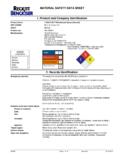
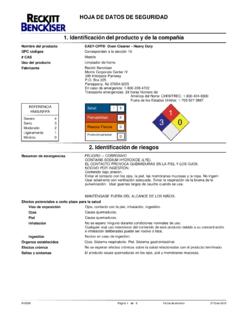
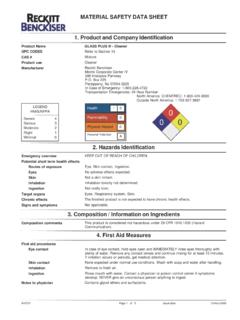
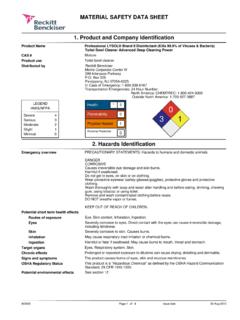
1 Silvo Metal PolishReckitt Benckiser (Canada) Tech Avenue, Unit #2 Mississauga, Ontario L4W 5S9 CANADA Telephone: +1 905 283 70001-800-338-6167 Reckitt Benckiser Corporate Center IV 399 Interpace Parkway ( Box 225)Parsippany, New Jersey 07054-0225 +1 973 404 2600 SAFETY DATA SHEETP roduct nameSupplierManufacturerValidation dateEmergency telephone number :1. Product and company identification::::02/04 :Transport Emergency phone::1-800-424-9300 ( & Canada) CHEMTREC Outside and Canada (North America), call Chemtrec:703-527-3887 Conforms to US Standard ANSI SDS #Formulation #::#890431 Silvo Metal PolishConsumer:Product use2.
2 Hazards identificationPotential acute health effectsSeverely irritating to the respiratory system. Exposure to decomposition products may cause a health hazard. Serious effects may be delayed following irritating to eyes. Risk of serious damage to if irritating to the stateLiquid. [Viscous Emulsion.]DANGERFLAMMABLE POISON::::: status:This material is considered hazardous by the OSHA Hazard Communication Standard (29 CFR ). overviewDo not smoke. Do not swallow. Do not get in eyes. Do not get on skin or suitable gloves. Use only in a well-ventilated area. Keep away from flames, such as a pilot light, and any object that sparks, such as an electric MAY CATCH FIRE CONTENTS HARMFUL MAY IRRITATE EYES MAY IRRITATE SKINS ignal word:Hazard statements:Precautionary measures:1/1102/04 of issue:SDS #FF890431_6:Code #890431 PSDS:890431 PSDSC onforms to US Standard ANSI 2.
3 Hazards identificationSee toxicological information (Section 11)Medical conditions aggravated by over-exposurePre-existing disorders involving any target organs mentioned in this MSDS as being at risk may be aggravated by over-exposure to this product.:Potential chronic health effectsChronic effects:Over-exposure signs/symptomsSkin:Adverse symptoms may include the following:irritationrednessEyes:Adverse symptoms may include the following:pain or irritationwateringrednessInhalation:Adve rse symptoms may include the following:respiratory tract irritationcoughingTarget organs:Contains material which may cause damage to the following organs.
4 Blood, kidneys,lungs, liver, spleen, upper respiratory tract, skin, central nervous system (CNS), eye,lens or cornea, stomach, material that may cause target organ damage, based on animal Composition/information on ingredientsThere are no additional ingredients present which, within the current knowledge of the supplier and in the concentrations applicable, are classified as hazardous to health or the environment and hence require reporting in this - 30 Silica, amorphous7631-86-910 - 15CI 77004 Kaolin1332-58-75 - 10 Ammonium Hydroxide1336-21-61 - (Z)-octadec-9-enoic acid112-80-11 - number%Any concentration shown as a range is to protect confidentiality or is due to batch swallowed, call a Poison Control Centre or doctor immediately.
5 Do not induce vomiting. If in eyes, rinse with water for 15 minutes. If on skin, rinse well with First aid measuresProtection of first-aiders:Use personal protective equipment as aidTreat symptomatically.:Notes to physicianUse dry chemical, CO , water spray (fog) or Fire-fighting measuresExtinguishing mediaFlammable liquid. In a fire or if heated, a pressure increase will occur and the container may burst, with the risk of a subsequent to sewer may create fire or explosion of the productNot Remark:Not Remark:2/1102/04 of issue:SDS #FF890431_6:Code #890431 PSDS:890431 PSDSC onforms to US Standard ANSI 5.
6 Fire-fighting measuresSpecial remarks on explosion hazardsPromptly isolate the scene by removing all persons from the vicinity of the incident if there is a fire. No action shall be taken involving any personal risk or without suitable training. Move containers from fire area if this can be done without risk. Use water spray to keep fire-exposed containers protective equipment for fire-fightersFire-fighters should wear appropriate protective equipment and self-contained breathing apparatus (SCBA) with a full face-piece operated in positive pressure exposure hazardsDo not use water suitableHazardous thermal decomposition productsDecomposition products may include the following materials.
7 Carbon dioxidecarbon monoxidenitrogen oxidesmetal oxide/oxidesSensitivity to mechanical impactSensitivity to static dischargeNot hazards arising from the substance or mixtureAdvice for firefightersNo action shall be taken involving any personal risk or without suitable surrounding areas. Keep unnecessary and unprotected personnel from entering. Do not touch or walk through spilled material. Shut off all ignition flares, smoking or flames in hazard area. Do not breathe vapor or mist. Provide adequate ventilation. Wear appropriate respirator when ventilation is inadequate. Put on appropriate personal protective equipment (see Section 8).
8 Stop leak if without risk. Move containers from spill area. Use spark-proof tools and explosion-proof equipment. Approach release from upwind. Prevent entry into sewers,water courses, basements or confined areas. Wash spillages into an effluent treatment plant or proceed as follows. Contain and collect spillage with non-combustible,absorbent material sand, earth, vermiculite or diatomaceous earth and place in container for disposal according to local regulations (see Section 13). Dispose of via a licensed waste disposal contractor. Contaminated absorbent material may pose the same hazard as the spilled product.
9 Note: see Section 1 for emergency contact information and Section 13 for waste precautions6. Accidental release measures:Avoid dispersal of spilled material and runoff and contact with soil, waterways, drains and sewers. Inform the relevant authorities if the product has caused environmental pollution (sewers, waterways, soil or air).Personal precautions:Large spill:Stop leak if without risk. Move containers from spill area. Use spark-proof tools and explosion-proof equipment. Dilute with water and mop up if water-soluble. Alternatively,or if water-insoluble, absorb with an inert dry material and place in an appropriate waste disposal container.
10 Dispose of via a licensed waste disposal spill:Methods for cleaning up3/1102/04 of issue:SDS #FF890431_6:Code #890431 PSDS:890431 PSDSC onforms to US Standard ANSI Store in accordance with local regulations. Store in a segregated and approved in original container protected from direct sunlight in a dry, cool and well-ventilated area, away from incompatible materials (see Section 10) and food and drink. Eliminate all ignition sources. Separate from oxidizing materials. Keep container tightly closed and sealed until ready for use. Containers that have been opened must be carefully resealed and kept upright to prevent leakage.