Transcription of Section 1 – Why bother - Safefood
1 Section 1 Why bother ?Objectives Define the terms food hygiene , food poisoning and foodborne disease . Name the different classes of micro-organism and where they are found. Identify the main conditions bacteria need in order to grow. Explain how the growth of bacteria can be the term food hygiene ?What is food hygiene?Food hygiene is the practice of ensuring food is safe, sound and wholesome, by protecting it from contamination, preventing bacterial multiplication and by the destruction of harmful the term food poisoning What is food poisoning?Food poisoning is an illness that occurs usually between 1 and 36 hours after eating contaminated or poisoned food, the most common symptoms being diarrhoea, vomiting and workers must report all instances of diarrhoea, vomiting and skin infections to a supervisor before returning to work and must not work while suffering from these symptoms.
2 Failure to observe these rules is the most common reason for food workers being the term foodborne illness Foodborne illness is an illness that occurs when food containing harmful bacteria is ingested. This term also covers foodborne disease and food the term foodborne disease Foodborne disease A disease or illness caused by micro-organisms carried by food or are the causes of food poisoning? Bacteria Pathogenic bacteria are the most common cause Viruses Metals Chemicals Natural poisons in food (toadstools, green potatoes, and red kidney beans) Mouldssafefood for life Revision Notes1 of 22 Factors contributing to food poisoning cases Food prepared too far in advance Cooling food too slowly Not re-heating food to high enough temperatures Using cooked food contaminated with food poisoning bacteria Poor food safety practicesPeople most at risk The elderly Babies and toddlers Pregnant women Individuals who are already unwellSpores are small round bodies with thick walls which allow the bacteria to stay dormant but alive, over long periods of time, during freezing, defrosting, cooking and cooling.
3 When conditions become favourable the spores germinate and active bacteria are produced once more. It is vital therefore that food is kept out of the danger zone as far as are poisonous chemicals produced by certain types of bacteria, the bacteria Staphylococcus aureus produces a toxin in food, which normally causes severe illness very soon after the food is the different classes of micro-organismBacteriaYeastsFungi Moulds VirusesConditions required for the growth of bacteria Moisture Time Food Warmth (37 C optimum for growth) Oxygen pHOnce the conditions required for growth are ideal, bacteria will multiply by binary fission: simply by splitting in two. Most bacteria will double every 10 to 20 methodsTo preserve food, remove one or more requirement for bacterial growth.
4 For instance, dehydrate food to remove for life Revision Notes2 of 22 What is the danger zone?The danger zone is the optimum temperature range within which bacteria can multiply: +5 C to + 63 temperatures to note Cook to a minimum core temperature of 75 C: too hot for bacteria to survive. At this temperature bacteria are killed off and food is deemed safe to eat 0 to +5 C: bacteria do not multiply or multiply very slowly -18 C or below: bacteria are dormant and do not multiply at freezer temperatures Pasteurisation 72 C x 15 secondsHow can bacterial growth be controlled? Good quality control systems, such as not storing raw food next to ready-to-eat and cooked food Temperature control, such as cooking food to a minimum core temperature of 75 C Personal hygiene.
5 Such as washing hands after visiting the toilet and then preparing food Cleaning and disinfectingDefine the term due diligence A food business must be able to demonstrate that it has done everything within its power to safeguard consumer legal requirements of food handlers Keep yourself clean Keep the workplace clean Protect food from contamination or anything that could cause harm Follow good personal hygiene practices hand washing Wear appropriate protective clothing Tell your employer if you are suffering from or are a carrier of a foodborne diseaseRequired training of food handlers By law food handlers must receive adequate supervision, instruction/ or training in food hygiene for the work they do Those responsible for HACCP should also receive adequate trainingIt is recommended the following takes place: Training certificates should be renewed every 3 years Training should be refreshed this generally takes place annually Training records should be keptsafefood for life Revision Notes3 of 22 Food safety is best defined as making sure food is protected from harm of any kind.
6 It is the protection of consumer health and well-being by safeguarding food from anything that can cause for life Revision Notes4 of 22 Section 2 Food ContaminationObjectives Identify sources of bacteria and how they are introduced into the food chain Distinguish between high risk and low risk foods Define the term cross contamination and state how it occurs Spoilage, pathogenic and beneficial bacteria Name the common food poisoning bacteriaSources of bacteriaWhere bacteria originateType of bacteriaAnimalE. coliPoultry & eggsSalmonella & CampylobacterVegetablesClostridium perfringensShellfishVirusesMilkTBWaterE. coliHandsStaphylococcus aureusDefine contamination What is contamination?Contamination is the presence of any harmful or objectionable substance in of cross contamination -Bacterial contamination of food Direct - Raw meats touching ready-to-eat products Indirect - Using a knife to cut raw meat and then using the same knife to cut a ready-to-eat product Airborne contamination sneezing over foodPreventative measures against cross contamination Store raw food and cooked food separately Keep raw meat on the bottom shelf of the fridge Use different chopping boards and knives for raw and cooked/ready-to-eat foods Always cover foods that are stored in the fridgesafefood for life Revision Notes5 of 22 BacteriaThree types of bacteria Pathogenic bacteria cause illness Beneficial bacteria used to make beer.
7 Cheese and yogurt Spoilage bacteria cause food to rotPathogenic bacteria versus spoilage bacteriaThese types of bacteria differ: pathogenic strains cause illness in humans and can be difficult to detect, while spoilage bacteria cause food to rot or perish and signs can be more readily of common food poisoning (pathogenic) bacteria CampylobacterSalmonellaE. coli It is important to note that not all bacteria cause poisoning and of beneficial bacteriaSome bacteria have beneficial properties:Lactobacillus casei immunitassLactobacillus plantarum Define the term high-risk foods High-risk foods support the growth of pathogenic bacteria because they are high in protein and water. High risk foods are usually ready-to-eat foods intended for consumption without further cooking, such as coleslaw, ready washed salad, and cooked rice.
8 Name the three types of contaminationChemical - cleaning products and pesticides poison food productsPhysical - foreign objects - parts of machinery fall into products during their manufacture, such as plasters and hairsMicrobial - contamination by bacteriaCommon foods that can cause allergic reactions in consumers Peanuts Tree nuts Eggs Shellfish Cow s milk Wheat (gluten) Soysafefood for life Revision Notes6 of 22 Symptoms of allergic reactions Tingling around the mouth Swelling around the nose, mouth and throat Difficulty breathing Rashes Vomiting Diarrhoea Cramps Anaphylactic reactionsUnderstand procedures required for dealing with foods that may cause allergic reactionsAs a food handler you must be careful not to inadvertently contaminate food that is supposed to be free from allergens.
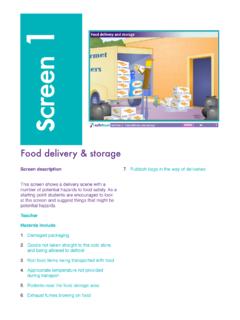
9 For example, do not place peanuts on a surface or next to another food group that wouldn t naturally contain must be careful to give the correct information about ingredients to customers who for life Revision Notes7 of 22 Section 3 Food delivery and storageObjectives Identify the correct procedures for receiving and accepting food deliveries Identify the correct procedures for storing food Name the various food storage areas and the potential hazards associated with each area List controls/checkpoints for the hazards identified in each food storage procedures for receiving and accepting food deliveriesIt is important that procedures are put in place for receiving and accepting deliveries of food products and that they are stored correctly and efficiently once the delivery
10 Has been following procedures should be observed Audit the suppliers premises to ensure their manufacturing methods, premises and quality control procedures meet the standards you expect. Smaller businesses may not be able to do this, so it is advisable to buy from a reputable supplier. Only buy from a reputable supplier Specify delivery requirements, especially the acceptable temperature of the product Check the temperature of refrigerated and frozen products; do not accept products if not at the required temperature Check all deliveries on receipt for damaged packaging, and any spoilage to products Ensure all staff are trained on the protocol for accepting deliveries Buy the correct quantity of food never buy more than can be properly stored Keep records of deliveries so the product can be traced in the event of contamination occurringCheck list for delivery vehicle/food conveyances/containersThe delivery vehicle/conveyance/container must: Clean and pest-proof Weatherproof Maintained at the correct temperature.