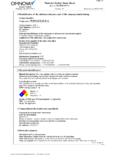
Transcription of SECTION 5: Firefighting measures
1 Issuing date 30-Apr-2013 Revision date 26-Jul-2013 Version 6 Material Safety Data SheetSECTION 2: Hazards identificationAggravated Medical ConditionsCentral nervous system. Preexisting eye disorders. Liver disorders. Skin hazard Toxic to aquatic organisms, may cause long-term adverse effects in the aquaticenvironment. See SECTION 12 for additional Ecological 1: Identification of the substance/mixture and of the company/undertakingProduct codePotential health effects SECTION 3: Composition/information on ingredients90046 Acute toxicityProduct nameChemical nameCAS-NoWeight %EyesDiphenyl to to 4: First aid measuresInhalationHarmful by inhalation. Irritating to respiratory more than slightly toxic.
2 Not expected to produce significant adverse health effects whenrecommended use instructions are Phone NumberChemtrec: 1-800-424-9300 - Direct Dial:1-703-527-3887 Recommended UseHeat transfer fluidsChronic effectsAvoid repeated exposure. Contains material which can cause liver and nerve subsidiary of Eastman Chemical Company575 Maryville Centre DriveSt. Louis, Missouri 63141 : +1-314-674-6661 EMERGENCY OVERVIEWI rritating to eyes, respiratory system and skinHarmful by inhalationContains material which can cause liver and nerve word - WarningPage 1 / 8 Physical State Liquid COPYRIGHT 2012 BY EASTMAN CHEMICAL COMPANYA ppearance ClearOdor Characteristic_____Revision date 26-Jul-201390046 THERMINOL VP-1 Explosion DataSECTION 5: Firefighting measuresEye contactSensitivity to Mechanical ImpactNoneSensitivity to static dischargeNoneSkin contactWash off immediately with soap and plenty of water.
3 Remove contaminated clothing andshoes. Get medical attention if irritation develops and persists. In case of burns,immediately cool affected skin for as long as possible with cold water. For severe burns,immediate medical attention is required. Wash contaminated clothing before reuse. Discardcontaminated propertiesProtective equipment andprecautions for firefightersAs in any fire, wear self-contained breathing apparatus pressure-demand, MSHA/NIOSH(approved or equivalent) and full protective product is not classified as a fire-resistant heat transfer fluid. Precautions to avoidsources of ignitions should be accidentally swallowed rinse the mouth with plenty of water (only if the person isconscious) and obtain immediate medical attention.
4 Keep victim warm and quiet. Loosentight clothing such as a collar, tie, belt or waistband. If material has been swallowed and theexposed person is conscious, give small quantities of water to drink. Stop if the exposedperson feels sick as vomiting may be dangerous. Never give anything by mouth to anunconscious person. Do NOT induce vomiting unless directed to do so by a physician. Ifvomiting occurs spontaneously, keep head below hips to prevent aspiration. Maintain anopen airway. If not breathing, give artificial respiration. If breathing is difficult, give a physician 6: Accidental release measuresImmediately flush with plenty of water. After initial flushing, remove any contact lenses andcontinue flushing for at least 15 minutes.
5 Get medical attention immediately if point 110 C / 230 FPersonal precautionsNo action shall be taken involving any personal risk or without suitable training. Do nottouch or walk through spilled material. Avoid contact with skin, eyes and clothing. Wearpersonal protective ASTM D-93 Environmental precautionsPrevent further leakage or spillage if safe to do so. Clean up spill immediately. Preventproduct and washings from entering drains, sewers or surface water due to high toxicity toaquatic adviceNotes to physician_____Treat symptomatically. Contact with hot material: Treat for thermal burns. Persons whohave inhaled vapors or smoke fumes have to be put under medical observation for at least48 hours, due to the delayed appearance of extinguishing mediaWater spray, Foam, Dry powder, Carbon dioxide (CO2)InhalationPage 2 / 8 COPYRIGHT 2012 BY EASTMAN CHEMICAL COMPANYR emove to fresh air.
6 If not breathing give artificial respiration. If breathing is difficult, giveoxygen. Call a physician. Keep victim warm and quiet. Loosen tight clothing such as acollar, tie, belt or waistband. Maintain an open airway. Persons who have inhaled vapors orsmoke fumes have to be put under medical observation for at least 48 hours, due to thedelayed appearance of symptoms persist or in all cases of doubt seek medical advice. If unconscious, placein recovery position and get medical attention immediately. Show this material safety datasheet to the doctor in date 26-Jul-201390046 THERMINOL VP-1 IDLH: 100 mg/m3 TWA: ppmTWA: 1 mg/m3 Soak up with inert absorbent material. Collect in closed and suitable containers for measuresGood general ventilation should be sufficient to control worker exposure to airbornecontaminants.
7 Apply technical measures to comply with the occupational exposure limits. Ifthis product contains ingredients with exposure limits, personal, workplace atmosphere orbiological monitoring may be required to determine the effectiveness of the ventilation orother control measures and/or the necessity to use respiratory protective 8: Exposure controls/personal protectionMethods for containmentPersonal protective equipmentAdvice on safe handlingEye/face protectionGoggles Have eye-wash facilities immediately availableAvoid contact with skin, eyes and clothing. Avoid breathing vapors or mists. Use in wellventilated areas. Handle product only in closed system or provide appropriate exhaustventilation.
8 Wear personal protective equipment. Do not eat, drink or smoke when using thisproduct. Handle in accordance with good industrial hygiene and safety practice. Thisproduct is not classified as a fire-resistant heat transfer fluid. Precautions to avoid sourcesof ignitions should be GuidelinesSkin and body protectionWear protective gloves and additional protective clothing as necessary to protectionIf exposure limits are exceeded or irritation is experienced, NIOSH/MSHA approvedrespiratory protection should be wornPrevent further leakage or spillage if safe to do so. Dike to collect large liquid measuresHandle in accordance with good industrial hygiene and safety nameACGIH TLVOSHA PELNIOSH IDLHSECTION 7: Handling and storage_____Technical measures /StorageconditionsDiphenyl oxideSTEL: 2 ppm vaporTWA: 1 ppm vaporTWA: 1 ppm vaporTWA: 7 mg/m3 vaporIDLH: 100 ppm vaporTWA: 1 ppm vaporTWA: 7 mg/m3 vaporKeep containers tightly closed in a dry, cool and well-ventilated place.
9 Keep away fromdirect sunlight. Keep away from contact with oxidizing materials. Keep in properly labeledcontainers. Use appropriate containment to avoid environmental contamination. Containersthat have been opened must be carefully resealed and kept upright to prevent in accordance with local for cleaning upPage 3 / 8 Biphenyl COPYRIGHT 2012 BY EASTMAN CHEMICAL COMPANYTWA: ppmTWA: ppmTWA: 1 mg/m3_____Revision date 26-Jul-201390046 THERMINOL VP-1 Strong oxidizing polymerizationHazardous polymerization does not under recommended storage and handling conditions (see SECTION 7).Conditions to avoidThis product is not classified as a fire-resistant heat transfer fluid. Precautions to avoidsources of ignitions should be taken.
10 Heating in airSECTION 10: Stability and reactivityHazardous decomposition productsNone known based on information productsExplosive propertiesNot explosiveOxidizing propertiesNot OTHER INFORMATION SECTION 9: Physical and chemical Information on basic physical and chemical properties Physical StateLiquidPartition coefficient: n-octanol/waterNo information availableNo information availablepH 25 C Pensky-Martens ASTM D-93 Pour pointNo information availableAutoignition temperature621 C / 1150 FFlammability (solid, gas)Property ASTM D-2155 Values AppearanceDensity1060 kg/m3 Boiling point/boiling range 257 C / 495 FDecomposition temperature25 CNo information available124 CFlammability Limits in AirOdorNot applicableViscosity, mm /sCleveland Open Cup ASTM D-92 Characteristic40 CClear 1013 hPaVapor densityNo information availableUpper flammability mm /sNo information availableEvaporation RateNo information available100 CRemarks Methods ColorWater g/lMelting point/freezing point12 C / 54 FLower flammability limitNo information availableViscosity.