Transcription of Self-regulation data collection
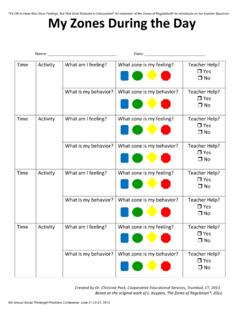
1 Student:_____Limited SkillsWith Prompts (Visual/ Verbal)Emerging Skills (1+ settings)Functionally Independent (All settings)Basic Foundational SkillsAbility to communicate wants and needsAsks for helpAccepts endings/transistion with use of concrete tool (timer/schedule)Accepts 1-2 changes in schedule (flexibility)Ability to ask for a breakAbility to wait for a short period of timeAbility to identify 10 or more emotions in picturesParticipates in calming activitiesRecognizes simple emotions in othersLabels 7 emotions in selfEmergent UnderstandingAttends to group activitiesStays on task while engaged in activityAccepts helps from adults to aid in regulationCommunicates anger, frustration or disapproval via verbal/visual meansCommunicates lack of understanding or need for clarificationAccepts unexpected changes in plansAble to identify state of arousal and feelings (Zones)
2 Can identify 5 triggers that lead to frustration or anxietyIdentifies how one's behavior affects others feelings and thoughtsInitiates use of tools/supports to regulate selfIdentifies what is the main problem given a conflict (gestalt thinking)Ability to classify the size of a problem (objectivity)Functional ConfidenceAccepts Authority from: Adults PeersFollows general rules of enviornment/situationHandles being corrected by othersSelf advocates in adverse situationsRefuses requests of others appropriatelyAble to generate solutions to positively solve problems Abilty to tolerate new demandsSelf-advocates needs, wants and desiresRegulates voice and body to match environmental demandsNegotiates compromise as part of conflict resolutionAdjusts own behavior based on interpretation of nonverbals/environmental cuesProactively clears hurdles to maintain expected regulated stateDemonstrates: Self-regulation data CollectionAdapted from H.
3 Hanzlick, L. Petersen and L. Rogers' Moving Toward Functional Social Competence (2007)