Transcription of Sheet 1 Retail centres and township development
1 Retail centres and township developmentPage 1 Sheet 1 Retail centres and township developmentThis case study is based on an existing booklet, Retail centres and township Developments: A Case Study (SACN, 2010) published by the South African Cities Network (SACN), the Training for township Renewal Initiative (TTRI) and National Treasury. The booklet draws on prior research on Retail centres in townships that was commissioned by Urban LandMark and conducted by Demacon Market Studies. The content of the case study is not presented here. The existing booklet needs to be used in conjunction with this and learning activities are provided on the back of this Sheet . You can do these activities on your own or in groups, as appropriate for your learning session. Look at the activities before you begin so you know what to look out for during your reading of the booklet highlights the following: In the last 10 years there has been an increase in the development of Retail centres in township areas.
2 Retail centres may have positive as well as negative implications for local development , for example, kick-starting urban renewal through attracting other services and facilities to an area, or damaging the local economy. The booklet provides strategies that help increase the positive impacts and reduce the negative ones. Learning outcomes: By the end of this session participants will be able to: Describe recent trends in Retail centre development in townships Outline some of the key impacts of Retail centres , both negative and positive Suggest strategies to increase the positive impacts of Retail centres and reduce the negative of a series of case studies developed by Urban LandMark as a teaching andlearning resource for studies in urban land markets. Urban LandMark gratefullyacknowledges funding by UKaid from the Department for International development (DFID).
3 Email: Background to this case studyThe development of shopping centres in townships and rural areas in South Africa has increased significantly within the last 10 years. For the initial development of the centre and its future successful operation, it is necessary that the developer makes a profit and that investments made are , the overall impact of a centre needs to be assessed in terms of how it affects people living and working in the area. Criteria for assessing the success of a Retail centre should include: Social imperatives: for example, a sense of community through providing a pleasant, safe, convenient place for people to shop and socialise Economic priorities: for example. the development of local enterprises, not only those that are directly related to the centre Environmental considerations: for example, the use and sustainability of natural environmental booklet provides an overview of the impact of such shopping centres on consumers and local enterprises in the light of this broader understanding of success.
4 It suggests some strategies that municipalities, planners and developers can consider to reduce the negative and increase the positive impact of a Retail booklet for use as case study materialRetail centres and township developmentPage 2 Sheet 1 Before you start Before you read the case study, spend a couple of minutes making a note of your answers to this question: These developers, they just come here, build their shopping centres and then take all the profits out of our areas. This is a very critical view of the role of Retail centres in townships. What are your views on this? After reading the case study Do the following activities on your own, or in groups. Write down your answers to the questions. Be prepared to share your findings with the larger Make a list of the main impacts, both positive and negative, of Retail centre development in townships and rural Put forward a set of guidelines or strategies that municipalities, planners and developers could use to increase the positive impacts of Retail centre developments in townships and rural areas and reduce the negative ones.
5 Reflection Has this case study influenced your attitudes or opinions about the role of local authorities and developers regarding Retail centre developments? Share this with the other participants using this learning material. What are the key insights that you have gained from this case study?To help you navigate the bookletLearning activitiesRETAIL centres AND township development :A CASE STUDYTRAINING FOR township RENEWAL INITIATIVEACKNOWLEDGEMENTSCase Study Review Panel: Geci Karuri-Sebina (National Treasury); Phumlani Mbulawa (SA Cities Network); Robert McGaffin (Urban LandMark). This case study has relied to a great extent on information and materials provided by a range of informants including: Hein du Toit (DEMACON Market Studies), Mark Souris (Periscopic Property Management Ltd), Mike Nkuna (Masingita Group of Companies).
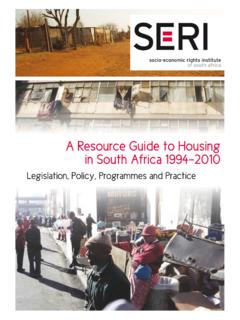
6 It is also complemented with the proceedings of a TTRI Colloquium on Retail -led township development which was held by invitation at the National Treasury on 11 August : Rachel Adatia Clacherty & AssociatesCover photos: Twin City, Kevin James/Urban LandMarkDesign and production: Clarity Editorial Printed by Formeset, Cape TownRETAIL centres AND township development :A CASE STUDY South African Cities Network for TTRI, rights and institutions are free to use the contents of this publication for non-commercial purposes, provided that proper acknowledgement and references are made. Any other types of use require prior permission from the FOR township RENEWAL INITIATIVE CASE STUDY SERIESThe Training for township Renewal Initiative (TTRI) is a partnership between the National Treasury (Neighbourhood development Programme), South African Cities Network (SACN), the Department of Cooperative Governance (Urban Renewal Programme), the development Bank of Southern Africa (DBSA), and Urban LandMark.
7 The partners are also supported by occasional associates. TTRI aims to promote, encourage and support township development and renewal in South Africa through the training of township managers and TTRI case studies series aims to document experiences that illustrate innovative approaches to area-based development in order to share practical ideas and lessons to inform future development initiatives and practices for South Africa s townships. The case studies are primarily for role-players involved in township regeneration, including planners, trainers, policy makers, investors, community leaders and municipal case study provides an overview of township Retail centre development in South Africa. In the last ten years there has been an increase in the development of Retail centres in township areas.
8 Retail centres may have positive as well as negative implications for local development , and there is some debate about the extent to which Retail -led development is appropriate for township case study highlights some of the impacts of Retail centres on consumers and local businesses. It suggests some strategies to minimise the potential negative impacts of Retail centres and maximise their benefits. This case study provides a valuable learning opportunity for municipal officials who are considering Retail -led development strategies for their areas. GLOSSARY AND ACRONYMSA nchor shops: national stores that are needed as tenants in the centre in order to attract other tenants and consumers CLO: Community Liaison Officer GLA: gross leasable areaNodal development : development that takes place in response to a particular focus or hub, for example a transport interchange, a particular industry, or a Retail centreSecond economy areas: township and rural areas that were underserved and economically marginalised in the apartheid eraSMME: small, medium and micro enterprisesCONTENTS1.
9 INTRODUCTION 4 Trends in Retail centre development 6 Retail centres as anchors for development 72. UNDERSTANDING Retail CENTRE DEVELOPMENTS 8 Types of Retail centres 8 Anatomy of a Retail centre 10 Key considerations in determining Retail centre developments 133. IMPACTS OF Retail centres 18 Measures of success 18 Impact of Retail centres on consumers 24 Impact of Retail centres on local businesses 26 4. STRATEGIES FOR SUCCESSFUL Retail CENTRE development 33 Keep the bigger picture in mind 33 Negotiate a balance between social good and profit 34 Take account of the local context 36 Be aware of vested interests driving the process 37 Consider the market dynamics and financial considerations when planning the centre 37 Take account of different types of developers 37 Consider centres that complement each other 38 Start with a viable size and allow for future growth 38 Ensure commitment from other role-players and affected parties 39 Ensure adequate maintenance of the centre and surrounding infrastructure 40 Provide support for the development of local businesses 40 Implement a long-term monitoring and
10 Evaluation process 42 TRAINING FOR township RENEWAL INITIATIVE | CASE STUDY1. INTRODUCTION The development of shopping centres in township and rural areas in South Africa has increased significantly within the last ten years. This trend has been met with mixed reactions. It has been argued that the benefits to consumers, such as easier access to a wide variety of goods at cheaper prices, come at the expense of existing local enterprises that cannot compete with the shops in the centre. It is also argued that such centres play an important role in kick-starting urban renewal and development , through attracting other services and facilities to the area. Research shows that the overall positive versus negative impact of a particular shopping centre is often less clear cut and will be affected by many factors related to its specific location and development process.