Transcription of Sight Distance Values5 - wisconsindot.gov
1 FDM 11-10 Attachment Sight Distance Values July 22, 2009 Attachment Page 1 Sight Distance Values5 DESIGN SPEED MPH Sight Distance - FEET STOPPING Sight Distance 1 DECISION Sight Distance 1 PASSING Sight Distance 1, 3, 4 AVOIDANCE MANEUVER 2A B C D E 25155 --- --- --- --- --- 900 30 200 220 490 450 535 620 1090 35 250 275 590 525 625 720 1280 40 305 330 690 600 715 825 1470 45 360 395 800 675 800 930 1625 50 425 465 910 750 890 1030 1835 55 495 535 1030 865 980 1135 1985 60 570 610 1150 990 1125 1280 2135 65 645 695 1275 1050 1220 1365 2285 70 730 780 1410 1105 1275 1445 2480 Notes 1 From Chapter 3, GDHS 2001 and GDHS 2004 (values are identical in both editions).
2 2 Avoidance maneuver A: Stop on rural road - t = s Avoidance maneuver B: Stop on urban road - t = Avoidance maneuver C: Speed/path/direction change on rural road - t varies between and s Avoidance maneuver D: Speed/path/direction change on suburban road - t varies between and s Avoidance maneuver E: Speed/path/direction change on urban road - t varies between and s 3 See Chapter 3 of the Wisconsin Traffic Engineering, Operations and Safety Manual (TEOpS) for No passing zone standards. 4 See Attachment for vertical curve design for Passing Sight Distance .
3 5 See Attachment for Sight Distance Categories and Application FDM 11-10 Attachment Sight Distance Categories and Applications May 15, 2019 Attachment Page 2 Sight Distance Categories Sight Distance Criteria 1 Category Sight Distance Criteria Upper Minimum Minimum 1 Stopping Sight Distance (SSD) to a 6-inch object SSD to a 24-inch object2 [BOTH] Decision Sight Distance Avoidance Maneuver C (DSD-C) to a 24-inch object <AND> SSD to a 6-inch object. [Note: SSD to a 6-inch object is the only Upper Minimum Sight Distance Criteria for points within a Category 2 roadway segment that are closer than SSD from the End Sight Distance Boundary (SDB) of that segment (see table starting on the next page of this attachment for SDB definitions).]
4 ] SSD to a 24-inch object3 [BOTH] Decision Sight Distance Avoidance Maneuver C (DSD-C) to a 24-inch object <AND> SSD to a 6-inch object [Note: SSD to a 6-inch object is the only Upper Minimum Sight Distance Criteria for points within a Category 3 roadway segment that are closer than SSD from the End Sight Distance Boundary (SDB) of that segment (see table starting on the next page of this attachment for SDB definitions).] SSD to a 6-inch objectNotes: 1 The available Sight Distance along a roadway should meet or exceed the required Sight Distance at every point along the roadway.
5 The Sight Distance Category for a segment of roadway determines the required Sight Distance . See Attachment for Sight Distance Values See Table Sight Distance Categories - Application and Sight Distance Boundaries in this Attachment; See Attachment , Attachment , Attachment and Attachment for vertical curve design for Sight Distance ; and See Attachment for horizontal curve design for Sight Distance . FDM 11-10 Attachment Sight Distance Categories and Applications May 15, 2019 Attachment Page 3 Sight Distance Categories - Application and Sight Distance Boundaries Category Locations to Apply Sight Distance Boundaries (SDB) Begin End 1 Default - All locations not in Category 2 or Category 3 End limit of Category 2 or Category 3 Begin limit of Category 2 or Category 3 2 Mainline approach to an Interchange entrance ramp where there is a continuous auxiliary lane to the next downstream interchange exit (See Example 1)
6 At a Distance = DSD-C 1 from the entrance ramp gore of the upstream interchange 2 At the entrance ramp gore of the upstream interchange 2 Crossroad approach to an Interchange ramp terminal where the posted speed is 40 mph or less At a Distance = DSD-C 1 from the CL of the ramp terminal intersection At the CL of the ramp terminal intersection Lane drop on a non-freeway or non-expressway At a Distance = DSD-C 1 from the start of the lane drop At the end of the lane drop Railroad / highway at-grade crossings (See Example 2) At a Distance = DSD-C 1 from the stop bar upstream from the RR tracks At the stop bar upstream from the RR tracks High speed multilane highway approach to an intersection with a right turn but no left turn in the direction of travel (See Example 3)
7 At a Distance = DSD-C 1 from the back of the design queue 3 At the CL of the intersection Approach to an intersection where a thru lane becomes a "turn only" lane Two-lane highway or non-high speed multi-lane road approach to an Intersection with an unusual configuration, including multiple right-turn lanes or multiple left -turn lanes Side road approach to an at-grade intersection with a bypass roadway or expressway High-speed 2-lane rural highway approach to an isolated stop sign, traffic signal, or roundabout where such control is unexpected because it is not typical FDM 11-10 Attachment Sight Distance Categories and Applications May 15, 2019 Attachment Page 4 3 Mainline thru lane that becomes an "exit only" lane at an interchange (See Example 4) At a Distance = DSD-C 1 from the begin taper to exit ramp At the exit ramp gore 2 Mainline approach to an interchange exit ramp (See Example 1)
8 At a Distance = DSD-C 1 from the begin taper to exit ramp At the exit ramp gore 2 Mainline approach to an interchange entrance ramp, except an entrance ramp where there is a continuous auxiliary lane to the next downstream interchange exit (see Category 2 for this location). (See Example 5 for Category 3 entrance ramp) At a Distance = DSD-C 1 from the entrance ramp gore 2 At the end taper from entrance ramp Mainline approach to an Interchange with unusual features, multiple entrance or exit points; short weaving sections At a Distance = DSD-C 1 from the 1st upstream feature, , begin taper to exit ramp, or entrance ramp gore 2 At the last downstream feature, , the exit ramp gore, or the end taper from entrance ramp 2 High-speed multilane highway approach to an intersection with a left turn in the direction of travel (See Example 6)
9 At a Distance = DSD-C 1 from the back of the design queue 3 At the CL of the intersection Crossroad approach to an interchange ramp terminal intersection where the posted speed is 45 mph or greater At a Distance = DSD-C 1 from the CL of the ramp terminal intersection At the CL of the ramp terminal intersection Lane drop on freeways or expressways At a Distance = DSD-C 1 from the start of the lane drop At the end of the lane drop Approach to a major fork on a freeway or expressway At a Distance = DSD-C 1 from the start of widening At the point of divergence Approach to a branch connection on a freeway or expressway At a Distance = DSD-C 1 from the point of convergence At the end of lane reduction [or, if there is no lane reduction, at the point of convergence] Notes = Decision Sight Distance Avoidance Maneuver C (see table on Attachment ) = painted nose as defined on and as depicted in Exhibit 10-59 on of the 2004 queue lengths for the thru, left turn and right turn movement, and use whichever is furthest from the intersection.
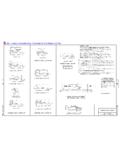
10 See FDM 11-25-1 , FDM 11-25-5, andFDM 11-25-10 for guidance on queue length requirements. Also, confer with region traffic 11-10 Attachment Sight Distance Categories and Applications May 15, 2019 Attachment Page 5 Example 1 Sight Distance Category 2 Mainline approach to an Interchange entrance ramp where there is a continuous auxiliary lane to the next downstream interchange exit / Sight Distance Category 3 Mainline approach to an interchange exit ramp FDM 11-10 Attachment Sight Distance Categories and Applications May 15, 2019 Attachment Page 6 Example 2 Sight Distance Category 2 Railroad / highway at-grade crossings FDM 11-10 Attachment Sight Distance Categories and Applications May 15, 2019 Attachment Page 7 Example 3 Sight Distance Category 2 High speed multilane highway approach to an intersection with a right turn but no left turn in the direction of travel FDM 11-10 Attachment Sight Distance Categories and Applications May 15.