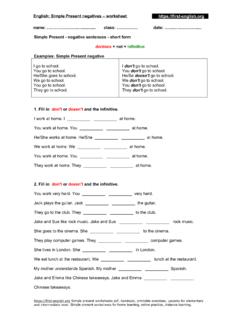
Simple Past - English grammar https://first-english.org ...
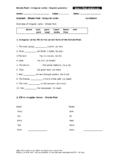
Simplepast - English : .. class: .. date: .. Simplepastregular verbs - worksheetThese verbs are called regular because they all add the same ending -ed on : cook - cooked, play - played, wash - washed,Add only -d. Examples: love - loved, live - lived, close - closed, live - lived 1. regular verbs make their past Tense by adding workto phoneto playto washto paintto cookto loveto opento liveto answerto callto decideto dreamto explainto expectto endto smokeSimple Pastworked_____Infinitiveto arriveto startto walkto cleanto opento happento lookto talkto askto liveto fillto hopeto inviteto jumpto mixto rememberto warnSimple Pastarrived_____ Simplepast worksheets pdf, handouts, printable exercises. Lessons for elementary and intermediate level. Simplepast worksheets for home learning with examples online practice, distance learning.
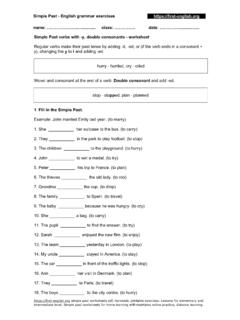
Simple Past – regular verbs - worksheet These verbs are called regular because they all add the same ending -ed on it. Examples: cook - cooked, play - played, wash - washed, Add only -d. Examples: love - loved, live - lived, close - closed, live - lived 1. Regular verbs make their Past Tense by adding -ed. Infinitive to work to phone to play ...
Transcription of Simple Past - English grammar https://first-english.org ...
1Simplepast - English : .. class: .. date: .. Simplepastregular verbs - worksheetThese verbs are called regular because they all add the same ending -ed on : cook - cooked, play - played, wash - washed,Add only -d. Examples: love - loved, live - lived, close - closed, live - lived 1. regular verbs make their past Tense by adding workto phoneto playto washto paintto cookto loveto opento liveto answerto callto decideto dreamto explainto expectto endto smokeSimple Pastworked_____Infinitiveto arriveto startto walkto cleanto opento happento lookto talkto askto liveto fillto hopeto inviteto jumpto mixto rememberto warnSimple Pastarrived_____ Simplepast worksheets pdf, handouts, printable exercises. Lessons for elementary and intermediate level. Simplepast worksheets for home learning with examples online practice, distance learning.
Worksheet Simple Past – regular verbs Simple Past: Add -ed or -d Examples: cook - cooked, love - loved. Exercise 1. Fill in the Simple Past form. 1. He learns English. (simple present) He _____ English. (simple past) 2. I like apples. (simple present) I _____ apples. (simple past) 3. They ask many questions. (simple present)
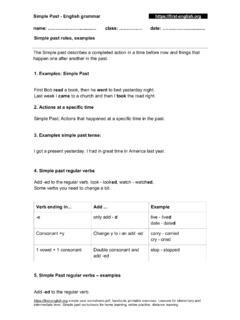
Simple past rules, examples 1. Examples: Simple Past First Bob read a book, then he went to bed yesterday night. Last week I came to a church and then I took the road right. 2. Actions at a specific time Simple Past: Actions that happened at a specific time in the past. 3. Examples simple past tense: I got a present yesterday.
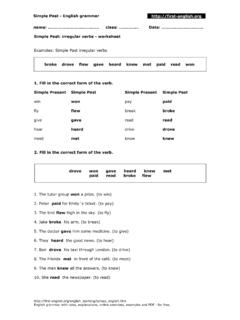
Simple Past: irregular verbs - worksheet Examples – Simple Past irregular : broke drove flew gave heard knew met paid read won 1. Fill in the correct form of ...
Simple Past arrived started walked cleaned opened happened looked talked asked lived filled hoped invited jumped mixed remembered warned https://first-english.org simple past worksheets pdf, handouts, printable exercises. Lessons for elementary and intermediate level. Simple past worksheets for home learning with examples online practice ...
https://first-english.org simple past worksheets pdf, handouts, printable exercises. Lessons for elementary and intermediate level. Simple past worksheets for home learning with examples online practice, distance learning.
Simple Past long form or short form: Fill in the correct form. Yesterday it ________ (to be) my friend´s birthday. He ________ (to invite) a lot of friends
3. Teach vocab for verbs and the regular past tense form 4. Practice saying past tense regular verbs 5. Do the "What did you do yesterday? Survey" worksheet 6. Sing "Yesterday was a Great Day!" 7. Read classroom reader "Silly Willy's Great Day" 8. Play "Past Tense Slap" Wrap Up: 1. Set Homework: "Past Regular Verbs" worksheet 2.
There are verbs with past tenses that are a mixture of regular and irregular forms, i.e., they have both a vowel change and a regular ending (sell-sold). There is a group of verbs that have no distinct past tense form at all; the verbs in this group are single-syllable verbs that end in –t or –d; for example hit-hit; slit-
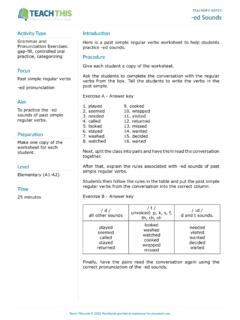
B. Past simple regular verb -ed endings can be pronounced in three ways: d, t, or id. Follow the rules and put the past tense regular verbs from the conversation into the correct column. / d / all other sounds / t / unvoiced: p, k, s, f, th, ch, sh / id / d and t sounds. C. Now, read the conversation again using the correct pronunciation of the ...
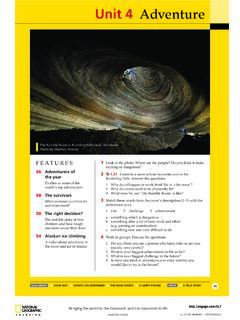
Grammar past simple 3 Underline all the verbs in the past tense in The mountaineer section of the article. Answer the questions. 1 What do you add to regular verbs in the past simple? 2 What auxiliary verb do you use to make the verb negative? Reading 1 Read the article. Complete the diagram with the phrases (1–6). Both Edurne Pasaban 1
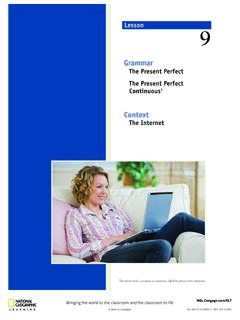
The past participle of regular verbs ends in -ed. The past participle is the same as the past form for regular verbs. 9.2 The Past Participle FORMS EXAMPLES Base Past Past Form Form Participle I orkw every day. I worked yesterday. I have worked all week. work worked worked improve improved improved The past participle of many irregular verbs is ...
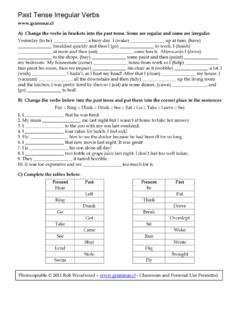
Past Tense Irregular Verbs www.grammar.cl A) Change the verbs in brackets into the past tense. Some are regular and some are irregular. Yesterday (to be) _____ a busy day.
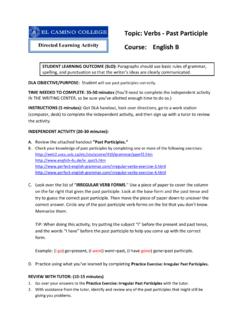
Look at the base form and the past tense and try to guess the correct past participle. Then move the piece of paper down to uncover the correct answer. Circle any of the past participle verb forms on the list that you don’t know. Memorize them. TIP: When doing this activity, try putting the subject “I” before the present and past tense,
Simple Past Perfect . already . just . never • mostly when two actions in a story are related to each other: the action which had already happened is put into . Past Perfect, the other action into . Simple Past • the past of the . Present Perfect. had + past participle* *(infinitive + ed) or (3rd column of table of irregular verbs) I . had ...
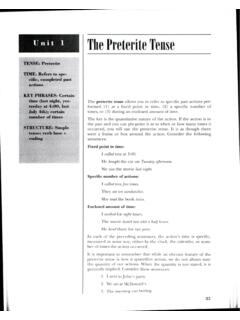
The Preterite Tense The preterite tense allows you to refer to specific past actions per¬ formed (1) at a fixed point in time, (2) a specific number of times, or (3) during an enclosed amount of time. The key is the quantitative nature of the action. If the action is in the past and you can pin-point it as to when or how many times it