Transcription of SNAP cPL Test—reference laboratory accuracy pet-side
1 Canine pancreatitis is difficult to diagnose and, in severe cases, can be A fast, accurate pet-side test for pancreatitis is needed to help veterinarians quickly diagnose or rule out pancreatitis in patients that present with acute clinical has introduced a pet-side SNAP version of the current IDEXX Reference Laboratories Spec cPL (canine pancreas-specific lipase) Test for canine pancreatitis. The new SNAP c P L (canine pancreas-specific lipase) Test is an ELISA assay that has a 95% correlation to the reference test method. The SNAP cPL Test can be used pet-side with confidence when working up dogs presenting with vomiting, anorexia, abdominal pain, or other clinical signs of pancreatitis.
2 BackgroundThe canine pancreatic lipase immunoreactivity (cPLI) test was developed at Texas A&M University by Dr. David Williams and Dr. J rg Steiner, and measured levels of lipase enzyme that originate specifically in the pancreas. Until 2005, this assay was the most sensitive laboratory test for canine ,3 In 2005, IDEXX collaborated with Drs. Williams and Steiner to develop an enhanced and commercially available version of the cPLI test called the Spec cPL Test. The Spec cPL Test, available from IDEXX Reference Laboratories, provides the same diagnostic benefits as the original cPLI test but with a faster turnaround time (next-day results).
3 As the Spec cPL Test became the standard of care in testing for canine pancreatitis, the benefit of a pet-side test using the same methodology became for development of the SNAP cPL TestExtensive market research indicated that veterinarians wanted a pet-side assay that could be used along with other blood work to provide direction when patients presented with common, nonspecific signs such as vomiting, anorexia, weakness, and abdominal pain. Veterinarians wanted a test that was fast, accurate, and easily effective test would produce results that correlated closely with results from the reference laboratory test.
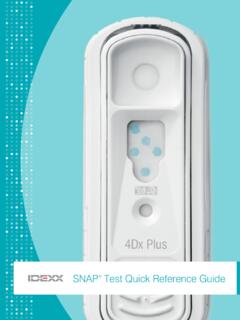
4 Additionally, a pet-side test needed to be optimized for maximum sensitivity and provide abnormal results for any sample outside the Spec cPL Test reference range of >200. The SNAP cPL Test, the pet-side version of the Spec cPL TestIn July 2007, IDEXX introduced the SNAP cPL Test, a pet-side version of the Spec cPL Test that uses SNAP ELISA technology. The SNAP cPL Test is part of the growing family of SNAP tests used by thousands of veterinarians SNAP cPL Test uses the same biological reagents as the Spec cPL Test, but displays results in 10 minutes. The test result is displayed as a colored sample spot that must be compared to a reference spot.
5 If the color intensity of the sample spot is lighter than the color intensity of the reference spot, then cPL concentration is normal. If the color intensity of the sample spot is equal to or darker than the reference spot, then cPL concentration is abnormal (either elevated or consistent with pancreatitis. ) Validation of the SNAP cPL TestTo determine whether the SNAP cPL Test met the objectives described above, the IDEXX Research and Development team performed two validation 1: Correlation with Spec cPL TestThe optical density of results from the SNAP cPL Test were compared to results from the reference laboratory Spec cPL Test, day-to-day and across design A series of canine serum samples was measured using the Spec cPL assay to determine cPL concentration.
6 The same samples were then run on the SNAP cPL assay. A densitometer was used to measure the optical density of results from the SNAP cPL Test for direct comparison and correlation with the Spec cPL cPL Test reference laboratory accuracy pet-sideMore answers for canine patients presenting with vomiting, anorexia, and abdominal pain when the culprit could be 1. Reference Laboratories Spec cPL concentration compared to SNAP cPL Test Results Spec cPL TestSNAP cPL Test0200 ElevatedConsistent with PancreatitisNormalAbnormalSample spot is lighter than reference spot is the same color as reference spot is darker than reference Densitometer readings produced a correlation coefficient of.
7 92. Importantly, none of the cPL concentrations greater than 400 ( consistent with pancreatitis ) were read as Normal using the SNAP cPL Test. Study 2: ReadabilityTrained technicians from local veterinary practices visually interpreted the results of the SNAP cPL Test for samples with known Spec cPL concentrations. Study design Twenty canine serum samples with known Spec cPL concentrations were assayed on SNAP cPL devices. Each device was visually interpreted twice by each of 14 veterinary professionals for a total of 28 observations per sample (total n=560).
8 The study was conducted twice, for an n>1,000. Veterinary professionals were blinded as to the Spec cPL concentrations of the samples. Results The results of the readability study showed a 95% correlation on both sensitivity and specificity measures against the Spec cPL Test, with over 1,000 sample reads. Densitometer readings were performed on the discrepant samples. As might be expected, the interpretations which caused the most difficulty were at the transition point between the high end of the normal range and the low end of the elevated range (noted as visual discrepants below).
9 Summary and conclusionsThe SNAP cPL Test was developed to fill the market need for an accurate, reliable, pet-side tool to aid veterinarians in diagnosing or ruling out pancreatitis in dogs presenting with clinically acute SNAP cPL Test has a 95% correlation to the reference laboratory Spec cPL Test, the most accurate test currently available for canine ,4 IDEXX recommends that veterinarians run the SNAP cPL Test pet-side or the Spec cPL Test at the reference laboratory on dogs presenting with signs of vomiting, anorexia, abdominal pain, or other clinical signs of pancreatitis.
10 If the SNAP cPL Test results are abnormal, veterinarians are encouraged to order the Spec cPL Test as a follow-up to establish a baseline cPL concentration and to monitor Mix K, Jones C. Diagnosing Acute Pancreatitis in Dogs. Com Cont Ed Pract Vet. 2006;28:226 Steiner JM, Williard MD, ed. Diagnosis of Pancreatitis. The Veterinary Clinics of North America Small Animal Practice. 2003;33:1181 Steiner JM, Broussard J, Mansfield CS, Gumminger SR, Williams DA. Serum canine pancreatic lipase immunoreactivity (cPLI) concentrations in dogs with spontaneous pancreatitis. J Vet Int Med.