Transcription of Southern Judicial Circuit
1 instructions FOR filing your CONTESTED DIVORCE WITH NO MINOR CHILDREN In Georgia, if you want to end your marriage, you must file a complaint for divorce in the Superior Court. You can either hire an attorney who will prepare your case and represent you in Court, or you can use the sample forms included in this packet and represent yourself in Court. After a Court issues a final judgment and decree, you can remarry. A contested divorce is one in which the parties cannot work out an agreement regarding issues such as alimony, property division, division of debts and the like. The parties ask the Judge to settle arguments between them, and each will have to present evidence at a trial. This process can be quite complicated.
2 You will probably need additional documents in order to conduct discovery, which is a formal process of gathering evidence for use at trial. Discovery can include depositions, interrogatories, requests for production of documents, and other procedures. Becausediscovery is a highly individualized process, it is not possible to include those documents in this packet. YOU MAY NEED AN ATTORNEY IF: The case becomes contested and your spouse has a lawyer. You cannot find your spouse to serve him or her with your papers. You think you will have difficulty getting information and documents from your spouseregarding income, retirement funds, if it is a friendly divorce, you should talk to a lawyer before you sign any settlement papers or file anything in Court.
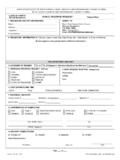
3 STEP 1: Complete the Domestic Relations filing Information and Final Disposition Forms. STEP 2: Complete the Complaint for 3: Complete the Summons form. STEP 4: Complete the Verification form. STEP 5: Attach other necessary documents (see details later). STEP 6: Financial documents to be produced. STEP 7: Pay the filing fee. STEP 8: File the forms. STEP 9: Prepare your case for trial. STEP 10: Receive the Final instructions : STEP 1: Complete the Domestic Relations filing Information and Final Disposition forms These forms are required by Georgia Law, at 9-11-133. They help the Clerk of Court keep statistical information about the number and types of cases decided in our local courts.
4 The clerks use this information to prepare case management reports for the Chief Judge of each Circuit and for the Chief Justice of the Georgia Supreme Court. In short, having this information helps us to run the Court system more efficiently for you. The filing information form the top line, fill in the county where you are filing and the date the second line, fill in the names of the Plaintiff and it says Plaintiff/Petitioner s Attorney, check the box which says Pro Se. This indicates that you are representing yourself without the left-hand box, check off what kind of case this is. Since this is adivorce, you will check Divorce (includes annulment). the right hand box, indicate whether or not you are asking for relief fromfamily violence by checking yes or no in the appropriate final disposition form The purpose of this form is to tell how your case ends.
5 Since you case is far from over, you should NOT fill in the information in the three big boxes at the bottom of the page. At this point, we do not know how your case will end. the top line, fill in only the county where you are filing . We do not yetknow the date disposed, since you have not yet received a final order from the Judge. the second line, Docket #, blank. The clerk will assign this your name where it says Reporting party. down the full names of the Plaintiff and it says Plaintiff/Petitioner s Attorney, you will check the box whichsays Pro Se. This shows that you are representing yourself. Since you arenot a licensed attorney, you do not have a Bar #, so leave those blanks 2: Complete the Complaint for Divorce.
6 Fill in your full name as the Plaintiff and your spouse s full name as Defendant. Do not fill in where it says Civil Action File No. The clerk will assign a number to your case when you file your complaint. Then insert your name in the space provided just before paragraph one (1). Paragraph 1: Subject Matter Jurisdiction Check box a) if you have lived in the state of Georgia for at least six months prior to filing your complaint for divorce. Check box b) if you are not a resident of the state of Georgia, but your spouse has lived in Georgia and in the county where you are filing for at least six months prior to your filing the complaint for divorce. If neither a) or b) applies to you, you cannot file for divorce in this county.
7 Paragraph 2: Venue and Service About Venue The word venue originally meant neighborhood. Today, venue means the proper place to hold a trial based on issues such as fairness and convenience to the parties, as well as the county s connection to the events in dispute. In Georgia, the general rule is that the proper venue (place) to sue a Defendant for divorce is in the Defendant s county of residence. This rule can be found in the 1983 Georgia Constitution, Article 6, Section 2, Paragraph 1. When the Defendant in a divorce case is incarcerated, Georgia courts have held that venue is proper in the county where the Defendant resided with his or her spouse before the incarceration.
8 About Service of Process Serving the Defendant with the complaint and other papers filed against him or her is essential. Without proper service, the Court has no jurisdiction (authority) to decide the case. In our legal system, a Defendant has a Constitutional right to receive notice that he or she has been sued. For this reason, the preferred method of Service is that someone physically put the legal papers into the Defendant s hand. Because this is not always possible, there are exceptions. Choose one of the following provisions a)Acknowledgement of Service Check box a) if your spouse will sign an Acknowledgement of Service.
9 You will need to give your spouse of copy of your completed Complaint for Divorce and have him/her sign the Acknowledgement of Service. By signing this form, your spouse is letting the Court know that he/she has received a copy o f your petition and, therefore, will not need to be served with a copy of your petition by the sheriff. b)Waiver of Venue and Jurisdiction and Acknowledgement of ServiceCheck box b) if: your spouse lives in Georgia but does not live in the county where you are filing ; or your spouse lives in another state and will consent (agree) to let you file for divorcein )Use paragraph c if your spouse lives in the county where you are )Use this paragraph if the following statements are are filing in the county of your marital residence (where you lastlived together).
10 Plaintiff still lives in the county of the marital Defendant moved to another Georgia county within the previous )Use this paragraph if your spouse lives in Georgia, but his or her exactwhereabouts are )Use this paragraph if your spouse is NOT a Georgia resident, then choose one ofthe this paragraph if your spouse is subject to Georgia s long armstatute. The long arm statute gives a Georgia court personal jurisdictionover a non-resident defendant if he or she had enough contacts with this paragraph if your spouse lives outside of Georgia, but his or herexact whereabouts are unknown. You will also need to complete anaffidavit of due diligence to include with your packet.