Transcription of southern peas (FSA6020)
1 Dr. Craig R. AndersenExtension Horticulturist -VegetablesEnvironmentLight sunnySoil well-drained loamFertility medium to lightpH to warm seasonMoisture average to droughtresistantCulturePlanting seed 1 inch deepSpacing 2 x 24 inchesHardiness tender annualFertilizer lightSouthern Peas Vignaunguiculata The southern pea, also known asthe cowpea, is thought to have origi-nated in Africa, where it has beeneaten for centuries. It traveled toEgypt as long as 3,000 years ago andwas common to the European andAsian diets. southern peas wereprobably brought to the West Indies inthe 17th century. They later became acommon food in the United of the more popular ways ofcooking black-eyed peas is a dishcalled Hoppin John, a traditionalAfrican-American dish served on NewYear s day for good southern pea (cowpea) is avery popular vegetable in many different types areavailable (Blackeye, Pink Eye, PurpleHull, Cream and Crowder), they areall southern peas and the basicculture is the same for all PracticesSoilsSouthern peas adapt to many soiltypes; medium fertility with pH of is desirable.
2 High fertility pro-duces excessive vine growth and pooryields. N-fixing bacteria inoculantsmay increase yield especially in soilswhere peas have not been TimePlant southern peas after the soilis thoroughly warm (62 degrees F orgreater) in late spring or early sum-mer. This vegetable is very tolerant tohot weather and can be plantedthroughout the summer with verygood results. For fall planting, plantabout 65 to 75 days prior to theaverage frost date to be sure and Depth of PlantingThe space required will vary a bitfrom variety to variety. Generally,plant southern peas at a rate of five toseven seeds per foot and 1 inch , a light fertilizerapplication is applied at or prior toplanting.
3 southern peas fix nitrogenAgriculture and Natural ResourcesUNIVERSITY OF ARKANSASDIVISION OF AGRICULTUREC ooperative Extension ServiceHome Gardening SeriesSouthern PeasUniversity of Arkansas, United States Department of Agriculture, and County Governments CooperatingArkansas IsOur CampusVisit our web site at: the air, thus excess nitrogen fertilizer mayencourage vine growth at the expense of prolonged periods of dry weather occur, irrigationduring flowering and pod fill will be very beneficialfor maximum are many different sources for thesecultivars. Some of these include the following:1vChesmore Seed Company5030 Highway 36 Joseph, MO 64507 Tel: 1-800-383-08652vWillhite Seed CompanyP.
4 O. Box 23 Poolville, TX 76487 Tel: 1-800-828-1840v vegetablesHarvestingSouthern peas are normally harvested at themature green or roasting ear stage. This stage ischaracterized by fully grown seed that have notstarted to ProblemsSouthern peas are not troubled with diseases andinsect problems to the extent that snap beans wilt and nematodes, two of the morecommon problems, can be controlled by crop rotation,site selection and resistant Asked QuestionsQ. What causes my southern peas to growextremely large vines but fail to setany pods?A. Failure to set pods can be caused by a number ofthings; the most common problem is overfertili-zation.
5 southern peas, if overfertilized, grow largeplants but fail to set many pods. Thrips, anextremely small insect which attacks the bloomsof southern peas, can also cause poor pod Can I save seed from this year s blackeyepea crop for next year s garden?A. Yes, but not recommended. Peas are self-pollinated and seed may be saved for planting innext year s garden. However, several types ofseedborne diseases may show up if seeds aresaved for later Why are my pea plants always yellow whenthey first come up then turn green afterplants get larger?A. Yellow plants early in the season are usuallycaused by cool or wet soils.
6 As the temperaturewarms and the soil dries, the plants will usuallyturn green. Q. My southern peas come up every yearlooking damaged. The leaves are curled andsnarled. What is wrong?A. The apexes or shoots of the leaves were damagedwhen they were very small by a tiny insect calleda thrip. The thrip rasps the tissue of the leaf sgrowing point causing it to bleed or secrete plantjuices. The thrip then feeds on these juices. Mostplants recover from this damage. Thrips can becontrolled with diazinon or malathion applied atseven- to ten-day intervals. Spraying should beginwhen plants have just emerged since mostdamage occurs then.
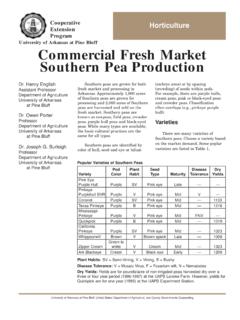
7 CropCultivarDays toMaturitySeed/100 Ftof RowDiseaseResistanceor ToleranceSourcesRemarksSouthernPeasElite ar704 oz2 Resistant to fusarium wilt. Cream,erect plant type, good yield Silver754 oz1, 2 Resistant to fusarium wilt andnematodes. Cream crowder, semi-bush type, good yield and Eye Purple HullBVR754 ozBacteria VirusResistant1, 2 Low, bushy, purple hull Black Eye #5752 Resistant to fusarium wilt. Erectplant type, good CRAIG R. ANDERSEN is Extension horticulturist -vegetables, Cooperative Extension Service, University of Arkansas, in furtherance of Cooperative Extension work, Acts ofMay 8 and June 30, 1914, in cooperation with the Depart-ment of Agriculture, Director, Cooperative Extension Service,University of Arkansas.
8 The Arkansas Cooperative ExtensionService offers its programs to all eligible persons regardless of race,color, national origin, religion, gender, age, disability, marital orveteran status, or any other legally protected status, and is anEqual Opportunity Employer.